
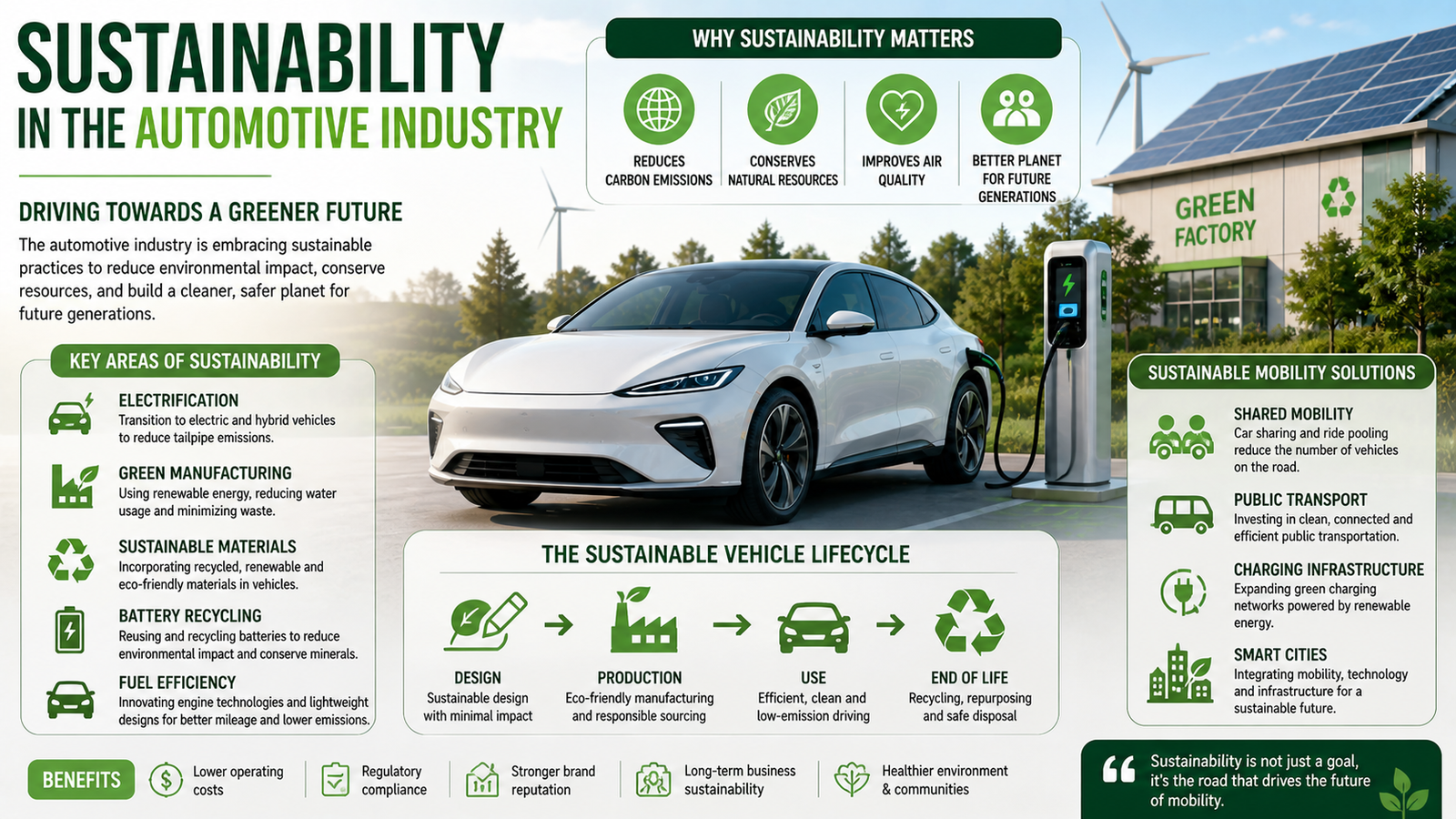
Learn how sustainability in the automotive industry is transforming vehicles through EVs, green manufacturing, recycling, and eco-friendly practices.
Sustainability in the automotive industry automotive sustainability report automotive industry sustainability
Sustainability in the automotive industry
Learn how sustainability is shaping vehicle design, manufacturing and mobility in the automotive industry through EVs, recycling and green practices.Learn how sustainability in the automotive industry is transforming vehicle design, manufacturing, and mobility through EVs, recycling, and green practices.
Sustainable Auto Industry
Sustainability in the automotive industry has become a major area of focus as manufacturers, governments and consumers work together to reduce environmental impact. Concerns about climate change, rising pollution levels and dwindling natural resources are compelling the industry to adopt greener practices throughout the entire vehicle lifecycle from design, production, usage and recycling.
Car makers such as Toyota Motor Corporation, BMW Group and Tata Motors are putting big money into sustainable technologies, materials and processes. Sustainability is no longer a marketing word. It is a business necessity and a responsibility to the planet.
Sustainability in the automotive industry: what does it mean
In this context, sustainability is the reduction of the environmental footprint of vehicles by:
- Reducing carbon emissions
- Use of eco-friendly materials
- Improve fuel and energy efficiency
- Reuse and recycling of components
- Utilizing environmentally sustainable manufacturing processes
“It’s not just the car on the road, it’s how it was made and how it was disposed of.”
Switching to Electric and Hybrid Vehicles
One of the big sustainability steps is moving to electric and hybrid vehicles. EVs emit no tailpipe emissions, which greatly reduces urban air pollution.
Hybrid vehicles also help traditional engines because they increase fuel efficiency and reduce emissions.
Green Manufacturing Practices
Automotive plants are being turned into environmentally friendly ones by:
- Using renewable sources of energy like solar and wind
- Conserving water
- Reducing waste creation
- Recycled industrial materials
Many plants are targeting carbon neutrality over the next few years.
Use of Recyclable and Environmentally Friendly Materials
Producers are substituting traditional materials for sustainable options such as:
- Plastics recycled
- Natural fibres
- Interior Vegan leather
- Lightweight materials for improved efficiency
These changes reduce resource extraction and make vehicles more efficient.
Recycling and Second Life of Batteries
EV batteries are a sustainability issue. Companies are looking at ways to:
- Recycling of lithium, cobalt and nickel
- Recycling old batteries for energy storage
- reduce dependency on mining
Management of battery life is getting a priority.
Better Fuel Economy Standards
Tougher emission standards are compelling carmakers to develop engines and cars that require less fuel and emit fewer pollutants.
Aerodynamics, lightweight and efficient engines all contribute to sustainability.
Role of Government in Policies
Governments support sustainability by:
- Emissions standards
- EV subsidies & incentives
- Old vehicle scrappage schemes
- Investment in public transport and charging infrastructure
These policies accelerate green uptake.
Solutions for Sustainable Mobility
Ride-sharing, integration of public transport and mobility services reduce the number of vehicles on the road, thereby reducing overall emissions.
Sustainable transport has a significant component in shared mobility.
Challenges to Achieving Sustainability
Progress apart, the challenges are:
- The high cost of green technology
- Impact on battery production
- Charging infrastructure deficits
- Consumer awareness
Breaking down these barriers requires constant innovation.
Future of Sustainable Automotive Industry
And during the next decade we will see:
- Carbon Neutral Production Facilities
- 100% Recyclable Vehicles
- Dominance of hydrogen vehicles and EVs
- Smart cities and green mobility
Sustainability will drive brand reputation and consumer preference.
Implications for Consumers
Buyers can assist by:
- Choosing EVs or hybrids
- Good condition vehicle maintenance
- Choose shared mobility when you can
- Safe recycling of old vehicles
The choices consumers make have a direct impact on the environment.
SUMMARY
Sustainability is driving the future of mobility in the automotive sector. Every step, from electric vehicles to green factories to recyclable materials, brings us closer to a cleaner planet.
With the growth of technology and awareness, sustainable practices will be standard practice in the automotive world, not an exception.
Read this – Big announcements for Maruti lovers,must see the features
Read this – Kia Seltos Price List 2026 – Complete Review, Specs & Features
Read this – New business models in automotive industry
Green automotive practices Eco friendly car manufacturing Electric vehicle sustainability Battery recycling in EVs Sustainable mobility solutions Low emission vehicles Carbon neutral automotive plants Sustainable car materials Future of green automobiles Sustainability in the automotive industry Green automotive practices Eco friendly car manufacturing Electric vehicle sustainability Battery recycling in EVs Sustainable mobility solutions Low emission vehicles Carbon neutral automotive plants Sustainable car materials Future of green automobiles Sustainability in the automotive industry Green automotive practices Eco friendly car manufacturing Electric vehicle sustainability Battery recycling in EVs Sustainable mobility solutions Low emission vehicles Carbon neutral automotive plants Sustainable car materials Future of green automobiles Sustainability in the automotive industry