
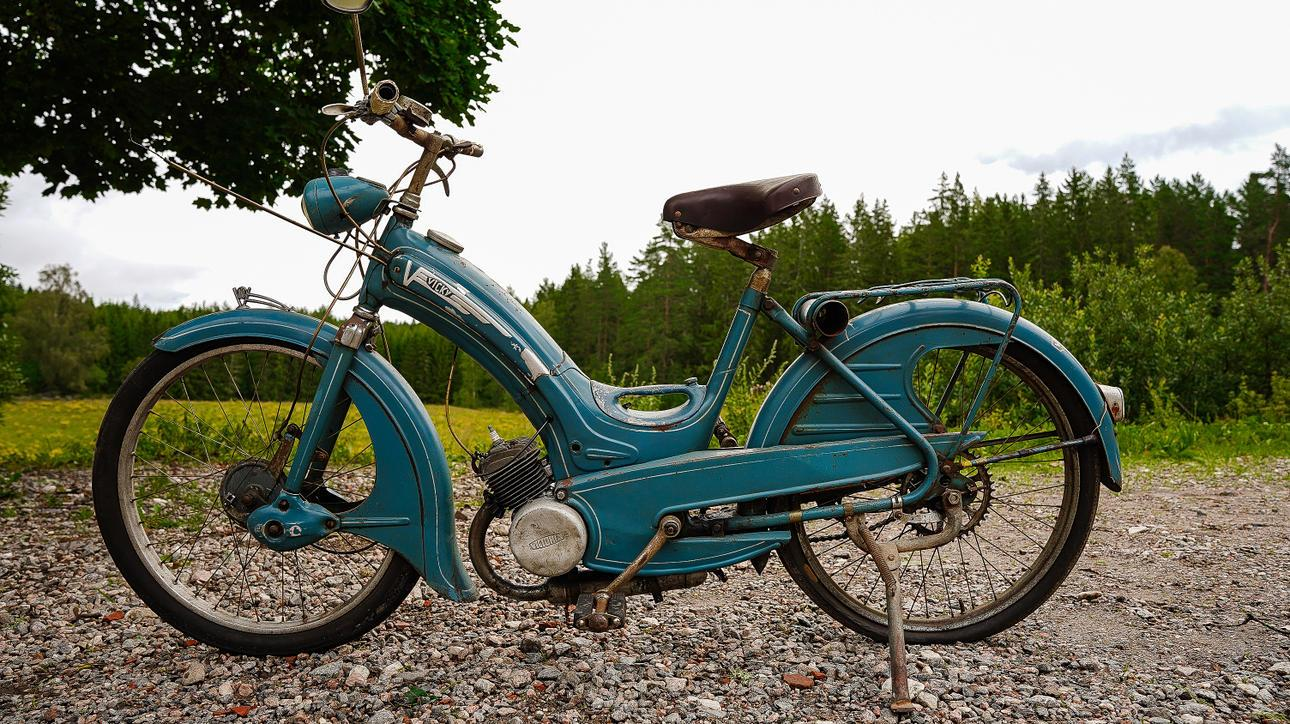
Discover the story of the Vicky 50, a German-designed 48cc two-wheeler manufactured in Gwalior, India. Explore its history, engine, features and popularity.
Table of Contents
Introduction
Before modern scooters, commuter motorcycles and electric two-wheelers became popular, India had several interesting small-capacity two-wheelers. One of them was the Vicky 50, a unique German-designed machine that became popular among Indian buyers during the 1960s and early 1970s.
The Vicky 50 was known for its compact design, simple mechanical setup and practical everyday usability. It was manufactured in India under licence by Saund Zweirad Union India Ltd. (SZUIL) in Gwalior, Madhya Pradesh.
Although it had a small engine, the Vicky 50 managed to create a special place in the hearts of two-wheeler enthusiasts.
German Connection Behind the Vicky 50
The story of the Vicky 50 goes back to Victoria, a German bicycle and motorcycle manufacturer based in Nuremberg.
Victoria developed small-capacity two-wheelers for people looking for affordable and practical personal transportation.
In India, the vehicle was manufactured under licence by Saund Zweirad Union India Ltd. The company produced the Vicky 50 in Gwalior from approximately 1965 to 1973.
Its German engineering influence made it different from many other small two-wheelers available in India at that time.
Engine and Performance
The Vicky 50 came with a small 48cc, two-stroke engine.
Despite its limited engine capacity, it was designed for practical everyday transportation.
Some important details included:
- Engine: 48cc, two-stroke
- Transmission: Three-speed manual gearbox
- Gear operation: Handlebar-mounted gear selector
- Starting system: Kick starter
- Design: Step-through body
- Typical cruising speed: Around 40 kmph
Its handlebar-operated gear system was one of its most interesting features. The rider could change gears using the left-hand grip, while the accelerator was positioned on the right side.
The Vicky 50 was not designed for high-speed performance. Its main purpose was affordable and convenient transportation.
Design That Made It Special
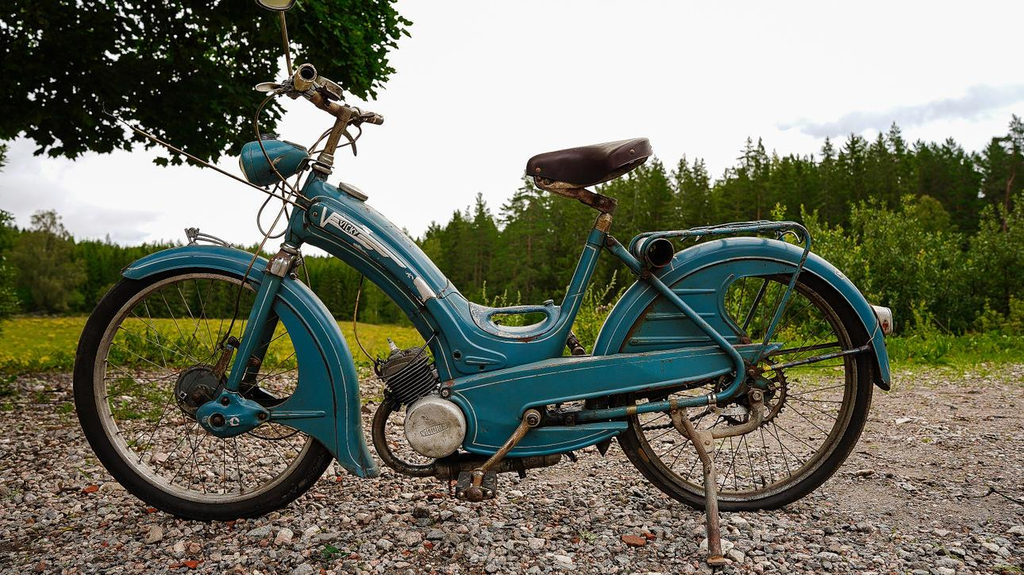
The Vicky 50 had a simple step-through design that made getting on and off the vehicle easier.
Its styling included a compact body, practical seating arrangement and attractive two-tone colour combinations.
Some early models also featured factory-fitted white-wall tyres, which are particularly interesting for vintage vehicle collectors today.
The vehicle was lightweight and well-balanced, making it suitable for everyday travel in smaller Indian cities and towns.
Why Did the Vicky 50 Become Popular?
During the 1960s, owning a scooter or motorcycle was not easy for every Indian family. Many popular scooters had long waiting periods and were relatively expensive.
The Vicky 50 offered an alternative for buyers who wanted a practical two-wheeler without purchasing a larger motorcycle.
Some important reasons behind its popularity were:
- Compact and lightweight design.
- Practical step-through construction.
- Simple mechanical arrangement.
- Affordable transportation for its time.
- Two-person seating convenience.
- German design influence.
It competed with other small two-wheelers, including the Jawa Jet, Pearl Yamaha and Suvega 50.
What Was the Price of Vicky 50?
The reported price of the Vicky 50 during the mid-1960s was approximately Rs. 2,455.
At that time, it was an interesting alternative to larger scooters and motorcycles.
However, vehicle prices and availability varied during its production period.
Why Did Production Stop?
The Vicky 50 remained an important name in India’s small two-wheeler history, but its production ended around 1973.
After the original model, the manufacturer introduced other products, including Saund 80, Saund 100 and Vicky 2. However, these models reportedly failed to achieve the same popularity.
Changing customer preferences and increasing competition also affected the small-capacity two-wheeler segment.
As motorcycles became more popular, the demand for older step-through designs gradually declined.
Vicky 50: A Vintage Two-Wheeler Worth Remembering
Today, the Vicky 50 is remembered as an interesting part of India’s automotive history.
It represents a time when simple engineering, affordability and practicality were more important than advanced technology and high performance.
For vintage vehicle enthusiasts, finding a well-preserved Vicky can be a special experience because very few examples remain in regular use.
FAQs
1. What was the Vicky 50?
The Vicky 50 was a small German-designed two-wheeler manufactured in India under licence.
2. Who manufactured the Vicky in India?
It was manufactured by Saund Zweirad Union India Ltd. in Gwalior.
3. What was the engine capacity of the Vicky ?
It used a 48cc two-stroke engine.
4. When was the Vicky manufactured in India?
Its Indian production ran approximately from 1965 to 1973.
5. What was the top cruising speed of the Vicky ?
Historical accounts describe it as capable of cruising at around 40 kmph.
6. Was the Vicky a German vehicle?
It had German origins and design heritage, but the Indian version was manufactured locally under licence.
Conclusion
The Vicky was much more than a small-capacity two-wheeler. It was an example of how international engineering and Indian manufacturing came together to create a practical transportation option.
With its 48cc engine, simple gearbox and step-through design, it won appreciation from buyers during its time.
Even today, the Vicky remains a memorable name among enthusiasts who love India’s vintage two-wheeler history.
Disclaimer
This article is intended for informational and historical purposes. Specifications, production dates and historical details are based on available enthusiast and historical sources. Some details may vary between individual models.
Written by: Harikesh Tiwari
Also read-
Maruti Suzuki Brezza 2026: कीमत, माइलेज, फीचर्स और लॉन्च डेट – क्या यह बनेगी 2026 की सबसे बेस्ट SUV?
Dutch Court Orders JLR to Destroy Seized BYD Records – Full Case Details
EICMA 2026: 2027 Honda CBR1000RR-R Fireblade Photo Gallery
EICMA 2026: Ultraviolette X-47 Venom Launched in Europe – Price, Range & Features




Avnish Tiwari is a seasoned automotive content creator and technical researcher with 5+ years of experience decoding car tech, mechanical systems, and vehicle performance.