
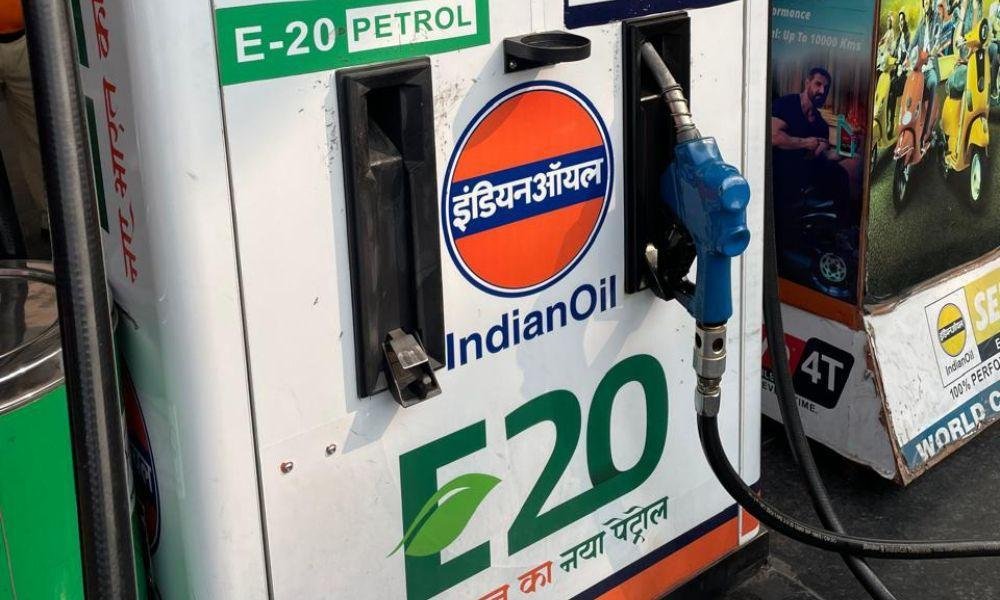
E20 Ethanol Blended Petrol Explained: Government Says Impact Will Be Clear Next Year
What is E20 Ethanol Blended Petrol? Why Indian government is calling it an ongoing experiment? Benefits, concerns and impact on vehicle owners.
Intro
The debate over E20 Ethanol Blended Petrol has gained renewed attention after the Indian government stated before the Supreme Court that blending 20% ethanol with petrol is still being closely monitored, and its full impact is expected to become clearer next year.
The statement comes at a time when questions are being raised about how E20 fuel affects vehicle performance, engine durability, fuel efficiency, and emissions. However, after the hearing, the Attorney General clarified that the 20% ethanol blending policy is a policy decision and is not expected to be withdrawn.
What Is E20 Ethanol Blended Petrol?
E20 Ethanol Blended Petrol is fuel that contains:
- 80% Petrol
- 20% Ethanol
Ethanol is a renewable biofuel mainly produced from agricultural feedstocks such as sugarcane, maize, and other biomass sources.
The government has introduced E20 fuel as part of its strategy to reduce dependence on imported crude oil, lower carbon emissions, and promote cleaner transportation.

Why Is India Promoting E20 Fuel?
The government aims to achieve several long-term objectives through ethanol blending.
Reduce Crude Oil Imports
India imports a significant portion of its crude oil. Higher ethanol blending can reduce dependence on imported fuel.
Support Farmers
Greater ethanol production creates additional demand for agricultural products, benefiting farmers and the rural economy.
Lower Vehicle Emissions
Ethanol burns cleaner than conventional petrol, helping reduce certain vehicle emissions.
Improve Energy Security
Using domestically produced biofuels helps strengthen India’s energy independence.
Why Did the Government Call It an “Experiment”?
During the Supreme Court proceedings, the government stated that the nationwide implementation of 20% ethanol blending is still being observed to evaluate its long-term impact.
The statement suggests that authorities are monitoring:
- Engine performance
- Fuel efficiency
- Vehicle compatibility
- Environmental impact
- Consumer experience
However, the Attorney General also clarified that this does not mean the government intends to reverse the E20 policy.

How Does E20 Fuel Affect Vehicles?
The impact depends on the vehicle model and manufacturer recommendations.
Compatible Vehicles
Many newer vehicles are designed or calibrated to run on E20 fuel without significant issues.
Older Vehicles
Older vehicles that are not designed for E20 may experience:
- Reduced fuel economy
- Possible compatibility concerns with certain rubber or plastic components
- Changes in engine performance over time
Owners should always check their vehicle manufacturer’s guidance before regularly using E20 fuel.
Advantages of E20 Ethanol Blended Petrol
Lower Carbon Emissions (E20 Ethanol Blended Petrol)
Ethanol contributes to cleaner combustion and can help reduce certain emissions.
Renewable Fuel Source (E20 Ethanol Blended Petrol)
Unlike fossil fuels, ethanol is produced from renewable agricultural resources.
Reduced Oil Import Bill (E20 Ethanol Blended Petrol)
Higher ethanol blending can reduce India’s reliance on imported petroleum products.
Support for Rural Economy (E20 Ethanol Blended Petrol)
The increased demand for ethanol production benefits farmers and the agricultural sector.
Potential Concerns (E20 Ethanol Blended Petrol)
Some experts and vehicle owners have raised concerns regarding:
- Reduced fuel efficiency because ethanol contains less energy than petrol.
- Compatibility with older vehicles.
- Long-term engine durability.
- Availability of E20-compatible vehicles in all segments.
Manufacturers continue to develop engines specifically optimized for higher ethanol blends.
What Should Vehicle Owners Do?
Before using E20 fuel regularly:
- Check your owner’s manual.
- Confirm whether your vehicle is E20-compatible.
- Follow the fuel recommendations provided by the manufacturer.
- Service your vehicle according to the recommended maintenance schedule.
If your vehicle is approved for E20, you can generally continue using it as recommended.

Future of E20 Fuel in India
The government continues to promote ethanol blending as part of its clean mobility and energy strategy.
Future developments may include:
- More E20-compatible vehicles.
- Expansion of ethanol production.
- Improved fuel infrastructure.
- Further research on long-term vehicle performance.
Authorities are expected to continue reviewing data from nationwide implementation while maintaining the broader policy direction.
Conclusion (E20 Ethanol Blended Petrol)
The discussion around E20 Ethanol Blended Petrol highlights the importance of balancing environmental goals with practical vehicle performance. While the government has described the rollout as an initiative whose long-term effects are still being evaluated, it has also made it clear that the 20% ethanol blending policy remains in place.
For vehicle owners, the key is to understand whether their vehicle supports E20 fuel and to follow the manufacturer’s recommendations. As more data becomes available and more E20-compatible vehicles enter the market, the long-term impact of the policy will become clearer.
Frequently Asked Questions (FAQ)
What is E20 Ethanol Blended Petrol?
E20 fuel is a blend consisting of 20% ethanol and 80% petrol.
Why is India introducing E20 fuel?
The objective is to reduce crude oil imports, lower emissions, support farmers, and improve energy security.
Can all vehicles use E20 petrol?
No. Compatibility depends on the vehicle model and manufacturer specifications. Owners should check their vehicle manual before using E20 fuel.
Does E20 petrol reduce fuel efficiency?
Ethanol has a lower energy content than petrol, so some vehicles may experience a slight reduction in fuel economy.
Is the government planning to stop the E20 policy?
Based on official statements, the government has indicated that the E20 blending policy is a policy decision and is not expected to be withdrawn.
Read this – Air Flow at Idle Too Low Error P307800: 7 Causes, Symptoms & Fixes Explained
Read this – Maruti Suzuki Brezza 2026: कीमत, माइलेज, फीचर्स और लॉन्च डेट – क्या यह बनेगी 2026 की सबसे बेस्ट SUV?..
Read this – P307800 Fault Code: Throttle Valve Control Module Air Flow at Idle Too Low – Causes, Symptoms & Fixes