
Brake Problems: Symptoms, Causes & Repair Cost
Learn the common brake problems warning signs, causes, diagnosis, solutions, repair costs and prevention tips to keep your car safe on the road.
The braking system is one of the most important safety systems in your car. Ignoring brake problems can increase stopping distance and pose serious safety hazards. Warning signs. Some brake problems are easy to spot, others need a professional to look at them.
Common Brake Problems: Warning Signs covers symptoms, possible causes, diagnosis, solutions, repair costs and prevention tips in simple language.
Issue Problem
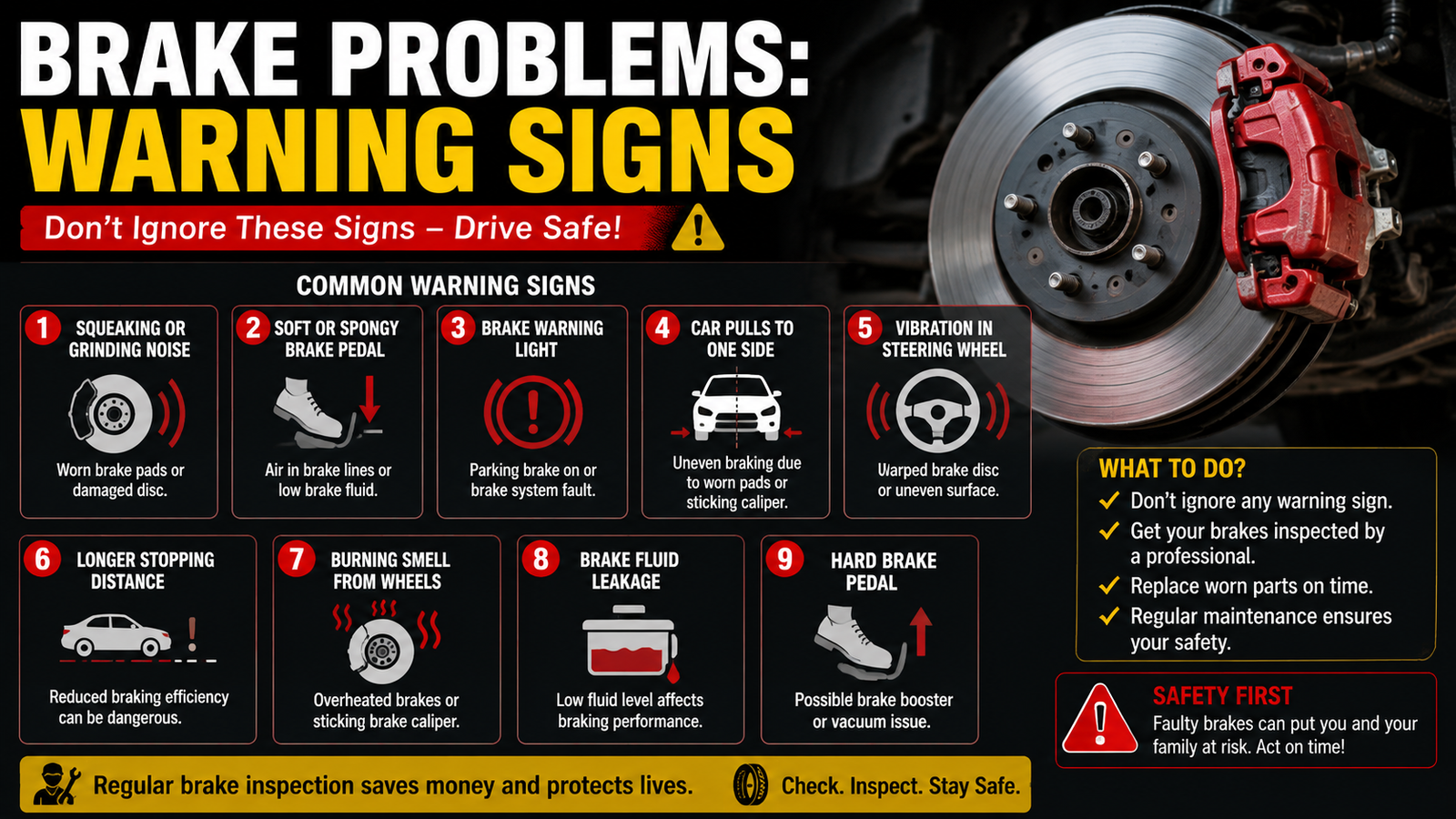
Brake Problems: Warning signs can come in many shapes and sizes. You may hear strange noises, feel vibrations, have a soft brake pedal, the car pull to one side or a brake warning light come on the dashboard.
Common Brake Problems Warning Signs to Never Ignore Since Brakes Can Wear Down Gradually If you keep driving with a serious problem with the brakes you can end up damaging other parts and making the car unsafe to drive.
Symptoms and Signs
The Brake Problems: Warning Signs are as follows:
- Sounds like a scream or grinding
- Soft or spongy pedal
- brake pedal harder than usual
- Car pulls left or right under braking
- Steering wheel vibration during braking
- Longer braking distance
- Brake warning light
- The wheels smell burning
- Brake fluid leak
Grinding sound is one of the most noticeable Brake Problems: Warning Signs. That could be a sign of dangerously worn brake pads and metal parts grinding on the brake disk.
What Might Be Going On
Warning Signs Brake Problems can have a number of causes. One of the more common reasons? Worn brake pads. Brake disks can also become worn, damaged or warped.
Other possible causes are:
- Brake Fluid Low
- Air Brakes
- Brake fluid leak
- Brake calipers sticking.
- Faulty brake hoses
- Drum brakes, worn brake pads
- ABS components faulty
- Poor quality or badly fitting brake parts
If you see multiple Brake Problems: Warning Signs simultaneously, then the vehicle should be inspected at the earliest opportunity.
Diagnosis.
A mechanic will usually start by looking at the brake pads, disks, calipers, brake lines and brake fluid. The technician may also check the tyres as the condition of the tyres can affect the braking performance.
For modern vehicles, an OBD diagnostic scan may be required if the ABS or electronic brake warning light is on.
A road test can help detect Brake Problems: Warning Signs such as pulling, vibration or unusual pedal behavior. But some problems need the wheels to be taken off for a detailed inspection.
Solutions.
The right fix depends on the cause. Replace worn brake pads before they become dangerously thin. Depending on the manufacturer’s specifications, damaged or excessively worn brake disks may also have to be replaced or machined.
A soft brake pedal caused by air in the system may mean the brakes need to be bled. You shouldn’t just add brake fluid if the level is low without investigating the cause.
A leaking line, damaged brake hose or faulty caliper should be repaired or replaced by a qualified mechanic.
Ignoring Brake Problems: Warning Signs Driving with faulty brakes can turn a simple repair into a very expensive one.
Repair Costs
The cost of brake repair depends on your car model, parts, and workshop. In India, the cost of a simple brake-pad replacement can be around ₹1,500–₹6,000 per axle and a brake-disc replacement can be around ₹3,000–₹12,000 or more per axle.
Brake fluid change or bleeding is around Rs. 500-1500, but repairs of caliper, ABS or brake lines can be more expensive.
Prices are indicative only. If your car has Brake Problems: Warning Signs, you should get a detailed inspection and a written estimate from the workshop before you agree to repairs.
Preventive
Brake Problems: Warning Signs Regular Maintenance is the Easiest Way to Reduce Brake Problems. Regularly inspect the brake system and adhere to the manufacturer’s service schedule.
Check fluid level of brake fluid and look for leaks. Don’t ignore strange noises or changes in pedal feel. Change brake pads when they are worn, not when they are completely worn.
Avoid aggressive driving and hard braking unnecessarily. Correct tyre pressure also maintains correct braking performance.
If you see Brake Problems: Warning Signs, get the car checked out early rather than waiting for the problem to worsen.
FAQs
Most Common Brake Problems: Warning Signs What are the most common brake problems?
Common Brake Problems: Squeaking, grinding, vibrations, a soft pedal, pulling to one side, longer stopping distances, and dashboard warning lights are warning signs.
Is a squeak always a sign of bad brakes?
Not always. Dust, moisture or brake-pad material can cause squeaking, but it is usually only occasional. But persistent or loud noises should be investigated.
Why is my car shaking when I brake?
A shaking steering wheel or vehicle when braking could be a sign of uneven or damaged brake disks, but other suspension or tyre issues can produce similar symptoms.
How often should you check your brakes?
Brake inspection should be part of your scheduled servicing, but if you notice any Warning Signs of Brake Problems, inspection may be needed earlier.
What does it mean if my brake warning light is on?
You don’t want to ignore a brake warning light. Safely pull over and consult the owner’s manual. If the braking performance is poor, have the vehicle checked immediately.
How to Avoid Brake Problems?
Brake Problems: Warning Signs Regular servicing, timely brake-pad replacement, correct brake fluid and gentle driving can help prevent.
Disclaimer
This article on Brake Problems: Warning Signs is for general information only. Brake components are safety critical, and should be diagnosed or repaired by a qualified technician. Repair costs vary by car, and by location. If your car has serious Brake Problems: Warning Signs, such as brake-fluid leakage, grinding, reduced braking power or a warning light, you should avoid unnecessary driving and get professional help.
Why Is My Car Losing Power While Driving? Causes & Solutions
Car Battery Keeps Dying: Causes & Solutions




11 thoughts on “Brake Problems: Warning Signs, Causes, Diagnosis, Solutions & Cost”