
Ola Electric comeback strategy focuses on cost reduction, wider dealership networks, battery manufacturing and higher production to regain market share.
Table of Contents
Ola Electric’s Comeback Strategy Shifts to Cost Control, Scale and Wider Distribution
Ola Electric is changing its business approach to strengthen its position in India’s electric two-wheeler market. After facing sales pressure, service-related complaints and increasing competition, the company is now focusing on cost reduction, production growth and dealership expansion.
The Ola Electric comeback strategy aims to rebuild customer confidence and improve financial performance. The Ola Electric comeback strategy is based on better manufacturing, lower expenses and wider customer reach.
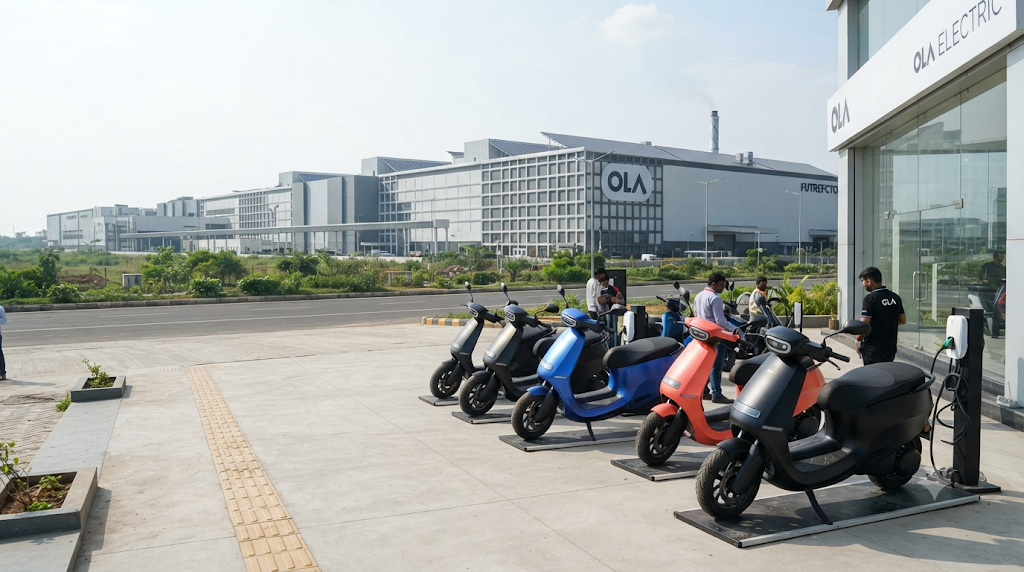
1. Cost Control Becomes the Main Priority
Ola Electric wants to reduce manufacturing costs by producing more components internally. Its vertical integration helps control expenses and improve production efficiency.
The upcoming Gen-4 platform is also expected to support further cost improvements. The Ola Electric comeback strategy focuses on reducing production costs while maintaining product quality.
Lower expenses could help Ola offer competitive electric scooters and improve profit margins. This makes cost management an important part of the Ola Electric comeback strategy.
2. Expansion of Dealership Network
Ola Electric is moving away from its direct-to-consumer retail model towards traditional dealerships.
As of November 2026, the company had onboarded 255 dealer partners operating 319 stores. It plans to expand its network to around 700 outlets by March 2027.
The Ola Electric comeback strategy expects dealerships to improve customer experience, sales and after-sales services.
This model can also reduce the expenses of operating company-owned stores. The Ola Electric comeback strategy will depend on how effectively dealers manage customers and inventory.
3. Increasing Production Capacity
Ola Electric is strengthening its supply chain to increase vehicle production. The company has indicated a target of producing 25,000 vehicles in December 2026.
The Ola Electric comeback strategy requires better coordination with suppliers and timely availability of components.
Higher production and faster deliveries could help the company serve increasing demand.
4. Focus on Battery Manufacturing
Battery technology is another important part of Ola’s growth plans.
Its Gigafactory has reached an installed capacity of 6 GWh. In-house battery production could reduce dependence on external suppliers and improve cost efficiency.
The Ola Electric comeback strategy also uses battery manufacturing as a potential long-term competitive advantage.
5. Challenges Ahead
Despite these improvements, Ola Electric still faces strong competition from TVS, Bajaj and Ather Energy.
The Ola Electric comeback strategy must address several challenges:
- Improving scooter reliability.
- Providing faster customer service.
- Maintaining spare-parts availability.
- Increasing timely deliveries.
- Building customer confidence.
The company has reported a narrower quarterly loss, but it remains loss-making. Therefore, the Ola Electric comeback strategy still needs consistent financial and operational results.
Frequently Asked Questions (FAQs)
Q1. What is Ola Electric’s comeback strategy?
The Ola Electric comeback strategy focuses on cost reduction, dealership expansion, higher production and in-house battery manufacturing.
Q2. How many dealerships does Ola Electric plan to open?
The company aims to expand to around 700 dealer outlets by March 2027.
Q3. Why is Ola Electric focusing on cost control?
The Ola Electric comeback strategy uses cost reduction to improve profit margins and strengthen its competitive position.
Q4. Can Ola Electric regain its market position?
The Ola Electric comeback strategy could help the company recover, but success depends on product quality, customer satisfaction and sales growth.
Conclusion
Ola Electric is taking important steps to rebuild its business through cost control, dealership expansion, battery manufacturing and production growth.
The Ola Electric comeback strategy could create new opportunities in India’s EV market. However, the company must deliver reliable products, improve customer service and achieve sustainable profitability.
The coming months will be important in determining whether the Ola Electric comeback strategy can bring the company back into strong competition.
Disclaimer: This article is published for informational and educational purposes only. The information is based on publicly available reports as of November 2026. Business plans and figures may change. This article does not provide financial or investment advice.
Also read-
Maruti Suzuki Brezza 2026: कीमत, माइलेज, फीचर्स और लॉन्च डेट – क्या यह बनेगी 2026 की सबसे बेस्ट SUV?
CFMoto 550MT and 550MT-X 2026 – Two New Adventure Bikes Revealed
MIVV HR-1 Exhaust for Harley-Davidson Softail Revealed at EICMA 2026
Bajaj Pulsar 180 Discontinued in India 2026 – Reasons & Latest Update





Avnish Tiwari is a seasoned automotive content creator and technical researcher with 5+ years of experience decoding car tech, mechanical systems, and vehicle performance.