
HACK LINKS - TO BUY WRITE IN TELEGRAM - @TomasAnderson777 Hacked Links Hacked Links Hacked Links Hacked Links Hacked Links Hacked Links cryptocurrency exchange vapeshop discount code vapewholesale affiliate link geek bar pulse x betorspin plataforma betorspin login na betorspin hi88 new88 789bet 777PUB Даркнет alibaba66 1xbet 1xbet plinko Tigrinho Interwin
New Car ReviewDiagnostic Trouble Code (DTC)More ReviewOld Car ReviewTrending News

Why Your Check Engine Light Is ON?

Why Your Check Engine Light Is ON?

Engine light on? Here’s why. Find out the common causes, warning signs and simple fixes to avoid major engine problems in your car.
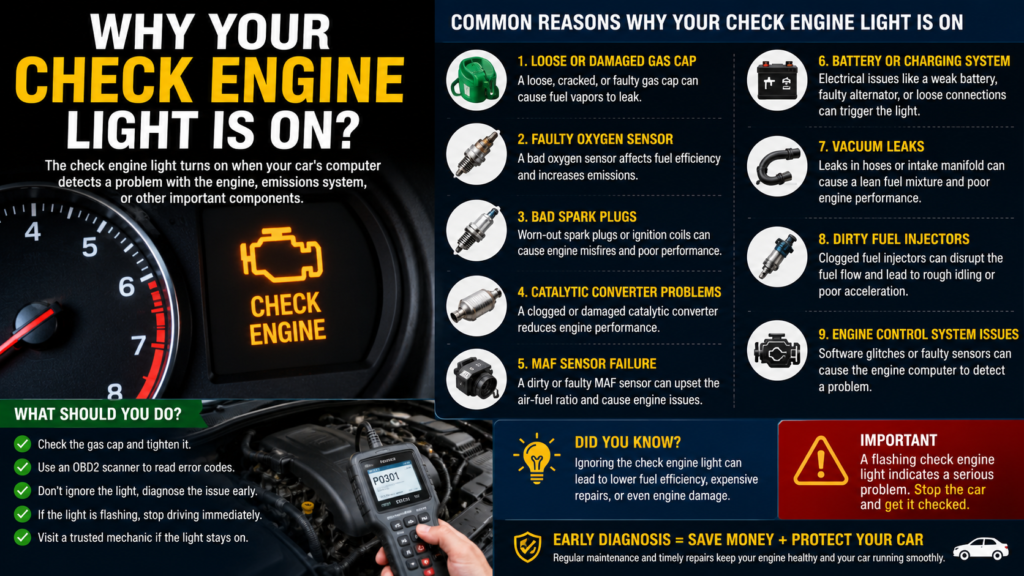
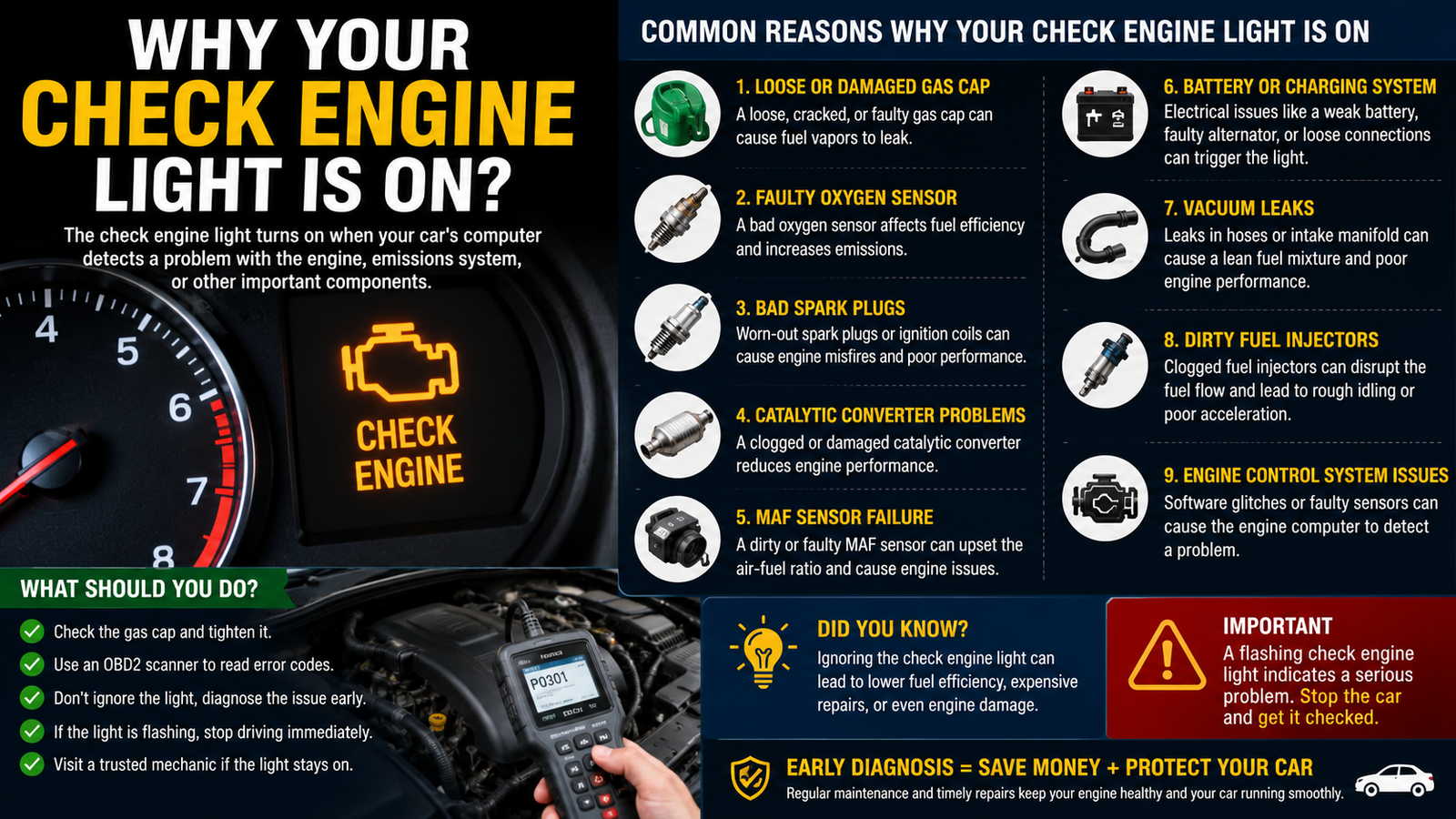
Why Your Check Engine Light Is ON?

What turned your check engine light on?

One of the most common and stressful moments of car owners is when the check engine light suddenly appears on the dashboard. Some drivers ignore it, others have a panic straight away. But knowing what is causing your check engine light to come on can help you avoid expensive repairs and keep your car running well.

The check engine light is a component of your vehicle’s onboard diagnostic system (OBD). It tells you when the engine, the emissions system or some other important part is not working properly.

This guide will cover the most common reasons your check engine light turns on, what the warning means, and what you can do to fix it before it becomes serious.

What the Check Engine Light Means

The check engine light, or malfunction indicator lamp (MIL), is linked to your car’s computer system.

If the sensors sense a problem , the system saves an error code and turns on the warning light .

The light can come two ways:

Steady Check Engine Light

If the light is steady, it is usually a non-emergency problem, but it does need to be addressed.

Check Engine Light Flashing

A flashing light indicates a serious condition such as an engine misfire, which can damage the catalytic converter.

If the light is flashing continuously, stop and have the vehicle checked immediately.

Why Is The Check Engine Light ON? Common Reasons

1. Loose or Damaged Fuel Cap

One of the most basic and common reasons for a check engine light to illuminate is a loose fuel cap.

Symptoms:

  • Fuel odour
  • Reduced fuel economy
  • Warning light on the dashboard

The gas cap is used to keep pressure on the fuel system. If the system is broken or loose, it will detect a leak.

Solution:

Reinstall gas cap properly and restart vehicle. The light may go out after several driving cycles.

2. Oxygen Sensor Failure

The oxygen sensor measures the oxygen in the exhaust gases.

Sensor damage: Can

  • Lower fuel economy
  • Raise emissions
  • influence engine performance

Oxygen Sensor Failure Ignoring a faulty oxygen sensor can damage a catalytic converter.

Signs:

  • LITTLE MILEAGE
  • Rough idle
  • Emissions test failed?

If the sensor is replaced early, it can save money in the long run.

3. Faulty Spark Plugs or Ignition Coils

Spark plugs ignite the fuel/air mixture in the engine.

spark plugs and ignition coils can fail and cause the engine to misfire.

Most Common Symptoms:

  • Engine vibration
  • Tough beginning
  • Weak acceleration.
  • Higher fuel consumption

Regular maintenance will avoid ignition problems.

Catalytic Converter Issues

The catalytic converter cuts down on harmful exhaust emissions.

If it is clogged or damaged, it will affect your engine’s performance.

Warning Signs:

  • Power loss
  • Smell of rotten eggs
  • Weak acceleration.
  • Higher fuel consumption

It can be expensive to replace a catalytic converter , so early engine diagnosis is important .

Failure of the Mass Air Flow (MAF) Sensor

The MAF Sensor measures the amount of air coming into the engine.

If it doesn’t work correctly, the engine may not get the correct mixture of fuel.

Symptoms:

  • Idle rough
  • Stuck
  • Inefficient fuel use
  • Hard to get started

Usually cleaning or replacing the sensor will solve the problem.


Battery or Charging System Problems

Sometimes the check engine light comes on because of problems with the electrical system.

Reasons may include:

  • Low Battery
  • Bad alternator
  • Free wiring
  • Corroded connectors

Most modern cars have a lot of electronic systems. So voltage problems frequently cause warning lights to light up.

Vacuum Leak Issues

Vacuum leaks let in extra air to the engine upsetting the air-fuel ratio.

Vacuum Leak Signs:

  • High idle RPM
  • Whistle sound
  • Weak acceleration.
  • Engine stalling

On older vehicles cracked hoses are a common source of vacuum leaks .

Fuel Injector Issues

Fuel injectors inject the fuel to the engine to be burned.

Dirty or clogged injectors can lead to:

  • Engine shaking
  • LITTLE MILEAGE
  • Slow speed
  • Engine performance rough

Fuel Injector Cleaning – Boosts Engine Efficiency and Performance

How to Diagnose Check Engine Light

OBD Scanner

OBD2 scanners read the diagnostic trouble codes that the vehicle’s computer has stored.

These codes are used to pinpoint the exact problem.

Typical examples include:

  • P0300 – Misfire in engine
  • P0420 – Catalyst System Efficiency Below Threshold
  • P0171 – System too lean.

OBD scanners are cheap and handy to car owners.

Can You Drive With Check Engine Light On?

Depends on the problem.

Generally Safe to Drive:

  • Gas cap is loose
  • Small sensor trouble
  • Intermittent Emission Fault

Stop Driving Immediately If You:

  • Lights flashing
  • Engine shakes really bad.
  • Start seeing smoke
  • Power loss in vehicle

Ignoring serious engine problems can result in expensive repairs down the road.

Avoiding Check Engine Light Problems

The best way to avoid warnings on your dashboard is prevention.

Run Routine Service Schedule

Alteration:

  • Oil engine.
  • Filters for air
  • Sparkplugs
  • liquids

on time.

Use Good Fuel –

Low quality fuel can damage the sensors and the fuel injectors.

Don’t Ignore Minor Issues

Neglecting small problems can lead to expensive repairs.

Power Levels

Keep terminals clean. Correct charge voltage.

Advantages of Early Diagnosis

Knowing why your check engine light is ON allows you to take action fast.

Early diagnosis:

  • Saves on repair costs
  • Stops breakdowns
  • Improves fuel economy.
  • Protects engine parts
  • Increases vehicle life

Usually the sooner you can find the problem, the easier and cheaper the repair is.

When should I see a mechanic?

If you need to see a professional mechanic:

  • The warning light will stay ON for days
  • Odd sounds from the engine
  • performance goes bad
  • Car stalls frequently
  • The light is blinking all the time

“Professional diagnostic equipment can accurately determine the problem.

Final Words

Now you know why your check engine light is ON and why you should never ignore it. Some are minor, others can cause serious damage to your engine if not fixed.

Most modern cars have safety systems that are designed to warn drivers before a serious failure occurs. With a car OBD scanner , you can know the problem early and follow regular maintenance schedules . This way , you can rely on your car and avoid costly repairs .

When your check engine light illuminates, don’t turn a blind eye to it, it’s a serious warning from your car.

Wondering why your check engine light is ON? Learn the common causes, warning signs, and simple fixes to protect your car from serious engine problems.

Focus Keyword

Why your check engine light is ON


Why Your Check Engine Light Is ON?

One of the most common and stressful moments for car owners is seeing the check engine light suddenly appear on the dashboard. Many drivers ignore it, while others panic immediately. But understanding why your check engine light is ON can help you avoid costly repairs and keep your vehicle running smoothly.

The check engine light is part of your car’s onboard diagnostic system (OBD). It warns you when the engine, emissions system, or another important component is not working properly.

In this guide, you will learn the most common reasons your check engine light turns on, what the warning means, and how you can fix the issue before it becomes serious.


What Does the Check Engine Light Mean?

The check engine light, also known as the malfunction indicator lamp (MIL), is connected to your vehicle’s computer system.

When sensors detect a problem, the system stores an error code and turns on the warning light.

The light may appear in two ways:

Solid Check Engine Light

A steady light usually means a non-emergency issue that still requires attention.

Flashing Check Engine Light

A blinking light indicates a serious problem, such as an engine misfire, that could damage the catalytic converter.

If the light flashes continuously, stop driving and inspect the vehicle immediately.


Common Reasons Why Your Check Engine Light Is ON

1. Loose or Damaged Gas Cap

A loose fuel cap is one of the simplest and most common reasons for a check engine warning.

Symptoms:

  • Fuel smell
  • Reduced fuel efficiency
  • Dashboard warning light

The gas cap helps maintain fuel system pressure. If it is cracked or loose, the system detects a leak.

Solution:

Tighten the gas cap properly and restart the vehicle. The light may disappear after a few driving cycles.


2. Faulty Oxygen Sensor

The oxygen sensor measures the amount of oxygen in exhaust gases.

A damaged sensor can:

  • Reduce fuel economy
  • Increase emissions
  • Affect engine performance

Ignoring a faulty oxygen sensor may lead to catalytic converter damage.

Signs:

  • Poor mileage
  • Rough idling
  • Failed emissions test

Replacing the sensor early can save money in the long run.


3. Bad Spark Plugs or Ignition Coils

Spark plugs ignite the fuel-air mixture inside the engine.

When spark plugs or ignition coils fail, the engine may misfire.

Common Symptoms:

  • Engine shaking
  • Hard starting
  • Poor acceleration
  • Increased fuel consumption

Regular maintenance helps prevent ignition-related issues.


Catalytic Converter Problems

The catalytic converter reduces harmful exhaust emissions.

If it becomes clogged or damaged, your engine performance suffers.

Warning Signs:

  • Loss of power
  • Rotten egg smell
  • Poor acceleration
  • Increased fuel usage

Catalytic converter replacement can be expensive, so fixing engine issues early is important.


Mass Air Flow (MAF) Sensor Failure

The MAF sensor measures how much air enters the engine.

If it stops working correctly, the engine may not receive the proper fuel mixture.

Symptoms:

  • Rough idle
  • Stalling
  • Poor fuel efficiency
  • Difficulty starting

Cleaning or replacing the sensor usually solves the problem.


Battery or Charging System Issues

Sometimes the check engine light appears because of electrical system problems.

Possible causes include:

  • Weak battery
  • Faulty alternator
  • Loose wiring
  • Corroded terminals

Modern vehicles rely heavily on electronic systems, so voltage problems can trigger warning lights.


Vacuum Leak Problems

Vacuum leaks allow extra air into the engine, disturbing the air-fuel ratio.

Signs of Vacuum Leak:

  • High RPM at idle
  • Whistling sound
  • Poor acceleration
  • Engine hesitation

Vacuum leaks are common in older vehicles due to cracked hoses.


Problems with Fuel Injectors

Fuel injectors spray fuel into the engine for combustion.

Dirty or clogged injectors can cause:

  • Engine vibration
  • Poor mileage
  • Slow acceleration
  • Rough engine performance

Fuel injector cleaning improves engine efficiency and performance.


How to Diagnose the Check Engine Light

Use an OBD Scanner

An OBD2 scanner reads diagnostic trouble codes stored in the vehicle’s computer.

These codes help identify the exact problem.

Common examples:

  • P0300 – Engine misfire
  • P0420 – Catalytic converter efficiency problem
  • P0171 – Lean fuel mixture

OBD scanners are affordable and useful for car owners.


Can You Drive with the Check Engine Light ON?

It depends on the issue.

Usually Safe to Drive:

  • Loose gas cap
  • Minor sensor issue
  • Temporary emissions fault

Stop Driving Immediately If:

  • Light is flashing
  • Engine shakes badly
  • Smoke appears
  • Vehicle loses power

Ignoring serious engine problems can cause expensive repairs later.


How to Prevent Check Engine Light Problems

Preventive maintenance is the best way to avoid dashboard warnings.

Follow Regular Service Schedule

Change:

  • Engine oil
  • Air filters
  • Spark plugs
  • Fluids

on time.

Use Quality Fuel

Poor-quality fuel may damage sensors and fuel injectors.

Don’t Ignore Small Problems

Minor issues can quickly turn into expensive repairs if ignored.

Check Battery Condition

Keep terminals clean and ensure proper charging voltage.


Benefits of Early Diagnosis

Understanding why your check engine light is ON helps you take action quickly.

Early diagnosis:

  • Saves repair costs
  • Prevents breakdowns
  • Improves fuel efficiency
  • Protects engine components
  • Extends vehicle lifespan

The sooner you identify the issue, the easier and cheaper the repair usually becomes.


When Should You Visit a Mechanic?

You should consult a professional mechanic if:

  • The warning light remains ON for days
  • The engine makes unusual noises
  • Performance becomes poor
  • The car stalls frequently
  • The light flashes continuously

Professional diagnostic tools provide accurate problem detection.


Final Thoughts

Now you understand why your check engine light is ON and why it should never be ignored. While some causes are minor, others can seriously damage your engine if left untreated.

Modern vehicles are designed to warn drivers before major failures happen. By checking the issue early, using an OBD scanner, and following regular maintenance schedules, you can keep your vehicle reliable and avoid costly repairs.

Whenever the check engine light appears, treat it as an important signal from your car — not something to ignore.

Wondering why your check engine light is ON? Learn the common causes, warning signs, and simple fixes to protect your car from serious engine problems.

Focus Keyword

Why your check engine light is ON


Why Your Check Engine Light Is ON?

One of the most common and stressful moments for car owners is seeing the check engine light suddenly appear on the dashboard. Many drivers ignore it, while others panic immediately. But understanding why your check engine light is ON can help you avoid costly repairs and keep your vehicle running smoothly.

The check engine light is part of your car’s onboard diagnostic system (OBD). It warns you when the engine, emissions system, or another important component is not working properly.

In this guide, you will learn the most common reasons your check engine light turns on, what the warning means, and how you can fix the issue before it becomes serious.


What Does the Check Engine Light Mean?

The check engine light, also known as the malfunction indicator lamp (MIL), is connected to your vehicle’s computer system.

When sensors detect a problem, the system stores an error code and turns on the warning light.

The light may appear in two ways:

Solid Check Engine Light

A steady light usually means a non-emergency issue that still requires attention.

Flashing Check Engine Light

A blinking light indicates a serious problem, such as an engine misfire, that could damage the catalytic converter.

If the light flashes continuously, stop driving and inspect the vehicle immediately.


Common Reasons Why Your Check Engine Light Is ON

1. Loose or Damaged Gas Cap

A loose fuel cap is one of the simplest and most common reasons for a check engine warning.

Symptoms:

  • Fuel smell
  • Reduced fuel efficiency
  • Dashboard warning light

The gas cap helps maintain fuel system pressure. If it is cracked or loose, the system detects a leak.

Solution:

Tighten the gas cap properly and restart the vehicle. The light may disappear after a few driving cycles.


2. Faulty Oxygen Sensor

The oxygen sensor measures the amount of oxygen in exhaust gases.

A damaged sensor can:

  • Reduce fuel economy
  • Increase emissions
  • Affect engine performance

Ignoring a faulty oxygen sensor may lead to catalytic converter damage.

Signs:

  • Poor mileage
  • Rough idling
  • Failed emissions test

Replacing the sensor early can save money in the long run.


3. Bad Spark Plugs or Ignition Coils

Spark plugs ignite the fuel-air mixture inside the engine.

When spark plugs or ignition coils fail, the engine may misfire.

Common Symptoms:

  • Engine shaking
  • Hard starting
  • Poor acceleration
  • Increased fuel consumption

Regular maintenance helps prevent ignition-related issues.


Catalytic Converter Problems

The catalytic converter reduces harmful exhaust emissions.

If it becomes clogged or damaged, your engine performance suffers.

Warning Signs:

  • Loss of power
  • Rotten egg smell
  • Poor acceleration
  • Increased fuel usage

Catalytic converter replacement can be expensive, so fixing engine issues early is important.


Mass Air Flow (MAF) Sensor Failure

The MAF sensor measures how much air enters the engine.

If it stops working correctly, the engine may not receive the proper fuel mixture.

Symptoms:

  • Rough idle
  • Stalling
  • Poor fuel efficiency
  • Difficulty starting

Cleaning or replacing the sensor usually solves the problem.


Battery or Charging System Issues

Sometimes the check engine light appears because of electrical system problems.

Possible causes include:

  • Weak battery
  • Faulty alternator
  • Loose wiring
  • Corroded terminals

Modern vehicles rely heavily on electronic systems, so voltage problems can trigger warning lights.


Vacuum Leak Problems

Vacuum leaks allow extra air into the engine, disturbing the air-fuel ratio.

Signs of Vacuum Leak:

  • High RPM at idle
  • Whistling sound
  • Poor acceleration
  • Engine hesitation

Vacuum leaks are common in older vehicles due to cracked hoses.


Problems with Fuel Injectors

Fuel injectors spray fuel into the engine for combustion.

Dirty or clogged injectors can cause:

  • Engine vibration
  • Poor mileage
  • Slow acceleration
  • Rough engine performance

Fuel injector cleaning improves engine efficiency and performance.


How to Diagnose the Check Engine Light

Use an OBD Scanner

An OBD2 scanner reads diagnostic trouble codes stored in the vehicle’s computer.

These codes help identify the exact problem.

Common examples:

  • P0300 – Engine misfire
  • P0420 – Catalytic converter efficiency problem
  • P0171 – Lean fuel mixture

OBD scanners are affordable and useful for car owners.


Can You Drive with the Check Engine Light ON?

It depends on the issue.

Usually Safe to Drive:

  • Loose gas cap
  • Minor sensor issue
  • Temporary emissions fault

Stop Driving Immediately If:

  • Light is flashing
  • Engine shakes badly
  • Smoke appears
  • Vehicle loses power

Ignoring serious engine problems can cause expensive repairs later.


How to Prevent Check Engine Light Problems

Preventive maintenance is the best way to avoid dashboard warnings.

Follow Regular Service Schedule

Change:

  • Engine oil
  • Air filters
  • Spark plugs
  • Fluids

on time.

Use Quality Fuel

Poor-quality fuel may damage sensors and fuel injectors.

Don’t Ignore Small Problems

Minor issues can quickly turn into expensive repairs if ignored.

Check Battery Condition

Keep terminals clean and ensure proper charging voltage.


Benefits of Early Diagnosis

Understanding why your check engine light is ON helps you take action quickly.

Early diagnosis:

  • Saves repair costs
  • Prevents breakdowns
  • Improves fuel efficiency
  • Protects engine components
  • Extends vehicle lifespan

The sooner you identify the issue, the easier and cheaper the repair usually becomes.


When Should You Visit a Mechanic?

You should consult a professional mechanic if:

  • The warning light remains ON for days
  • The engine makes unusual noises
  • Performance becomes poor
  • The car stalls frequently
  • The light flashes continuously

Professional diagnostic tools provide accurate problem detection.


Final Thoughts

Now you understand why your check engine light is ON and why it should never be ignored. While some causes are minor, others can seriously damage your engine if left untreated.

Modern vehicles are designed to warn drivers before major failures happen. By checking the issue early, using an OBD scanner, and following regular maintenance schedules, you can keep your vehicle reliable and avoid costly repairs.

Whenever the check engine light appears, treat it as an important signal from your car — not something to ignore.

Read this –10 Best Interior Cleaning Tips for Your Car

Read this –Connected Car Features Explained : Everything You Need to Know

Read this – Maruti Suzuki Brezza 2026: कीमत, माइलेज, फीचर्स और लॉन्च डेट – क्या यह बनेगी 2026 की सबसे बेस्ट SUV?..

Leave a Reply

Your email address will not be published. Required fields are marked *