
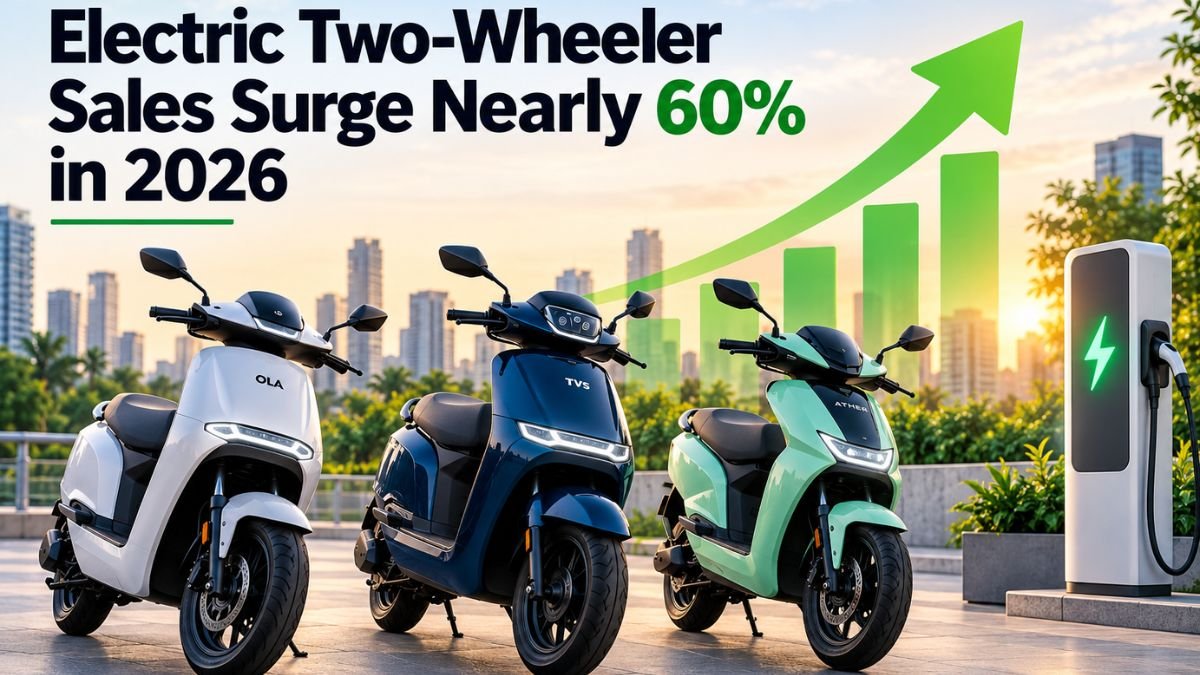
Electric Two-Wheeler Sales: India’s electric two-wheeler market is continuing to gain ground as more buyers show interest in electric scooters and motorcycles. Between January and August 2026, electric two-wheeler registrations increased by nearly 60% compared with the same period last year.
The growth shows that EVs are gradually moving from a niche choice to a more common option for daily commuting. According to data from the government’s Vahan portal, 13,09,127 electric two-wheelers were registered in India during the first eight months of 2026.
This is 4,85,817 units higher than the 8,23,310 units recorded during January-August 2025. More importantly, sales in just eight months of 2026 have already crossed the total volume registered throughout 2025, which was around 12.92 lakh units.
Electric Two-Wheeler Sales
| Period | Electric Two-Wheeler Sales/Registrations | Key Change |
|---|---|---|
| January-August 2025 | 8,23,310 units | Base period |
| January-August 2026 | 13,09,127 units | Nearly 60% growth |
| Full Year 2025 | 12.92 lakh units | Already surpassed in 8 months |
| July 2026 | Nearly 2 lakh units | Record monthly level |
| August 2026 | Around 1.75 lakh units | Lower than July |
| August 2026 EV Share | 10.68% | Crossed 10% of two-wheeler retail sales |
Electric Two-Wheeler Sales Cross 13 Lakh Units
The performance of the electric two-wheeler segment during the first eight months of the year highlights the growing demand for EVs across India. A wider selection of scooters, particularly in the affordable category, is giving customers more options than before. Buyers who were earlier concerned about the higher upfront cost of electric vehicles can now consider models positioned closer to the prices of petrol scooters.
Established manufacturers are also helping build confidence in the segment. As more recognised brands introduce electric models at different price points, customers have greater choice when looking for an EV for everyday travel. This combination of new products, competitive pricing and increasing awareness could support further growth in the months ahead.
August Sees a Monthly Sales Decline
Electric two-wheeler registrations stood at around 1.75 lakh units in August 2026. While this remains a strong monthly figure, it represented a decline from July, when registrations were close to the two-lakh mark. July was an exceptionally strong month for the industry and set a high benchmark for the following month.
The decline in August can partly be linked to seasonal factors. The monsoon period often leads some customers to postpone vehicle purchases. There was also a change in the buying urgency surrounding the PM E-Drive scheme. Benefits for electric two-wheelers had initially been expected to end on July 31, 2026, encouraging some buyers to complete their purchases earlier. The government later extended the scheme until March 31, 2028, reducing that immediate pressure.
EV Share Crosses 10% in Two-Wheeler Market
Despite the monthly decline, August delivered an important milestone for electric two-wheelers. Retail data from the Federation of Automobile Dealers Associations showed that electric models accounted for 10.68% of India’s total two-wheeler retail sales during the month. It was the first non-festive month in which the segment crossed the 10% mark.
FADA data indicates that around 17.14 lakh two-wheelers were delivered to customers in August. The fact that electric models captured more than a tenth of this market outside the festive period highlights how quickly consumer interest is changing. It also suggests that EV demand is no longer dependent entirely on special promotional periods or government incentives.
Affordable Electric Scooters Could Accelerate Growth
One of the biggest changes in India’s electric two-wheeler market is the arrival of more affordable products. Models such as the Ola S1Z and Ather Konark are targeting buyers who want an electric scooter without moving too far away from the price range of conventional petrol-powered scooters.
Lower prices could make a significant difference in smaller cities and among first-time EV buyers. However, customers are also looking closely at factors such as riding range, charging facilities, battery life, maintenance costs and after-sales service. Manufacturers that can offer a reliable overall ownership experience along with competitive pricing could have an advantage as the market expands.
Ola Electric Expands Its Dealer Network
Ola Electric, one of the major names in India’s electric two-wheeler market, is also working to increase its physical reach. The company has started opening dealer-operated stores, a move that could help it establish a stronger presence across different parts of the country.
A wider retail network can make a difference when customers are deciding whether to purchase an electric scooter. Easy access to showrooms, test rides, service centres and customer support can help remove some of the concerns associated with EV ownership. Ola’s expansion comes at a time when competition is becoming stronger, with both EV specialists and traditional two-wheeler manufacturers competing for customers.
Five Key Points to Know
- Electric two-wheeler registrations rose by nearly 60% from January to August 2026 compared with the same period in 2025.
- India recorded 13,09,127 electric two-wheeler registrations during the first eight months of 2026.
- August marked the first non-festive month when electric two-wheelers crossed a 10% share of total two-wheeler retail sales.
- New affordable models are bringing electric scooters closer to the price range of petrol-powered alternatives.
- Wider dealership networks and the upcoming festive season could support stronger EV sales in the coming months.
Festive Season May Push EV Sales Higher
The upcoming festive season could provide another opportunity for electric two-wheeler manufacturers to increase sales. Vehicle purchases traditionally rise around Navratri, Dussehra and Diwali, while some customers also wait for these periods because of special offers and attractive financing schemes.
August may have been affected by customers postponing purchases until more auspicious dates during the festive period. If this delayed demand returns in the coming weeks, electric two-wheeler registrations could see another noticeable increase. Manufacturers are also expected to use new launches and promotional campaigns to attract customers during the busy buying season.
Competition in the EV Market Is Increasing
The rapid growth of electric two-wheelers is attracting more manufacturers to the segment. Established two-wheeler companies are expanding their EV portfolios, while electric-focused brands are trying to strengthen their position through new products and wider sales networks. This competition is giving consumers more choices across different price ranges.
For the industry to maintain its current growth, however, manufacturers will need to address more than just the purchase price. Reliable batteries, practical riding ranges, convenient charging options, strong service networks and reasonable ownership costs will remain important. Customers are becoming more informed, and a competitive price alone may not be enough to win them over.
India’s Shift Towards Electric Mobility
The latest sales figures indicate that electric two-wheelers are becoming an increasingly important part of India’s overall mobility market. Crossing 13 lakh registrations between January and August is particularly significant because the segment has already surpassed its entire 2025 volume before the year has even entered its final four months.
The next stage of growth will depend on how effectively manufacturers can reach customers outside major cities and make EV ownership more convenient. If affordable products, better infrastructure, stronger after-sales support and government incentives continue to work together, electric two-wheelers could capture an even larger share of India’s two-wheeler market.
India’s electric two-wheeler market has recorded impressive growth during the first eight months of 2026. With 13,09,127 registrations and nearly 60% year-on-year growth, the segment has already exceeded its total sales volume from 2025. Although August recorded a monthly decline from July’s unusually high numbers, electric models still achieved a major milestone by crossing a 10% share of total two-wheeler retail sales.
Disclaimer: The figures and information mentioned in this article are based on data available as of September 8, 2026, including registration information from the Vahan portal and retail figures referenced from FADA.
Registration and sales numbers can change as official databases are updated. Readers should check the latest information from official sources before making purchasing or financial decisions.
Also read:
TVS Sales August 2026: Electric Two-Wheeler Sales Jump 137% YoY