
Government Scraps Licensing Rule for Vehicle Safety Technology – Benefits, Impact & Industry Reaction
The government has lifted the licensing requirement for vehicle safety technology. Learn what this decision means for auto manufacturers, innovation, safety systems, and the future auto industry.
Introduction (Government Scraps Licensing Rule for Vehicle Safety Technology)
The automotive industry is rapidly changing with the implementation of sophisticated safety technologies such as Advanced Driver Assistance Systems (ADAS), collision warning systems, automatic emergency braking and intelligent vehicle monitoring solutions. The government has abolished the licensing rule for vehicle safety technology in a bold policy move that will make regulation easier and speed up innovation in the sector.

The move could help carmakers, technology companies and suppliers get advanced vehicle safety solutions to market more quickly. It may also reduce the managerial challenge and lead to the development of smarter and safer vehicles.
Government Scrapping Licensing Rule for Vehicle Safety Technology: What It Means
Licensing requirements removed
The government’s move to relax some licensing requirements could mean fewer regulatory hurdles for companies developing and supplying vehicle safety technologies.

Such a facility can assist manufacturers in introducing new safety features and speed up the adoption of advanced technologies in vehicles.
Accelerated approval and development
Licensing procedures in the past required companies to take more time to introduce new technologies. Manufacturers will be able to concentrate more on research, development and deployment with fewer regulatory steps.
Why Did The Govt. Remove Licensing Rules?
Promoting Innovation
Today’s vehicles are increasingly reliant on software, sensors, artificial intelligence (AI), and connected technologies. The government is interested in creating a climate where companies can innovate more efficiently.

Supporting the automotive sector
Cutting unnecessary regulations can help reduce compliance costs for automobile manufacturers and technology providers.
Encouraging Advanced Safety Features
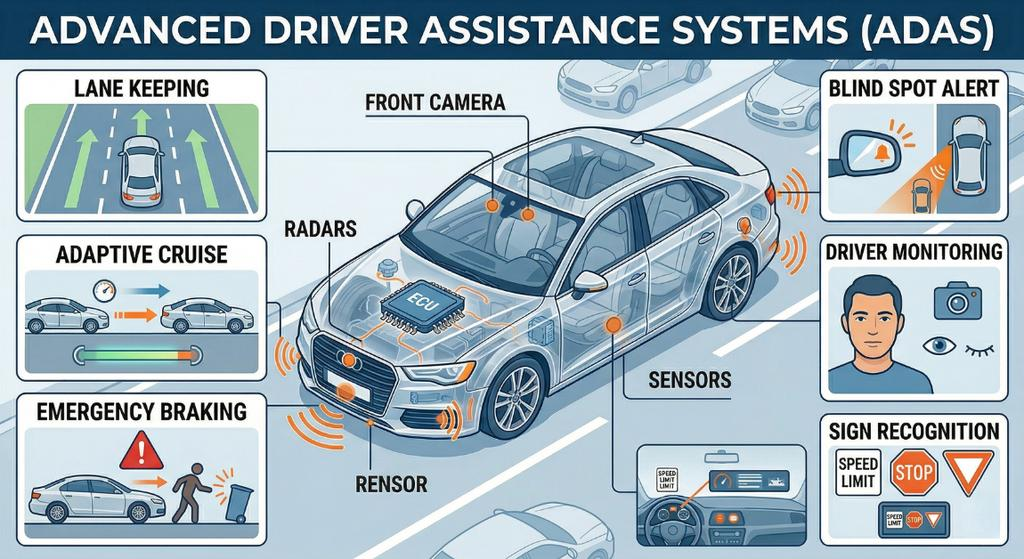
The decision could lead to broader use of technologies including:
- Automatic Emergency Braking (AEB) •
- Lane Departure Warning (LDW) System
- Blind Spot Alert
- Driver Monitoring Systems
- Collision avoidance system
- Smart Speed Assist
Impact on Car Manufacturers (Government Scraps Licensing Rule for Vehicle Safety Technology)
Quick Technology Adoption
New cars could have safety features sooner.
Less Regulatory Burden
Less licensing means less time on paperwork, more time on product development for manufacturers.
More Competitions
The policy may encourage more technology companies to enter the market leading to increased competition and innovation.
Benefits for Car Buyers
Better safety features available (Government Scraps Licensing Rule for Vehicle Safety Technology)
Consumers may get more up-to-date safety technology from newer cars.
Potential savings (Government Scraps Licensing Rule for Vehicle Safety Technology)
Less stringent regulations can lower development and compliance costs, which may, in turn, make advanced safety features affordable to more consumers.

Enhanced Road Safety (Government Scraps Licensing Rule for Vehicle Safety Technology)
Broad use of smart safety systems can help prevent accidents due to human error.
AI and Smart Technology’s Role in Vehicle Safety
Advanced Driver Assistance Systems (ADAS)
ADAS uses cameras, sensors, radar and software to help drivers and make roads safer.
Common features of ADAS are:
- Adaptive Cruise Control
- Automatic Emergency Braking
- Lane Keeping Assist
- Recognition of road signs
Driver Monitoring Systems (Government Scraps Licensing Rule for Vehicle Safety Technology)
AI-powered monitoring systems can detect driver distraction, fatigue and unsafe driving behavior.
Vehicle-to-Vehicle Technologies (Government Scraps Licensing Rule for Vehicle Safety Technology)
Today, cars can communicate with other systems to provide real-time safety alerts and improved driving assistance.
Challenges and Concerns after the Removal of Licensing Rule
Safety Standards Maintenance (Government Scraps Licensing Rule for Vehicle Safety Technology)
Although eliminating regulations can foster innovation, authorities should verify that all safety technologies adhere to the necessary performance and quality standards.
Information on Security Risks (Government Scraps Licensing Rule for Vehicle Safety Technology)
As vehicles become more connected, the importance of protecting software and user data grows.
Continuous Testing Needs (Government Scraps Licensing Rule for Vehicle Safety Technology)
“Manufacturers must continue rigorous testing to ensure that new technologies work reliably in real-world driving situations.
The Future of Vehicle Safety Technologies
The automotive industry is moving towards smarter, safer and connected vehicles. With artificial intelligence, machine learning and advanced sensors playing a major role, accidents will be reduced, and the overall driving experience will be improved.

The government’s decision to cancel the licensing rule for vehicle safety technology could speed up this transformation by enabling rapid development and adoption of innovative solutions.
Conclusion (Government Scraps Licensing Rule for Vehicle Safety Technology)
The government’s effort to eliminate a licensing regulation for vehicle safety technology is a big shift in the auto industry. The government aims to cut red tape to encourage innovation, accelerate the deployment of new safety technologies and boost growth in the automobile industry.

But as vehicles become smarter and more connected, keeping up with the high safety standards, proper testing and cybersecurity efforts will be critical.
Frequently Asked Questions
What is the government’s licensing rule for vehicle safety technology?
That means some licensing requirements on vehicle safety technologies have been removed, making it easier for companies to develop and deploy new solutions.
What’s the advantage of this decision for car manufacturers?
Manufacturers would benefit from faster product development, lower compliance costs and quicker integration of advanced safety technologies.
Will the licensing rule be removed and will this affect the safety of the vehicle?
The goal is to cut down on regulation and at the same time keep the basic standards of safety through testing and quality control measures.
What safety technologies might this change help?
Technologies such as ADAS, driver monitoring systems, collision avoidance systems and AI-based safety solutions could benefit from this.
Will consumers see lower-cost safety features in future cars?
Over time, advanced safety technologies may become less costly as compliance costs decline and competition increases.
Read this – Kia Overtakes Maruti Suzuki in This Vehicle Segment: A Wake-Up Call for India’s Largest Carmaker
Read this –Connected Car Features Explained : Everything You Need to Know
Read this – Maruti Suzuki Brezza 2026: कीमत, माइलेज, फीचर्स और लॉन्च डेट – क्या यह बनेगी 2026 की सबसे बेस्ट SUV?..