
Learn why a car engine overheats, the common causes, warning signs, prevention tips, and what to do when your engine temperature rises.
Table of Contents
Introduction
A car engine normally produces a lot of heat while running, but the cooling system keeps the temperature within a safe range. If this system cannot remove enough heat, the engine may overheat. Understanding why does a car engine overheat can help car owners identify warning signs early and avoid further damage.
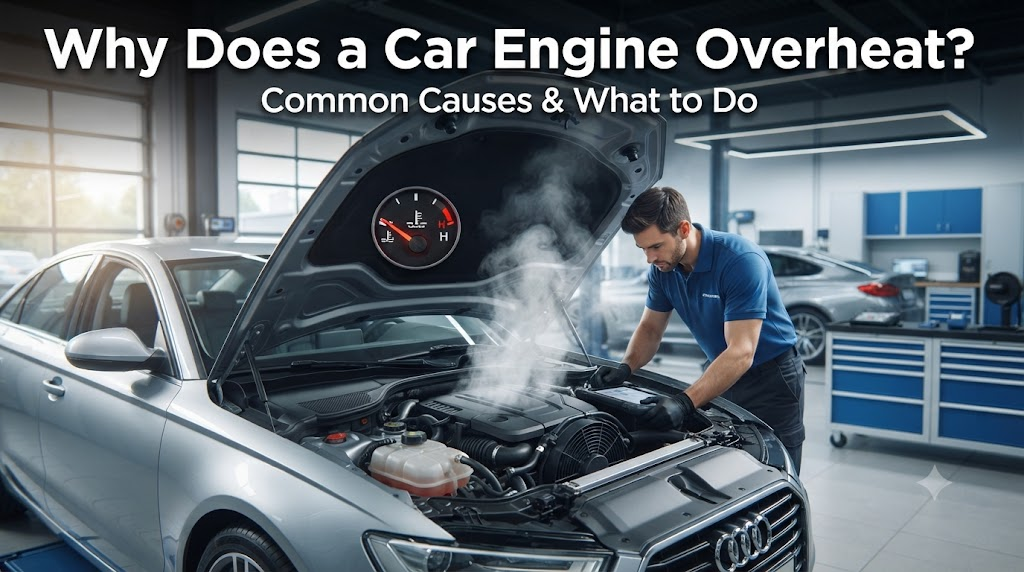
Why Does a Car Engine Overheat?
So, why does a car engine overheat? An engine can overheat when the cooling system is not working properly or when the engine is producing more heat than the system can remove. Common reasons include low coolant, a damaged radiator, a faulty thermostat, cooling fan problems, or issues with the water pump.
Sometimes overheating can happen during heavy traffic, long drives, or very hot weather, especially when the cooling system already has a problem.
Why Is Knowing Why a Car Engine Overheats Important?
Understanding why a car engine overheats is important because continuing to drive an overheating vehicle can turn a small cooling-system problem into a more serious engine problem.
The temperature warning light, temperature gauge moving into the hot zone, steam from under the bonnet, or an unusual smell can all indicate that the engine needs attention.
Main Causes of Car Engine Overheating
Low Coolant Level
Coolant helps transfer heat away from the engine. If the coolant level is too low because of a leak or poor maintenance, the cooling system may not work properly.
Radiator Problems
The radiator removes heat from the coolant. A blocked, damaged, or leaking radiator can reduce cooling performance and cause the engine temperature to rise.
Faulty Thermostat
The thermostat controls coolant flow through the cooling system. If it becomes stuck or fails to operate correctly, coolant circulation can be affected.
Cooling Fan Failure
The cooling fan helps move air through the radiator, particularly when the vehicle is stationary or moving slowly. A faulty fan, motor, fuse, relay, or related component can contribute to overheating.
Water Pump Problems
The water pump circulates coolant through the engine and cooling system. If it is damaged or does not circulate coolant properly, engine temperature can increase.
How to Check Why a Car Engine Overheats
If your temperature gauge moves unusually high, first pay attention to warning lights or messages. If you see steam or notice the engine temperature continuing to rise, stop in a safe location and switch off the engine.
Do not immediately open the radiator cap while the engine is hot because the cooling system may be under pressure.
Once the vehicle has cooled sufficiently, the coolant level can be checked according to the manufacturer’s instructions. Look for visible coolant leaks around the radiator, hoses, and underneath the vehicle.
If the problem continues, professional inspection is recommended.
How to Prevent Car Engine Overheating
Regular maintenance can help reduce the risk of overheating. Check coolant levels as recommended by the vehicle manufacturer and inspect the cooling system during routine servicing.
Keep an eye on the temperature gauge and do not ignore warning lights. Have coolant leaks, damaged hoses, radiator problems, or unusual temperature changes checked promptly.
Using the correct coolant and following the manufacturer’s maintenance recommendations is also important.
When Should You Visit a Mechanic?
Visit a qualified mechanic if your car repeatedly overheats, loses coolant, produces steam, shows a temperature warning, or has unusual noises from the cooling system.
A mechanic can inspect the radiator, thermostat, water pump, cooling fan, hoses, coolant system, and other related components to determine why a car engine overheats.
FAQs
Why does a car engine overheat?
A car engine can overheat because of low coolant, coolant leaks, radiator problems, a faulty thermostat, cooling fan failure, water pump problems, or other cooling-system issues.
Can low coolant cause engine overheating?
Yes. Insufficient coolant can reduce the cooling system’s ability to remove heat from the engine.
Can a car overheat in traffic?
Yes. Overheating can occur in traffic, particularly if the cooling fan or another part of the cooling system is not working correctly.
What should I do if my car engine overheats?
Stop safely, switch off the engine, and allow it to cool. Do not open a hot radiator cap. If the problem continues, have the vehicle inspected by a qualified mechanic.
Is it safe to drive an overheating car?
It is generally not advisable to continue driving when the engine is overheating. Continuing to operate the vehicle at excessive temperature can cause further damage.
Conclusion
Understanding why does a car engine overheat can help you recognize cooling-system problems before they become more serious. Low coolant, radiator issues, thermostat failure, cooling fan problems, and water pump faults are common areas to check.
If your car shows an overheating warning or the temperature gauge enters the hot zone, stop safely and allow the vehicle to cool. For repeated overheating, get professional mechanic advice instead of continuing to drive the vehicle.
Disclaimer
This article is for general informational purposes only. The exact cause of engine overheating can vary between vehicles. Always follow the vehicle manufacturer’s instructions and consult a qualified mechanic for diagnosis and repairs.
Also read:
10 Signs a Used Car Has Been in an Accident
How to Check Car Odometer Tampering: Easy Guide for Used Car Buyers