
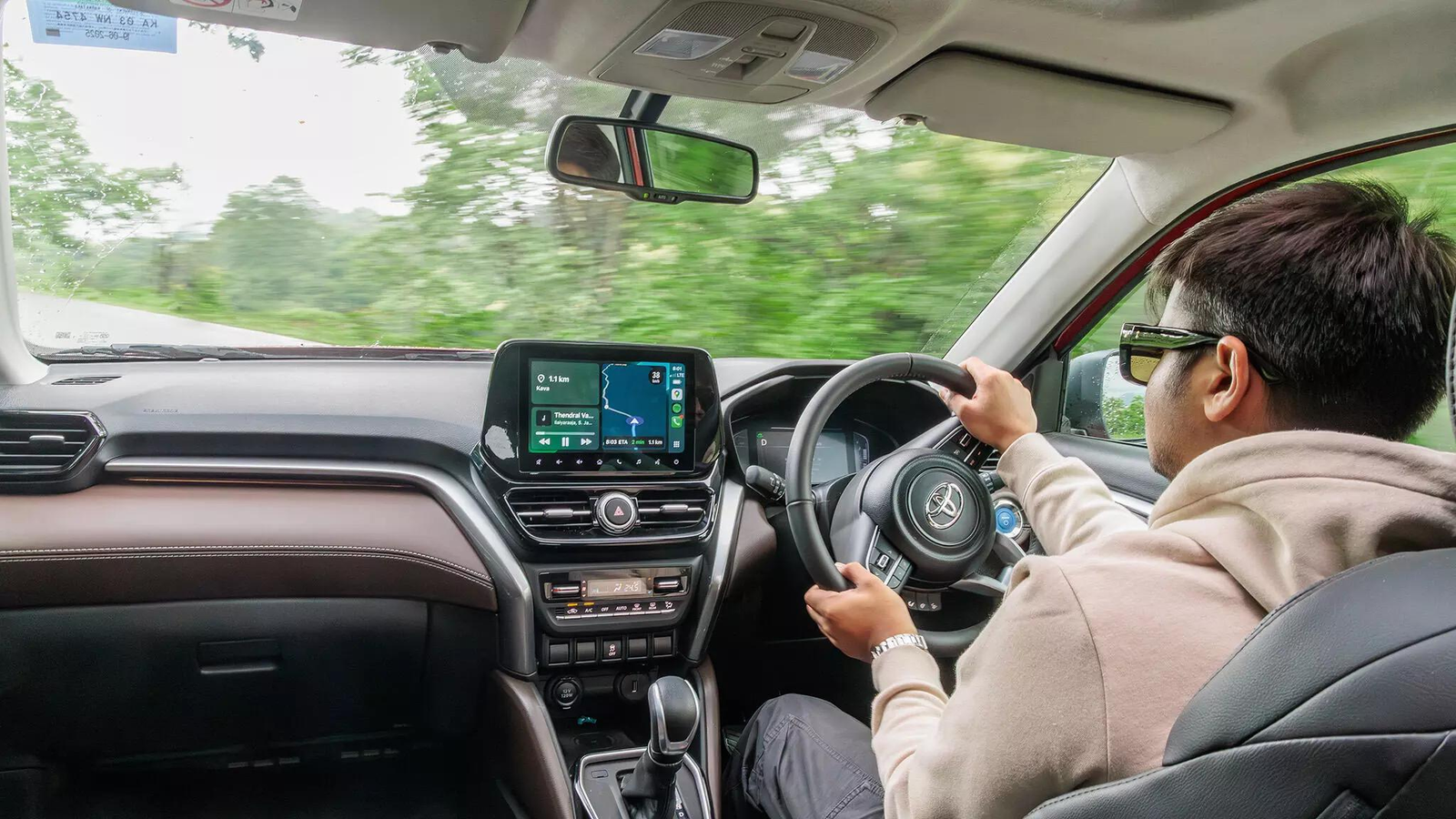
Strong hybrid car premium in India offer better mileage but cost Rs. 2.5–3 lakh more. Find out whether the extra price is justified by fuel savings, driving comfort and ownership costs.
Table of Contents
Introduction
Hybrid cars are becoming increasingly popular in India because they offer better fuel efficiency than regular petrol vehicles. Models such as the Toyota Urban Cruiser Hyryder, Maruti Suzuki Grand Vitara, Honda City e:HEV and other strong hybrids attract buyers looking for lower fuel consumption.
However, there is one important question: should buyers pay an additional Rs. 2.5–3 lakh for hybrid technology?
The hybrid car premium in India can look expensive when compared with the petrol version of the same vehicle. But better mileage, smoother city driving and reduced fuel consumption may make the extra investment attractive for some buyers.
Let’s understand whether the additional cost is justified.
Why Do Hybrid Cars Cost More?
A strong hybrid vehicle uses both a petrol engine and an electric motor. It also has a battery pack and a system that manages power between the engine and motor.
These additional components increase manufacturing costs.
The hybrid car premium in India generally covers:
- Electric motor and battery pack
- Hybrid control system
- Additional power electronics
- Regenerative braking technology
- Advanced powertrain engineering
Unlike an electric vehicle, a strong hybrid does not need to be plugged into an external charger. Its battery is charged through the engine and regenerative braking.
How Much Fuel Can a Hybrid Car Save?
Fuel efficiency is the biggest advantage of a strong hybrid car.
Many strong hybrids can operate using electric power at low speeds and during light-load driving, depending on battery charge and driving conditions. This can improve fuel economy, especially in city traffic.
For example, the Toyota Hyryder and Maruti Grand Vitara strong hybrid versions have claimed fuel efficiency figures of around 27.97 kmpl. Actual mileage depends on traffic, driving style, road conditions and air-conditioning use.
The hybrid car premium in India may therefore make more sense for people who regularly drive in congested cities.
Is the Rs. 3 Lakh Extra Cost Recoverable?
Let’s consider a simple example.
Assume a buyer pays Rs. 3 lakh extra for a hybrid version. Even if the hybrid saves around Rs. 1.50 per kilometre in fuel costs, the buyer would need to drive approximately 2 lakh kilometres to recover the additional amount.
Recent calculations comparing selected petrol automatic and strong hybrid variants of the Honda City, Toyota Hyryder and Maruti Victoris also show that the payback period can exceed 2 lakh kilometres using claimed mileage figures and Delhi petrol prices. DynoBHP News+1
This means the hybrid car premium in India is not always recovered quickly through fuel savings alone.
Benefits of Buying a Strong Hybrid Car

There are several reasons why buyers still prefer hybrid vehicles despite their higher prices.
1. Better city mileage: Hybrid technology can reduce petrol consumption in stop-and-go traffic.
2. Smooth driving experience: Electric motor assistance provides smooth acceleration, particularly at lower speeds.
3. No external charging required: Owners do not need to install a home charger or search for charging stations.
4. Lower fuel consumption: Drivers with high monthly running can benefit from better mileage.
5. More powertrain choices: Strong hybrids offer an alternative to diesel vehicles for buyers who want good fuel efficiency.
These advantages can make the hybrid car premium in India worthwhile for people who drive long distances regularly.
Disadvantages of Hybrid Cars
Hybrid vehicles also have some disadvantages that buyers should consider.
- Higher purchase price compared with petrol versions.
- Battery and hybrid components add complexity.
- Some models offer less boot space because of battery placement.
- The fuel savings may take many years to recover the additional cost.
- Some hybrid models focus more on fuel efficiency than sporty performance.
Therefore, the hybrid car premium in India should be evaluated according to individual driving requirements.
Who Should Buy a Hybrid Car?
A strong hybrid can be a good option for buyers who:
- Drive regularly in heavy city traffic.
- Cover high distances every month.
- Want better mileage without external charging.
- Plan to keep their vehicle for several years.
- Prefer smooth and quiet low-speed driving.
On the other hand, buyers with low monthly running may find a regular petrol car more affordable.
Petrol vs Hybrid: Which One Is Better?
| Factor | Petrol Car | Strong Hybrid Car |
|---|---|---|
| Purchase price | Lower | Higher |
| Fuel efficiency | Generally lower | Generally higher |
| City driving | Good | Excellent efficiency potential |
| External charging | Not required | Not required |
| Technology | Simpler | More complex |
| Initial investment | Lower | Higher |
The hybrid car premium in India makes sense when the buyer values fuel efficiency and the driving experience more than the initial purchase price.
Final Verdict: Is the Extra Rs. 2.5–3 Lakh Justified?
The answer depends on your driving habits.
If you drive 2,000 km or more every month, a strong hybrid could be an attractive choice because of its better fuel efficiency and smooth city performance. However, if your monthly driving is limited, recovering the additional purchase cost through fuel savings alone may be difficult.
The hybrid car premium in India is not automatically justified for every buyer. Before purchasing, compare the on-road prices, real-world mileage, features, insurance and expected ownership period of both variants.
Ultimately, choose a hybrid for its complete benefits rather than buying it only because of its impressive mileage figure.
FAQs
1. Why are hybrid cars more expensive in India?
Hybrid cars use an electric motor, battery pack and advanced control systems, which increase manufacturing costs.
2. Is a strong hybrid better than a petrol car?
A strong hybrid generally offers better fuel efficiency, particularly in city traffic. However, a petrol car usually has a lower purchase price.
3. Can hybrid cars run without charging?
Yes. Strong hybrid cars charge their batteries through the engine and regenerative braking. External charging is not required.
4. Is a hybrid car worth buying for low daily running?
Not always. Buyers with low monthly running may find it difficult to recover the extra purchase price through fuel savings.
5. How much extra do hybrid cars cost in India?
The premium varies by model and variant. It can be around Rs. 2.5–3 lakh or even higher in some cases.
6. Which is better for city driving: petrol or hybrid?
A strong hybrid can offer better fuel efficiency and smoother low-speed driving in congested city conditions.
Conclusion
Strong hybrid technology is an important step towards more fuel-efficient mobility in India. It combines the convenience of petrol vehicles with electric motor assistance.
However, the hybrid car premium in India remains an important consideration for buyers. While high-running users can benefit from better mileage, low-running users should carefully calculate the total ownership cost.
The best decision is to compare both versions and choose the vehicle that offers the right balance of price, mileage and comfort (hybrid car premium in India).
Disclaimer
This article is for informational purposes only. Fuel efficiency, vehicle prices and ownership costs may vary depending on the model, variant, location and driving conditions. Always check official manufacturer specifications and current dealership prices before making a purchase.
Written by: Harikesh Tiwari
Also read-
Maruti Suzuki Brezza 2026: कीमत, माइलेज, फीचर्स और लॉन्च डेट – क्या यह बनेगी 2026 की सबसे बेस्ट SUV?
Dutch Court Orders JLR to Destroy Seized BYD Records – Full Case Details
EICMA 2026: 2027 Honda CBR1000RR-R Fireblade Photo Gallery
EICMA 2026: Ultraviolette X-47 Venom Launched in Europe – Price, Range & Features





Avnish Tiwari is a seasoned automotive content creator and technical researcher with 5+ years of experience decoding car tech, mechanical systems, and vehicle performance.