
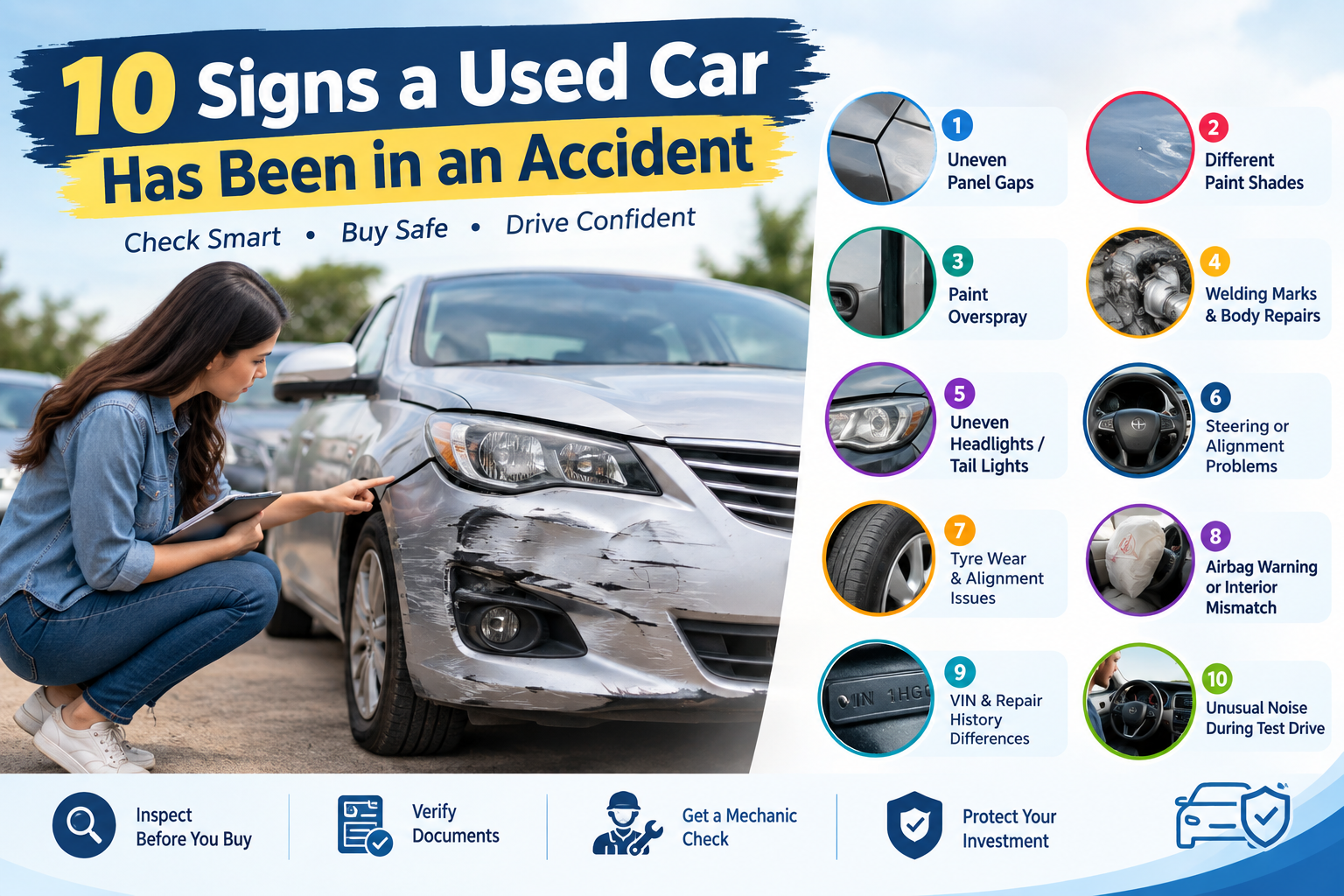
10 Signs a Used Car Has Been in an Accident
Buying a used car can save money, but a car with hidden accident damage may create expensive problems later. In this guide, we explain 10 signs a used car has been in an accident, how to check them, what to ask a mechanic, and how to protect yourself before buying.
Table of Contents
10 Signs a Used Car Has Been in an Accident
Buying a second-hand vehicle requires more than checking its exterior appearance. Some accident repairs can look perfect at first, but careful inspection can reveal signs of previous damage.
1. Uneven Body Panel Gaps
Check the gaps between the bonnet, doors, boot, fenders, and other body panels. If one side has a noticeably wider or narrower gap, the panel may have been removed or repaired after an accident.
2. Different Paint Shades
Look at the car in natural daylight. Compare the colour of nearby panels. A slightly different shade can indicate that a panel was repainted after damage.
3. Paint Overspray
Check around door edges, rubber seals, window areas, and inside the bonnet or boot. Small traces of paint where they normally should not be can indicate previous bodywork.
4. Scratches, Dents, or Welding Marks
Look carefully inside the engine bay and boot area. Unusual welding marks, fresh-looking metal, or repaired sections may indicate that the vehicle previously suffered structural damage.
5. Uneven Headlights or Tail Lights
Headlights and tail lights should normally sit evenly on both sides. A newly replaced light or a noticeable difference between the two sides may be worth investigating.
6. Different Tyre or Wheel Conditions
Check whether the tyres are of the same brand, size, and similar condition. Uneven tyre wear can sometimes indicate alignment or suspension problems caused by previous impact.
7. Steering or Alignment Problems
During a test drive, the car should generally move straight when the steering wheel is held normally. If it constantly pulls to one side or the steering wheel is noticeably off-centre, have the suspension and alignment inspected.
8. Airbag Warning or Interior Mismatch
Check the dashboard for warning lights when starting the car. Also inspect the steering wheel, dashboard, seats, and other airbag locations for unusual stitching, panel gaps, or replacement parts.
9. VIN and Repair History Differences
Check the Vehicle Identification Number (VIN) and compare the details across the vehicle documents and available records. Service invoices and insurance repair records can also help reveal previous accident repairs.
10. Unusual Noise During a Test Drive
Listen for rattling, vibration, knocking, or unusual sounds while driving over bumps and during braking. These issues do not automatically mean accident damage, but they should be inspected before purchase.
How to Check a Used Car Before Buying
A proper inspection can help you identify accident-related problems before paying for the vehicle.
Check the Exterior in Daylight
Walk around the complete car and compare panels from different angles. Look for colour differences, dents, scratches, uneven gaps, and signs of repainting.
Inspect the Engine Bay and Boot
Look for unusual welding, bent metal, fresh paint, or repaired areas. Pay particular attention to areas around the front and rear sections of the vehicle.
Check the Interior
Inspect the steering wheel, dashboard, seats, seat belts, and airbags. Warning lights should also be checked when the ignition is switched on.
Take a Proper Test Drive
Drive at different speeds where it is safe to do so. Pay attention to steering, braking, suspension, vibrations, and unusual sounds.
Prevention Tips Before Buying a Used Car
Taking a few precautions can reduce the risk of buying a badly repaired vehicle.
Check Documents Carefully
Verify the registration certificate, insurance details, service history, VIN, and other available vehicle records. Make sure the information is consistent.
Avoid Making a Quick Payment
Do not make the final payment simply because the car looks clean. Give yourself enough time for inspection and documentation checks.
Get an Independent Inspection
A professional inspection can identify mechanical, structural, paint, and suspension problems that may not be visible to an ordinary buyer.
Ask a Mechanic Before Buying
A trusted mechanic can check areas that are difficult for a normal buyer to inspect.
Ask the mechanic to check:
- Body panel alignment
- Chassis and structural components
- Suspension and steering
- Brake system
- Engine and transmission
- Airbags and warning systems
- Paint and repair marks
- Wheel alignment
- Underbody condition
- Signs of welding or major repair
A professional inspection is especially useful when the vehicle has a suspicious repair history or multiple visible repairs.
FAQs
How can I tell if a used car was in an accident?
Look for uneven panel gaps, different paint shades, overspray, welding marks, replaced parts, unusual tyre wear, steering problems, and inconsistent repair history.
Can a repaired accident car be safe?
Yes, a vehicle can be properly repaired after an accident. However, the quality and extent of the repair matter, especially when structural components or safety systems were involved.
Should I buy a used car with repainting?
Repainting does not automatically mean the car had a major accident. A panel may have been repainted because of scratches, dents, or other cosmetic damage. Ask for the reason and inspect the repair properly.
Should I take a mechanic when buying a used car?
Yes. An independent mechanic can identify mechanical and structural problems that may not be obvious during a normal visual inspection or test drive.
What is the most important thing to check before buying?
Check the vehicle’s overall condition, documents, service history, accident or repair history, and mechanical condition. A professional inspection before purchase can provide additional confidence.
Conclusion
Knowing the 10 signs a used car has been in an accident can help you inspect a vehicle more carefully before making a purchase. Uneven body gaps, different paint shades, welding marks, unusual tyre wear, steering problems, and inconsistent repair history are some important things to investigate.
A clean-looking car is not always a problem-free car. Take a proper test drive, verify the documents, check the vehicle history where available, and get an independent mechanic inspection before completing the purchase.
Disclaimer
This article is for general informational purposes only. The signs mentioned above do not automatically prove that a vehicle has been involved in an accident. Vehicle condition can vary depending on its age, maintenance, repairs, and usage. For an accurate assessment, consult a qualified mechanic or professional vehicle inspection service before purchasing a used car.
Also read:
Mercedes-AMG G 63 Offroad Pro Arrives With 585 HP And Serious Off-Road Tech




2 thoughts on “10 Signs a Used Car Has Been in an Accident”