
10 Signs a Used Car Has Been in an Accident
Learn 10 signs a used car has been in an accident, including mismatched paint, panel gaps, repair marks, tyre wear and hidden damage.
Table of Contents
Introduction
Buying a used car can save money, but a vehicle with hidden accident damage can create expensive problems later. A car may look perfect after repairs, but certain signs can reveal its accident history. In this guide, we explain 10 Signs a Used Car Has Been in an Accident and how buyers can identify them before purchasing.
Problem
The main problem is that accident-damaged cars are not always easy to identify. Some vehicles receive professional repairs, while others may have poorly repaired body panels, replaced parts or hidden structural damage. Knowing the 10 Signs a Used Car Has Been in an Accident can help you make a safer buying decision.
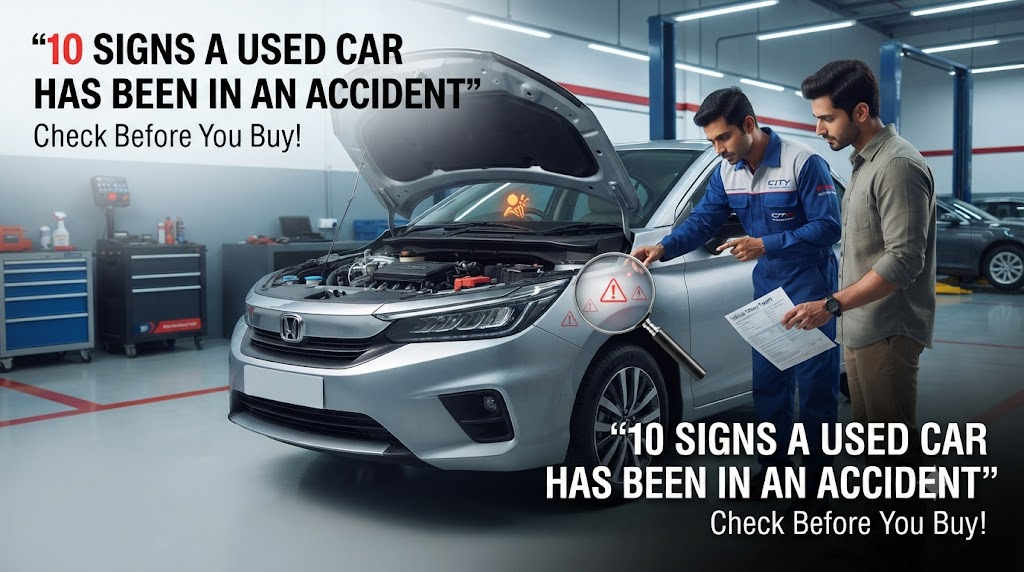
Symptoms: 10 Signs a Used Car Has Been in an Accident
1. Different Paint Shades
One of the easiest 10 Signs a Used Car Has Been in an Accident to notice is a difference in paint colour. Look at the doors, bonnet, boot and fenders under natural daylight. A repaired panel may have a slightly different shade or finish.
2. Uneven Panel Gaps
Check the gaps between the bonnet, doors, boot and body panels. Uneven or unusually wide gaps can indicate that a panel was removed, replaced or repaired after an accident.
3. Paint Overspray
Paint on rubber seals, plastic trims, door edges or engine-bay components can indicate body repainting. It does not always prove an accident, but it is an important clue among the 10 Signs a Used Car Has Been in an Accident.
4. Damaged or New Body Parts
A much newer headlight, tail light, bumper or other component compared with the rest of the car may indicate replacement. Ask the seller why the part was changed.
5. Welding or Repair Marks
Open the bonnet and boot and inspect visible metal areas. Unusual welding marks, fresh-looking bolts or uneven metalwork may indicate previous structural repairs.
6. Airbag Warning Signs
Check the dashboard for the airbag warning light. It should operate normally and then switch off after starting, according to the vehicle’s normal system behaviour. Any persistent warning requires professional inspection.
7. Steering Pulling to One Side
During a test drive, notice whether the car consistently pulls left or right on a suitable, reasonably level road. This could have many causes, including alignment or tyre problems, but it can also point to suspension or accident-related damage.
8. Uneven Tyre Wear
Uneven tyre wear can indicate alignment, suspension or wheel problems. Combined with other 10 Signs a Used Car Has Been in an Accident, it deserves further investigation.
9. Mismatched Interior Parts
Loose trim, unusual dashboard gaps, replaced seatbelts or inconsistent interior parts may indicate previous repair work. Pay particular attention to areas associated with airbags.
10. Accident or Insurance Records
Vehicle history documents, insurance records and service invoices may reveal previous accident claims or repairs. Documentation is one of the strongest ways to investigate the 10 Signs a Used Car Has Been in an Accident.
Possible Causes
These signs can have different explanations. A repainted panel may have been damaged in a minor parking incident, while uneven tyres may simply result from poor wheel alignment.
Therefore, the 10 Signs a Used Car Has Been in an Accident should be treated as clues rather than automatic proof of serious accident damage.
Diagnosis
Start by inspecting the vehicle in daylight. Compare paint, panel gaps, lights, glass markings and body alignment.
Then check service and insurance records where available. During the test drive, pay attention to steering, braking, vibration and unusual noises.
For greater confidence, take the car to a trusted mechanic or professional inspection service. They can check the chassis, suspension, underbody, paint thickness and other areas that may not be obvious to an ordinary buyer.
Solutions
If you find one suspicious sign, ask the seller for an explanation and supporting documents.
If several 10 Signs a Used Car Has Been in an Accident appear together, do not rush to buy the car. Get an independent inspection before making a payment.
A properly repaired minor accident does not necessarily make a car a bad purchase. The important factors are the severity of the accident, quality of repairs and current condition of the vehicle.
Repair Cost
Repair costs depend on the damage and vehicle model. Minor bumper or paint repairs may cost a few thousand rupees, while suspension, structural, electrical or airbag repairs can cost significantly more.
If an inspection identifies major accident damage, calculate the potential repair cost before negotiating the price. The 10 Signs a Used Car Has Been in an Accident can help you identify areas that require further inspection.
Prevention
Before buying a used car:
- Inspect it in daylight.
- Check all body panels.
- Compare paint shades.
- Inspect panel gaps.
- Check tyres and wheels.
- Review service records.
- Check available insurance history.
- Take a proper test drive.
- Verify vehicle documents.
- Get an independent inspection.
Following these steps can help you avoid a poorly repaired vehicle.
Final Checklist
Before buying, ask yourself:
☐ Do all panels have a consistent finish?
☐ Are panel gaps even?
☐ Are there signs of repainting?
☐ Are lights and glass consistent?
☐ Is there unusual welding or repair work?
☐ Are dashboard warning lights normal?
☐ Does the steering feel correct?
☐ Are tyres wearing evenly?
☐ Do records reveal previous accidents?
☐ Has a mechanic inspected the car?
If multiple 10 Signs a Used Car Has Been in an Accident are present, investigate further before buying.
FAQs
Q1. What is the biggest sign of an accident-damaged used car?
There is no single guaranteed sign. A combination of mismatched paint, uneven panel gaps, repair marks and documentation is more meaningful.
Q2. Can a car look normal after an accident?
Yes. Professional repairs can make accident damage difficult to see, which is why an independent inspection is useful.
Q3. Does repainting always mean the car had an accident?
No. A panel may have been repainted because of scratches, dents or cosmetic damage.
Q4. Should I buy a car with an accident history?
A minor, properly repaired accident does not automatically mean you should reject the car. However, serious structural or safety-related damage deserves extra caution.
Q5. Can a mechanic detect hidden accident damage?
A qualified mechanic or inspection professional can identify many mechanical, structural and repair-related signs that an ordinary visual inspection may miss.
Q6. Can accident history reduce a used car’s value?
Yes. Significant accident or structural repair history can affect buyer confidence and resale value.
Disclaimer
This article is for general information only. The 10 Signs a Used Car Has Been in an Accident are indicators, not definitive proof of accident history. Some signs can have other causes. Always verify available records and get an independent professional inspection before purchasing a used vehicle.
Also read:
3 Upcoming Nissan SUVs in India: New Models Worth Waiting For




2 thoughts on “10 Signs a Used Car Has Been in an Accident”