

Table of Contents
Introduction – Tesla Ban by Trump? No—AI Video Manipulation Behind Viral Hoax
In the age of rapidly advancing artificial intelligence, misinformation is spreading faster and more convincingly than ever before. A recent example that has captured widespread attention is a viral video showing former U.S. President Donald Trump allegedly announcing a ban on Tesla’s production in the United States. The video, which appears authentic at first glance, has been confirmed to be a product of AI manipulation. Despite its falsity, the video sparked confusion, concern, and heated debate across social media platforms. This incident serves as a stark reminder of the growing threats posed by AI-generated fake content, also known as deepfakes.
What Happened: The Viral Fake Video
The video in question features Donald Trump in what appears to be a formal press briefing, stating that “Tesla production is banned in the United States effective immediately.” The video quickly went viral, shared by thousands on platforms like X (formerly Twitter), Facebook, TikTok, and YouTube. The manipulated footage was realistic enough to deceive many viewers, especially those who saw it without context or verification.
However, fact-checkers and experts soon debunked the video. Close inspection revealed inconsistencies in Trump’s facial expressions and voice patterns — tell-tale signs of deepfake technology. Furthermore, there were no reports from credible news outlets or official statements from either Donald Trump or the U.S. government confirming such a drastic move.
The Technology Behind the Fake
The viral video was created using AI-driven deepfake technology, which uses machine learning and neural networks to superimpose a person’s face and voice onto existing video footage. These technologies have advanced to the point where distinguishing real from fake has become extremely difficult for the average viewer.
The video also likely used voice synthesis tools to replicate Trump’s unique speech patterns, making it sound like an authentic announcement. When combined with advanced video editing and synthetic media generation, the result is a hyper-realistic video that can convincingly imitate public figures.
EV CAR BATTERY, How to Create a EV Charging Dealership (2025 Guide)
Why This Is Dangerous
The implications of such AI-generated misinformation are serious:
- Erosion of Trust: Fake videos erode trust in legitimate news sources and public figures. When deepfakes are indistinguishable from real videos, people become skeptical of everything they see and hear.
- Financial Impact: A false announcement about Tesla’s production ban could have affected the company’s stock price, leading to real economic consequences for investors, employees, and stakeholders.
- Political Manipulation: Deepfakes can be weaponized to influence public opinion, elections, and national security. In the wrong hands, such technology becomes a powerful tool for propaganda.
- Public Panic and Confusion: Misinformation that spreads quickly can cause unnecessary panic, spread conspiracy theories, and fuel social unrest.
How It Was Debunked
Several fact-checking organizations and AI researchers analyzed the video and confirmed it was fabricated. Key observations included:
- Lip-sync Issues: The mouth movements in the video didn’t align perfectly with the audio.
- Voice Cloning Artifacts: Some words sounded slightly robotic or unnaturally paced — common in AI-generated speech.
- Background Errors: Blurred or inconsistent backgrounds, lighting mismatches, and subtle animation glitches suggested manipulation.
- Lack of Source: No credible news agency reported the statement. Neither the White House archives nor Donald Trump’s official channels had any record of such a statement.
Official Responses
Tesla has not made a formal statement on the fake video, but insiders confirmed that there is no production ban or legal issue affecting Tesla’s operations in the U.S. In fact, Tesla continues to operate Gigafactories in multiple American states and remains a critical player in the electric vehicle industry.
Meanwhile, media watchdogs and digital rights organizations called for stronger regulations and AI safeguards to prevent similar incidents. This includes advocating for:
- Digital watermarking for AI-generated content.
- Public education on how to spot deepfakes.
- Tech company responsibility in moderating harmful content.
How to Protect Yourself from Deepfake Misinformation
Given the increasing prevalence of deepfakes, it’s important for individuals to adopt a cautious and informed approach when consuming media online:
- Cross-Check Sources: If a video makes a shocking claim, check if credible news outlets are reporting the same.
- Use Fact-Checking Sites: Websites like Snopes, FactCheck.org, and Reuters Fact Check are reliable sources for debunking fake news.
- Pay Attention to Visual Cues: Watch for unnatural facial movements, inconsistent lighting, or glitches in video playback.
- Verify with Official Channels: Always refer to official websites or social media accounts of involved entities for confirmation.
New Car Launches in India – May 2025 Roundup with Prices, Features & Highlights
The Road Ahead
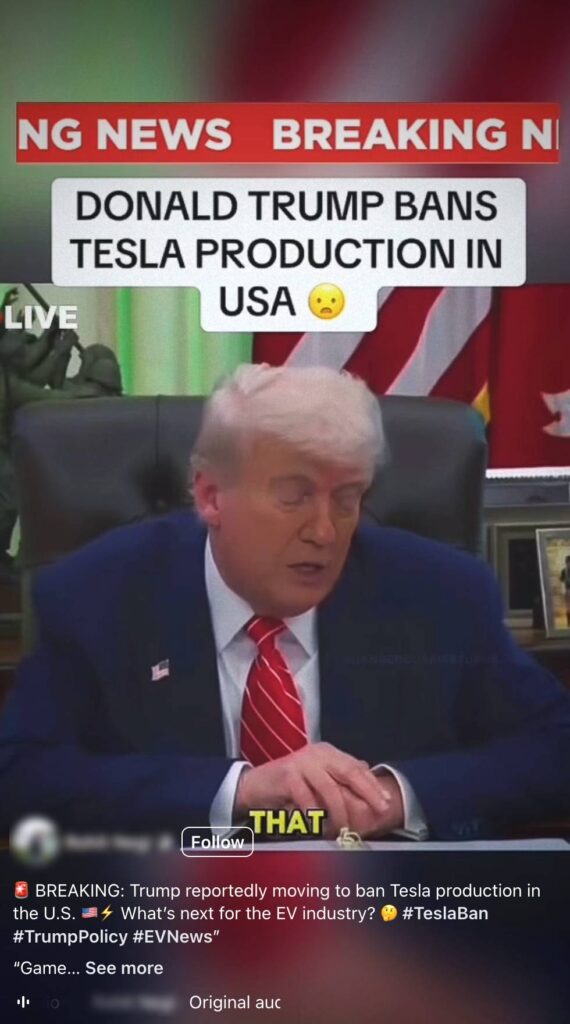
This viral Trump-Tesla deepfake serves as a wake-up call about the power and dangers of AI-generated misinformation. While AI offers enormous benefits in fields like healthcare, education, and automation, its misuse in media manipulation presents a growing threat to truth, democracy, and civil discourse.
Governments, tech companies, and civil society must work together to build robust frameworks for deepfake detection, content moderation, and digital literacy. As the technology evolves, so must our tools and awareness to keep reality grounded in facts.
Conclusion
The fake video of Donald Trump banning Tesla production in the U.S. highlights how AI-manipulated content can mislead the public and sow confusion. As deepfake technology becomes more sophisticated, distinguishing between real and fake will demand vigilance, media literacy, and collaboration across all sectors of society. Only by recognizing and confronting this challenge can we safeguard the integrity of information in the digital age.