
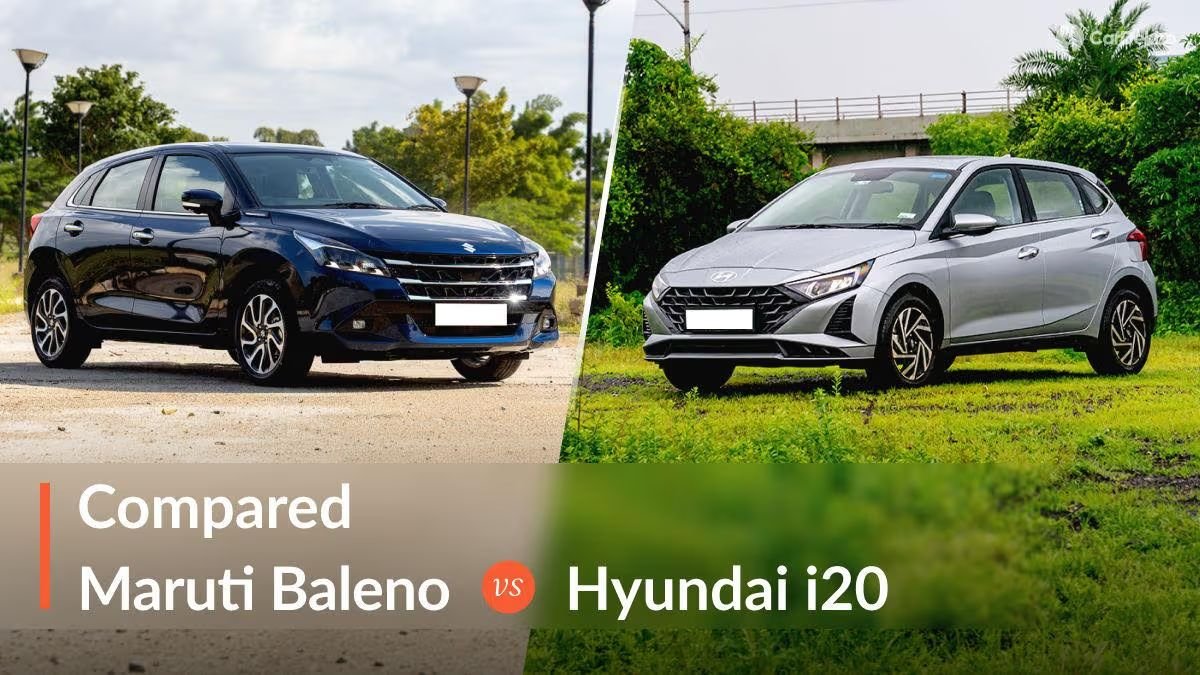
New Maruti Baleno vs Hyundai i20: The premium hatchback segment in India continues to attract buyers who want a stylish car with good mileage, useful features, comfortable interiors and manageable ownership costs. The new Maruti Baleno and Hyundai i20 are two strong choices in this space.
While Maruti Suzuki has focused on efficiency, technology and everyday practicality with the updated Baleno, Hyundai continues to appeal to buyers with the i20’s refined engine, premium cabin and sporty styling. The comparison becomes more interesting because both cars offer similar petrol power figures, but their overall character is quite different.
The Baleno focuses strongly on mileage, convenience and technology, while the i20 aims to deliver a smoother and more premium driving experience. Here is a detailed comparison of their engines, mileage, features, pricing and design to understand which hatchback could offer better value for different buyers.
New Maruti Baleno vs Hyundai i20
| Feature | New Maruti Baleno | Hyundai i20 |
|---|---|---|
| Engine | 1.2-litre, 3-cylinder Z-Series petrol | 1.2-litre, 4-cylinder petrol |
| Power | 82 bhp | 82 bhp |
| Torque | 112.4 Nm | 114.7 Nm |
| Manual Gearbox | 5-speed manual | Available |
| Automatic Gearbox | AMT | Automatic option available |
| CNG | Factory-fitted CNG option | Not specified |
| Claimed Mileage | Up to 23.8 kmpl (MT) | Around 19-20 kmpl |
| AMT Mileage | Up to 24.77 kmpl | Not specified |
| ADAS | Level 2 ADAS | Not specified |
| Front Seats | Ventilated front seats | Premium comfort features |
| Camera | 360-degree camera | Not specified |
| Starting Price | Around ₹6.10 lakh | Around ₹5.99 lakh |
| Design | Modern and elegant | Sporty and aggressive |
| Best For | Mileage, technology and lower running costs | Refinement, styling and premium cabin |
New Maruti Baleno vs Hyundai i20: Engine and Performance
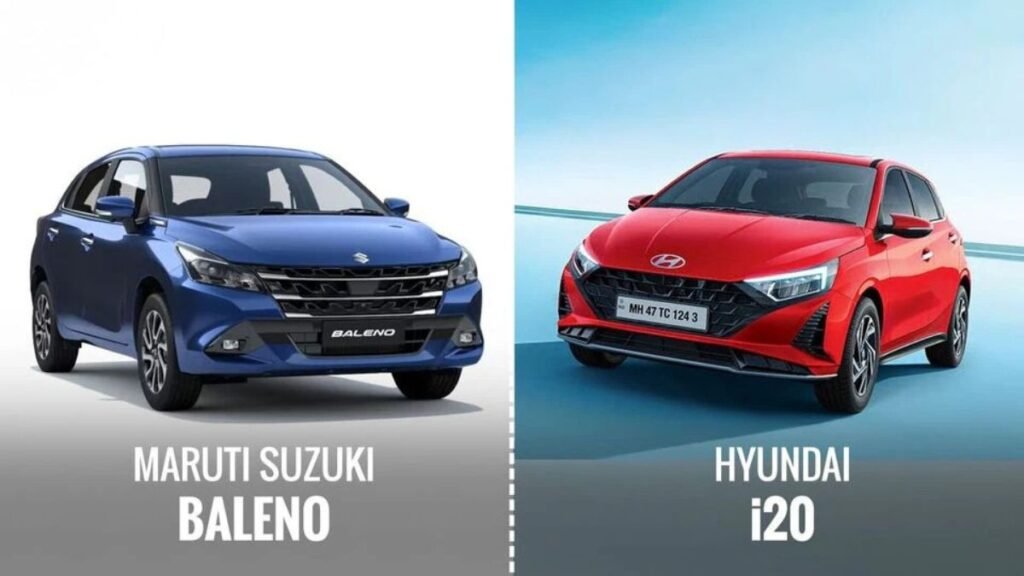
The new Maruti Baleno is equipped with a 1.2-litre, three-cylinder Z-Series petrol engine that produces 82 bhp and 112.4 Nm of torque. It is available with a five-speed manual transmission as well as an AMT option. Maruti also offers a factory-fitted CNG version, giving buyers an alternative for reducing day-to-day fuel expenses. The combination is primarily aimed at buyers who want an economical premium hatchback for regular city driving.
The Hyundai i20, meanwhile, gets a 1.2-litre four-cylinder petrol engine producing around 82 bhp and 114.7 Nm of torque. Although the headline power output is almost identical to the Baleno, the four-cylinder configuration can provide a smoother and more refined engine character. This could make the i20 appealing to buyers who give greater importance to refinement and driving comfort rather than simply chasing the highest mileage figure.
Baleno vs i20: Mileage and Running Costs
Mileage is one of the biggest advantages of the new Baleno. The 1.2-litre petrol version is claimed to deliver up to 23.8 kmpl with the manual transmission, while the AMT version can return up to 24.77 kmpl. These figures make the Baleno particularly attractive for buyers who regularly drive in cities or cover long distances and want to keep fuel expenses under control.
The Hyundai i20 offers around 19-20 kmpl depending on the variant and transmission. While the difference may not matter as much to buyers with limited monthly driving, frequent commuters could benefit from the Baleno’s stronger claimed efficiency. The availability of a factory-fitted CNG option further strengthens the Baleno’s case for customers who prioritise lower running costs over outright performance.
The major mileage and practicality advantages can be summed up as follows:
- Baleno petrol manual offers a claimed mileage of up to 23.8 kmpl.
- Baleno AMT claims mileage of up to 24.77 kmpl.
- Hyundai i20 offers around 19-20 kmpl depending on the variant.
- Baleno also gets a factory-fitted CNG option for selected buyers.
- Both petrol engines produce around 82 bhp of maximum power.
New Baleno vs Hyundai i20: Features and Technology
Maruti Suzuki has made technology one of the key talking points of the updated Baleno. The car comes with features such as Level 2 ADAS, ventilated front seats and a 360-degree camera. These additions can make the Baleno feel significantly more technology-focused than a conventional premium hatchback. For buyers who want modern driver-assistance and convenience features without moving to a larger vehicle, this equipment could be a major attraction.
The Hyundai i20 has built a strong reputation for offering a premium cabin and a good collection of comfort and convenience features. Its interior quality and overall presentation remain important reasons why buyers consider it in this segment. Therefore, while the Baleno may have an edge in terms of some newer technology-focused equipment, the i20 continues to appeal to customers who value cabin ambience, refinement and a more premium overall experience.
Maruti Baleno vs Hyundai i20: Price Comparison
Price is another important factor when choosing between the two hatchbacks. According to the provided pricing information, the new Maruti Baleno starts at approximately ₹6.10 lakh, while the Hyundai i20 starts at around ₹5.99 lakh. This puts the starting prices quite close to each other, meaning buyers should compare the equipment available with specific variants rather than making a decision based only on the entry-level price.
The actual amount a buyer pays can change depending on the selected variant, transmission and optional or standard features. A buyer considering an AMT, higher trim or additional technology should therefore compare the respective on-road prices before making a final decision. In a close price comparison, the equipment and ownership requirements may ultimately be more important than the small difference between their starting prices.
New Baleno vs Hyundai i20: Design and Road Presence
The new Maruti Baleno carries a modern and elegant design with an updated grille, sleek headlamps and sharper body lines. Its styling is designed to give the hatchback a more sophisticated road presence while retaining the familiar proportions associated with the Baleno. The design should appeal to buyers who prefer a clean and premium appearance rather than an overly aggressive look.
The Hyundai i20 takes a different approach with a sportier exterior design. Its bold grille, sharp lighting elements and stylish alloy wheels give it a more aggressive visual character. The choice between the two therefore largely comes down to personal taste. Buyers looking for an elegant and understated premium hatchback may prefer the Baleno, while those who want a sportier appearance could find the i20 more appealing.
Which Hatchback Offers Better Value?
The new Maruti Baleno appears to have a strong advantage for buyers who prioritise fuel efficiency, lower running costs and technology. Its claimed mileage figures are higher than those of the i20, while the availability of a factory-fitted CNG option adds another practical advantage. Features such as Level 2 ADAS, ventilated seats and a 360-degree camera also make the updated Baleno an interesting proposition for technology-conscious buyers.

The Hyundai i20, on the other hand, remains a compelling option for customers who value refinement, premium cabin experience and sporty styling. Its four-cylinder petrol engine offers similar power to the Baleno while potentially delivering a smoother character. Ultimately, there is no single winner for every buyer. The Baleno makes a stronger case for efficiency and feature value, whereas the i20 can be the better choice for buyers who place greater emphasis on refinement, styling and cabin experience.
The new Maruti Baleno vs Hyundai i20 comparison shows that both premium hatchbacks have different strengths. The Baleno stands out with its claimed mileage, CNG availability and technology-focused features, making it particularly suitable for buyers who want an economical and feature-rich car for everyday use. Its competitive starting price further strengthens its value proposition.
Disclaimer: Prices, specifications, mileage figures, features and equipment can vary by variant, location and manufacturer updates. Buyers should verify the latest information, variant-wise equipment and on-road prices from the respective manufacturers or authorised dealers before making a purchase decision.
Also read:
New Maruti Wagon R Spotted Testing With Possible Z-Series Engine