
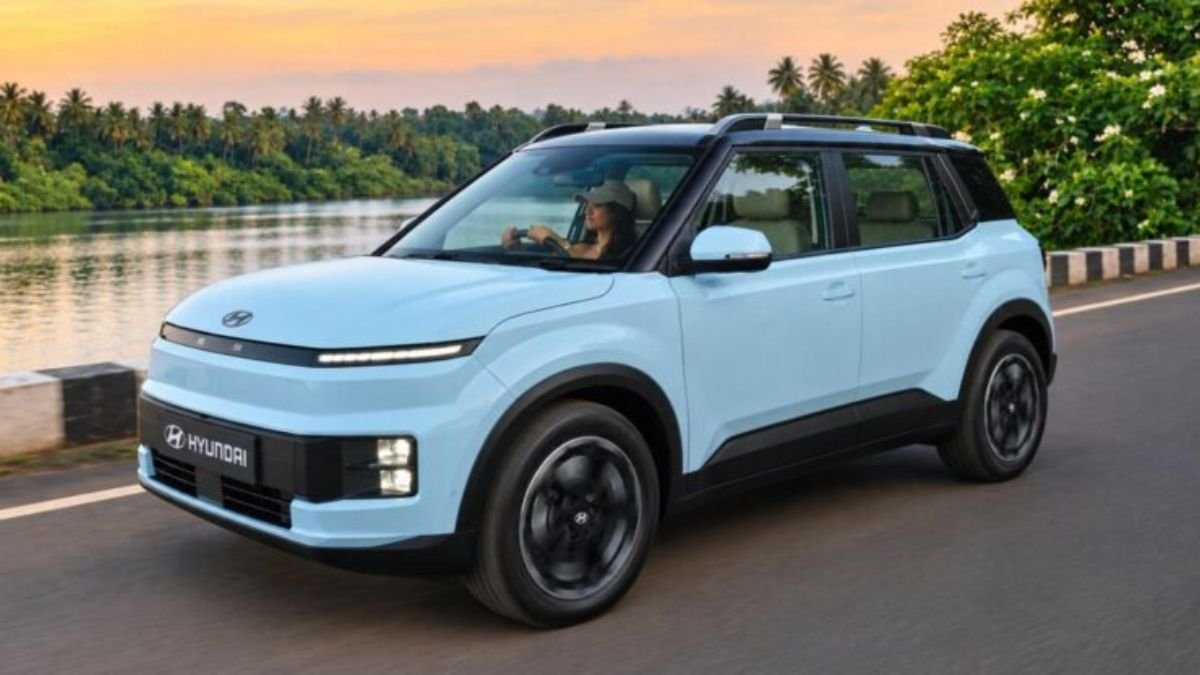
Hyundai Compact EV 2026: Hyundai’s upcoming compact electric SUV is already attracting attention in India, even though the production version is still hidden under heavy camouflage. Now, an AI-generated design video has offered a possible interpretation of the upcoming model, showing how Hyundai’s known SUV proportions and visible test-car details could look once the camouflage is removed.
Hyundai has confirmed that the compact electric SUV will use the company’s E-GMP (K) platform and will be available in Standard Range and Long Range versions. It is expected to compete in India’s growing electric SUV segment, including models such as the Tata Nexon EV and upcoming Mahindra XUV 3XO EV.
Hyundai Compact EV 2026
| Feature | Expected / Known Details |
|---|---|
| Model | Hyundai HE1i Compact EV |
| Expected Launch | By the end of 2026 |
| Platform | E-GMP (K) |
| Body Type | Compact Electric SUV |
| Battery Options | Standard Range and Long Range |
| Expected Design | Boxy, upright SUV stance |
| Front Lighting | Split LED lighting with slim DRLs |
| Rear Lighting | Square-shaped LED tail-lamps in AI render |
| Battery Cells | Svolt initially, Exide cells planned later |
| Infotainment | Next-generation system expected |
| Driver Assistance | Level 2 ADAS expected |
| Key Rivals | Tata Nexon EV, Mahindra XUV 3XO EV |
| Design Status | AI-generated interpretation, not an official reveal |
| Official Production Design | Yet to be revealed by Hyundai |
Key Highlights
- Hyundai’s HE1i compact EV is expected to debut by the end of 2026.
- The SUV will use Hyundai’s dedicated E-GMP (K) electric platform.
- Standard Range and Long Range versions are expected to be offered.
- AI visuals suggest an upright SUV design with split LED lighting.
- The production model could feature advanced infotainment and Level 2 ADAS.
AI Video Gives Hyundai’s Upcoming EV a Fresh Look
The AI-generated video attempts to remove the mystery surrounding Hyundai’s heavily camouflaged electric SUV by creating a possible production-style design. The imagined model features a boxy and upright profile, giving it a more substantial road presence than a typical compact crossover. This basic shape appears reasonably consistent with the proportions seen on test vehicles, although many of the finer styling details remain speculative.
At the front, the AI interpretation shows a modern lighting arrangement with slim LED daytime running lights positioned higher on the face and the primary headlamps located lower down in the bumper. A dark connecting panel visually links the lighting elements, creating a clean and contemporary appearance. The design gives the SUV a futuristic identity while retaining the upright stance that Hyundai appears to be testing.
Side Profile Looks Practical and SUV-Like
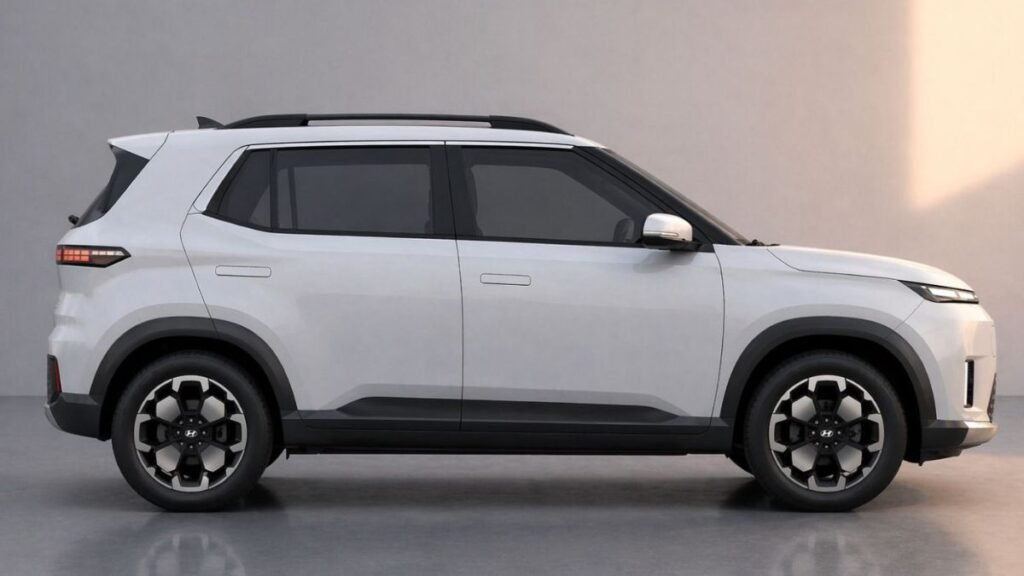
The side profile of the AI-rendered SUV follows the overall proportions seen in spy images. It features a relatively flat roofline, roof rails, blacked-out pillars and conventional door handles. Chunky wheel arches further strengthen its SUV character, while the squared-off body gives the vehicle a more mature appearance despite its compact dimensions.
However, buyers should not assume that every styling element shown in the video will appear on the final vehicle. Details such as alloy wheel designs, body surfacing, door treatment and precise lighting graphics have not been officially revealed. AI-generated automotive renders can fill these gaps creatively, but they do not provide evidence of Hyundai’s actual production design.
Rear Design Gets a Clean and Modern Treatment
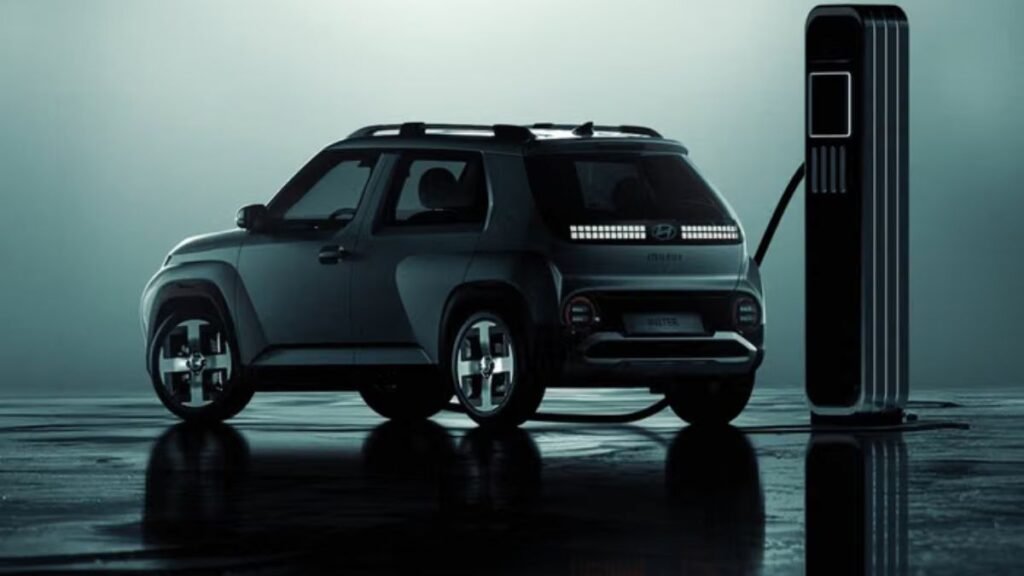
The rear section imagined in the AI video continues the same upright design language. It features square-shaped LED tail-lamps that appear visually connected through a dark strip across the tailgate. This gives the compact SUV a wider appearance and creates a distinctive rear signature that could help the model stand out on Indian roads.
The rear design is particularly interesting because the real test vehicles remain heavily camouflaged. That means there is still considerable uncertainty about the final lighting arrangement and tailgate styling. Hyundai could adopt a completely different approach when the production vehicle is officially revealed, so the AI-generated rear should be treated purely as an interpretation.
Hyundai Could Give the EV a Strong Road Presence
One of the most appealing aspects of the AI design is its substantial appearance. Instead of looking like a conventional hatchback with a raised stance, the imagined Hyundai EV has proportions that make it look like a genuine compact SUV. The upright bonnet, squared wheel arches and relatively straight roofline contribute to that impression.
This approach could make sense for the Indian market, where compact SUV buyers often place considerable importance on road presence. Hyundai already has a strong SUV portfolio, and giving its smallest dedicated EV a similarly confident appearance could help it attract customers looking for an electric vehicle that does not compromise on SUV styling.
HE1i Will Be a Dedicated Electric SUV
Unlike some electric vehicles that are developed by converting an existing petrol or diesel model, the upcoming Hyundai compact EV is expected to be a dedicated electric vehicle. Hyundai has confirmed that the model will be based on its E-GMP (K) platform, which has been designed specifically for electric vehicles. This should give the SUV a foundation suited to modern EV packaging and technology.
The company is also expected to offer different battery configurations through Standard Range and Long Range versions. Initial vehicles are reportedly expected to use Svolt battery cells, while Hyundai plans to transition towards locally sourced Exide cells. Localisation could eventually help Hyundai strengthen its EV manufacturing strategy in India.
Technology Could Be a Major Part of the Package
Hyundai is expected to equip the upcoming compact EV with next-generation infotainment technology, making the cabin an important part of its overall appeal. As competition in the electric SUV market becomes stronger, buyers are increasingly looking beyond battery range and exterior design. Connected features, digital displays and convenient technology could play a major role in Hyundai’s strategy.
The upcoming model is also expected to feature Level 2 driver assistance technology, which could bring a higher level of active safety and convenience. If Hyundai combines these features with a well-designed cabin, multiple battery options and competitive pricing, the HE1i could become an important addition to the brand’s electric portfolio in India.
How the Hyundai EV Could Compete in India
The compact electric SUV segment is becoming increasingly important as manufacturers introduce more affordable EVs aimed at mainstream buyers. Hyundai’s upcoming model will enter a market where the Tata Nexon EV has already established itself, while new competitors are preparing to enter the segment. The Hyundai badge, established SUV presence and dedicated EV platform could give the new model a strong starting point.
Pricing, driving range and charging capability will ultimately determine how competitive the HE1i becomes. Hyundai will need to strike a careful balance between technology, battery capacity, performance and affordability. If the company manages that combination effectively, its upcoming compact EV could appeal to buyers who want a modern electric SUV without moving into a much larger and more expensive vehicle category.
AI Rendering Is Interesting, But the Real Design Remains Unknown
The AI-generated video provides an entertaining glimpse at what Hyundai’s upcoming compact EV might look like, particularly because its overall proportions appear inspired by the real test vehicles. The boxy stance, split lighting and clean surfaces create a convincing interpretation of a future Hyundai SUV. Still, AI can only speculate about details that Hyundai has not officially shown.
For now, the heavily camouflaged prototypes remain the more reliable indication of the vehicle’s actual dimensions and overall shape. The production design could borrow some elements imagined in the AI video, or it could take an entirely different direction. Until Hyundai officially reveals the HE1i, these visuals should therefore be treated as a creative prediction rather than a leaked design.
Hyundai’s upcoming compact electric SUV could become one of the brand’s most important new EV products in India. The HE1i is expected to combine a dedicated E-GMP (K) platform with Standard Range and Long Range versions, modern technology and Level 2 driver assistance. Its compact dimensions should also position it in a part of the market that is likely to see increasing competition.
Disclaimer: The design details discussed in this article are based on an AI-generated visual interpretation and available information about Hyundai’s upcoming compact EV. The final production design, specifications, features, battery options, pricing and launch details may differ when Hyundai officially unveils the vehicle.
Also read:
Maruti Suzuki Car Price Hike September 2026: Which Cars Are Now Expensive?
Tata Car Sales August 2026: Punch Leads Strong Monthly Growth




1 thought on “Hyundai Compact EV 2026: AI Render Reveals Possible SUV Design”