
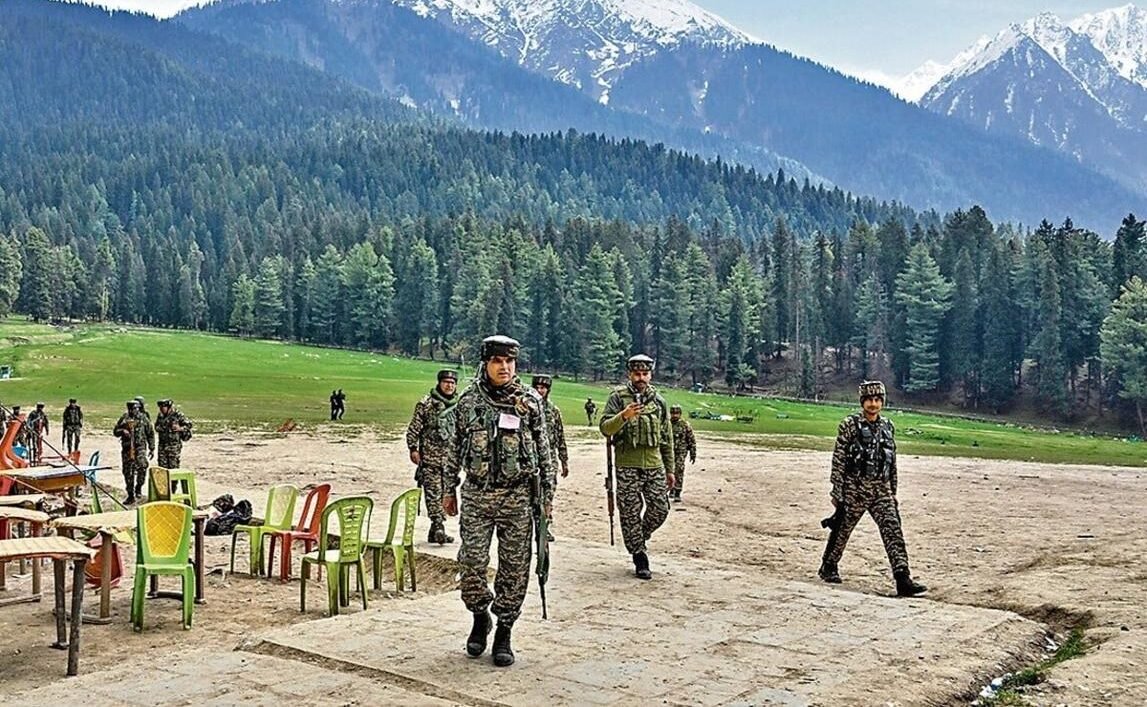
Pahalgam Terror Attack: Hafiz Saeed Among 2 Named As Accused By NIA Court
The NIA has named Hafiz Saeed as an accused in the Pahalgam terror attack case and alleged his links with Lashkar-e-Taiba and TRF based on its investigation. Read the latest update, key facts, FAQs and legal developments.
The investigation into the Pahalgam terror attack has taken a major turn after India’s National Investigation Agency (NIA) named Hafiz Saeed as an accused in its charges filed before the court. The agency has said the investigation has uncovered evidence of links to terrorist networks in Pakistan. The case also mentions the alleged role of banned terrorist organisation Lashkar-e-Taiba (LeT) and its proxy outfit The Resistance Front (TRF).
This milestone marks a major step in India’s efforts to bring those behind the attack to justice through legal and investigative means.
NIA Names Hafiz Saeed in Pahalgam Terror Attack Case
The National Investigation Agency (NIA), India’s premier anti-terror investigation agency, has formally named Hafiz Saeed, chief of banned Jamaat-ud-Dawa (JuD), as an accused in the Pahalgam terror attack case. The charges were filed after months of investigation in a designated NIA court.
The agency said evidence collected during the investigation points to links between the attackers and terrorist infrastructure based in Pakistan. The NIA says the attack was planned and executed by networks linked to Lashkar-e-Taiba (LeT) and its proxy group The Resistance Front (TRF).

The agency said its findings were based on evidence collected during the investigation and presented to the court.
Probe points to alleged Pakistan-linked terror ties
NIA said its investigation has revealed that the attack was a planned operation with the support of terrorist groups based in Pakistan.
Investigators reportedly looked at:
- Electronic evidence
- Financial transactions
- Communication records
- Intelligence inputs
- Statements from witnesses
- Forensic results
The findings were used to build the case for the alleged involvement of major individuals and organizations linked to the attack.
Role of Lashkar-e-Taiba (LeT) and The Resistance Front (TRF)
The NIA investigation has brought to light the alleged involvement of the banned terrorist outfit Lashkar-e-Taiba (LeT) and its proxy outfit The Resistance Front (TRF) in planning and carrying out the attack.
TRF has earlier been identified by Indian authorities as a proxy organisation allegedly working on behalf of LeT but with a different identity for operational purposes.
The charges brought to the court include allegations of conspiracy, terrorist activities and support given to the attackers.
Who Is Hafiz Saeed?
Hafiz Saeed is the founder of Pakistan-based Lashkar-e-Taiba (LeT), a designated terrorist organization by several countries and international organizations.
Indian authorities have accused him of involvement in several major terror incidents targeting the country for a long time. The latest development is that his name has appeared as an accused in the Pahalgam terror attack case based on the NIA’s probe.
It must be stressed that they are accusations, part of the legal process and the case will continue with its judicial course.
The Reason This Is Important
The decision to charge Hafiz Saeed carries legal and diplomatic implications.
Some key implications are:
- Strengthens legal investigation into Pahalgam terror attack.
- Concentrates more on alleged cross-border terrorism.
- Supports India’s pursuit of accountability through judicial processes.
- Could affect future diplomatic talks on counter-terrorism cooperation.
- And also backed by the documentary evidence adduced in the court of competent jurisdiction.
What is Next in the Case?
After filing before the NIA court, the legal process is likely to proceed to more judicial proceedings.
The steps below may be:
- The court considers evidence.
- Consideration of testimonies of witnesses.
- Further investigation if necessary.
- Legal action under relevant anti-terror laws
Any finding of criminal culpability will be in the courts.
India’s Counter-Terrorism Effort Persists
India has continuously strengthened its counter-terrorism architecture by increasing intelligence sharing, forensic investigations, technological surveillance and inter-agency co-ordination.

The NIA remains one of the country’s premier agencies in investigating terrorism related cases and producing evidence before the courts.
The investigation into the Pahalgam terror attack is a case in point of the agency’s continued drive to identify the alleged perpetrators and take legal action under Indian law.
Summary
The NIA’s investigation into the Pahalgam terror attack case took a big turn with the name of Hafiz Saeed surfacing as an accused. “Evidence gathered during the course of the investigation points towards the involvement of Pakistan-based terrorist networks like Lashkar-e-Taiba (LeT) and The Resistance Front (TRF), the agency said.
The issue is now before the court and it will be up to the judiciary to decide based on the evidence. The case is a key part of India’s ongoing efforts to investigate terrorism and seek accountability through legal channels.
Frequently Asked Questions FAQs
1. Why NIA named Hafiz Saeed as accused?
The NIA said that evidence collected during its investigation allegedly links Hafiz Saeed with planning and support to the Pahalgam terror attack. The allegations have been presented before the court of competent jurisdiction.
2. What is the case of the Pahalgam terror attack?
This is a terrorism probe being conducted by India’s National Investigation Agency (NIA) following a deadly attack in Pahalgam. The agency is investigating those allegedly involved in plotting, supporting and carrying out the attack.
3. Who is The Resistance Front (TRF)?
The Resistance Front (TRF) is a group that Indian authorities say is a proxy of the banned terrorist group Lashkar-e-Taiba (LeT).
4. What evidence did the NIA bank on?
The agency said the investigation involved digital evidence, forensic analysis, financial records, communication data, intelligence inputs and witness statements.
5. Is Hafiz Saeed convicted in this case?
Nope. The NIA has named him as an accused and its findings have been placed before the court. Now that the case is in the hands of the courts, it is up to the court to decide if she is guilty or not after the legal process.
6. What does the NIA do?
The National Investigation Agency (NIA) is India’s premier counter-terrorism investigative agency. It investigates terrorism-related offences and presents evidence before the designated courts.
7. Why this case matters?
The case is important as it relates to allegations of cross-border terrorism and is a significant step in India’s legal probe into the Pahalgam terror attack.
8. What happens after the NIA names an accused?
Once the court filings identify an accused, the judicial process continues with the examination of evidence, hearings and further proceedings as per Indian law.
Read this also- Bhutan E20 Petrol News: Govt Clarifies No Proposal Sent For E20 Fuel Export
Read this also- गलती से 5W-20 ऑयल डाल दिया जबकि 5W-30 चाहिए था? यहाँ 10 आसान पॉइंट्स और सही तरीके (Simple Hindi में)