
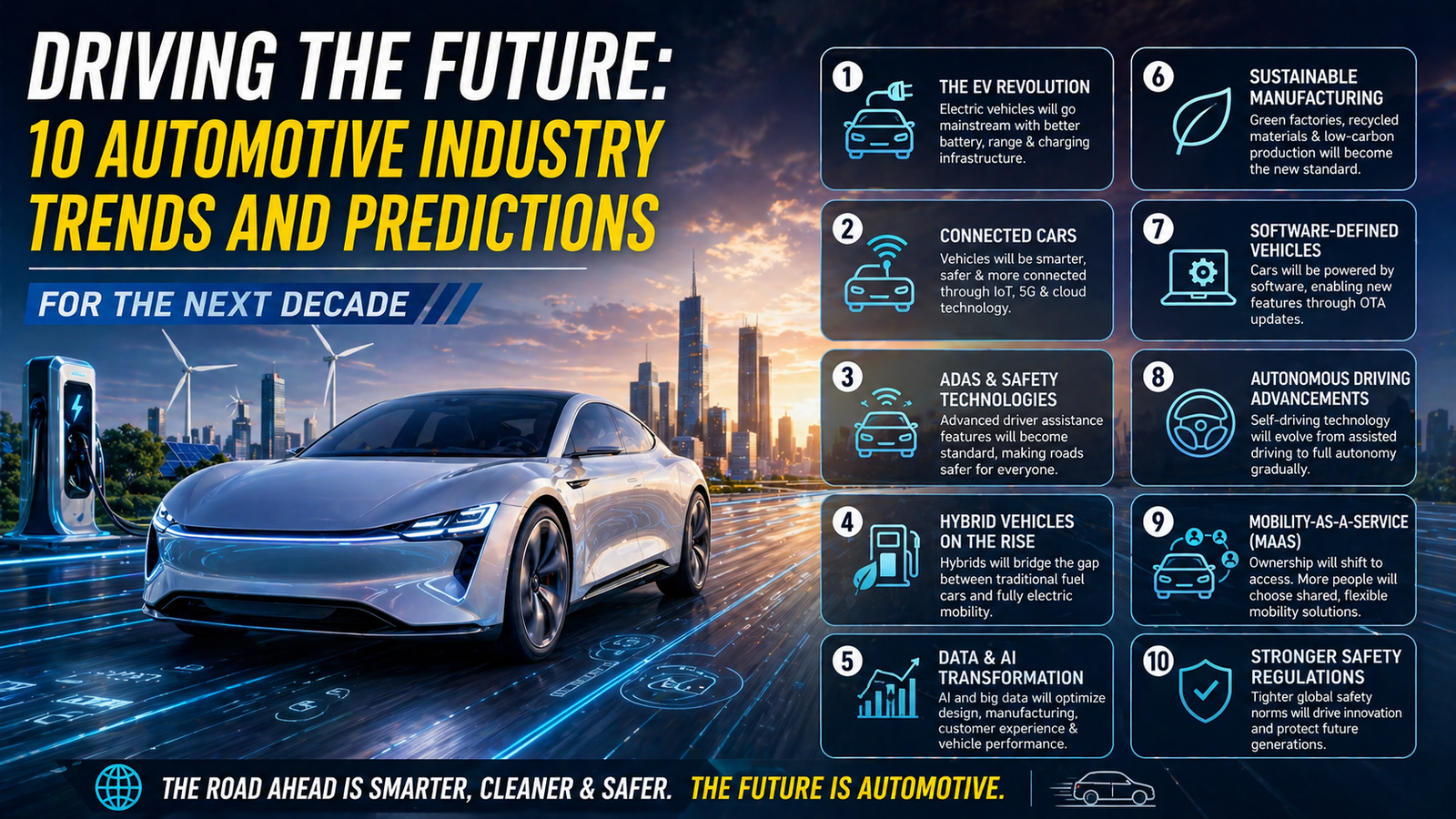
Automotive industry trends and predictions
Explore leading automotive industry trends 2026 that will define the future of mobility, covering the rise of EVs and ADAS to connected cars and sustainable manufacturing practices.
The automotive industry is changing faster than ever before. Technology, sustainability goals and changing consumer expectations are transforming the way vehicles are designed, powered and used. The industry stands on the verge of a transformative decade, moving from electrification to autonomous systems.
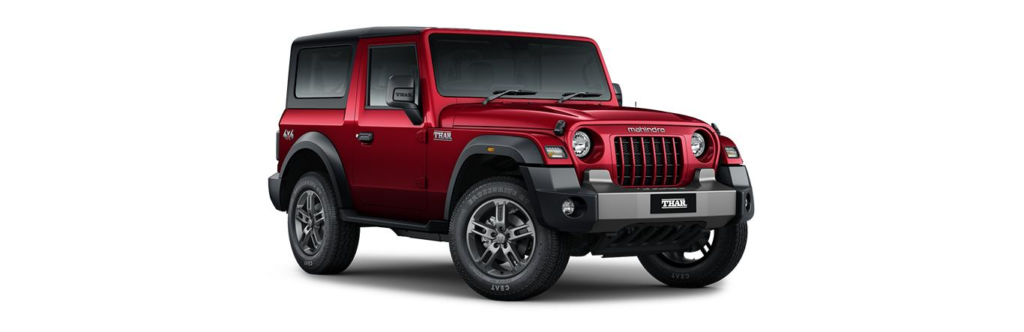
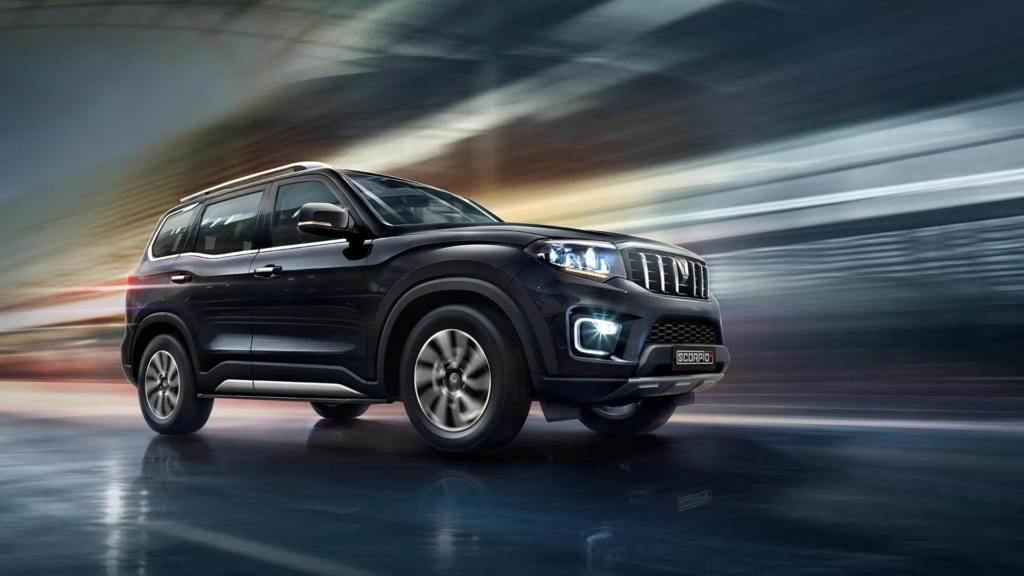
Already, manufacturers such as Tata Motors, Mahindra & Mahindra and Hyundai Motor Company are responding to these changes with new technologies and products in India and globally.
Here are 10 of the biggest automotive trends and predictions that will shape the future of mobility.
1. Fast-Growing Electric Vehicles (EVs)
Electric cars aren’t a niche anymore. Lower battery costs, government incentives and improved charging networks are accelerating adoption. EV sales are growing in India across two-wheelers, three-wheelers and passenger cars.
Expect:
- Extended driving distance
- Quicker charging
- More affordable EV choices across segments
2) Deployment of Charging Infrastructure
Charging availability has been one of the biggest obstacles to the uptake of EVs. There’s a lot of investment from public and private players to build out fast charging corridors along highways and in cities.
That will allow for long-distance EV travel and reduce range anxiety for buyers.
3) ADAS (Advanced Driver Assistance Systems) Are Becoming Standard
Features such as lane assist, adaptive cruise control, emergency braking and blind-spot detection are moving from luxury cars to mid-range vehicles.
ADAS gets better:
- Road safety
- Driver comfort
- Prevention of accidents
Many markets may make these features mandatory in the near future.
4) Smart Features and Connected Cars
Modern cars are turning into smartphones on wheels. With internet connectivity, vehicles can now offer:
- Remote diagnostics
- OTA (over the air) upgrades
- Traffic & Navigation Data in Real-time
- App-based controls
The growth of 5G connectivity will continue this trend.
5) Transition Step – Emergence of Hybrid Vehicles
As EVs expand, hybrids provide a pragmatic middle ground. They mix fuel engines with electric motors for better mileage and lower emissions without full reliance on charging infrastructure.
Hybrids will probably get more popular, especially in markets where readiness for EVs is still growing.
6) Eco-Friendly and Sustainable Manufacturing
Automakers aren’t just making clean vehicles, they’re making green factories. Key goals are the use of recycled materials, renewable energy sources in plants, and the reduction of carbon footprints.
Sustainability will be a strong brand value in the coming years.
7) Software Defined Vehicles
Cars are being controlled by software rather than hardware. Just like with smartphones, updates can add or improve features.
This enables:
- Ongoing performance improvements
- New feature available after purchase
- Longer vehicle life
8) Autonomous Driving Technology Development
Fully self-driving cars are still years away, but semi-autonomous capabilities are advancing quickly. Some vehicles already feature traffic jam assist, self parking and highway autopilot.
These technologies will become more dependable and more common over time.
9) Subscription & Mobility-as-a-Service Models
Subscription and shared mobility models are slowly challenging ownership. Many city users prefer:
- Subscriptions to car
- Carpooling
- short-term lease
This trend alleviates the burden of ownership and maintenance for city dwellers.
10) Increased Focus on Safety and Regulation
Governments worldwide are tightening safety norms. Multiple airbags, ABS, ESC and crash test ratings are now becoming major buying points.
Safety ratings are more top of mind for consumers than they’ve ever been.
What This Means for Buyers in India
What does it mean for Indian consumers?
- More affordable EV choices
- Safer cars with clever features
- More fuel economy and less emissions
- Enhanced driving comfort and connectivity
- Flexible ownership options
Future of automotive is not just about cars, it’s about smarter, cleaner and safer mobility.
SUMMARY (Automotive industry trends and predictions)
The automotive industry is heading into a technology-driven, sustainable and customer-centric era. Electrification, connectivity, automation and safety will be the hallmarks of tomorrow’s vehicles.
Buyers who are aware of such trends are better able to make smarter decisions when buying their next vehicle. The future looks like it will have something for everyone, whether it’s an EV, hybrid or a more sophisticated petrol/diesel car with ADAS.
Read this – Big announcements for Maruti lovers,must see the features
Read this – Kia Seltos Price List 2026 – Complete Review, Specs & Features
Automotive industry trends and predictions Automotive industry trends and predictions Automotive industry trends and predictions Automotive industry trends and predictions Automotive industry trends and predictions Automotive industry trends and predictions Automotive industry trends and predictions Automotive industry trends and predictions Automotive industry trends and predictions