
Maruti Baleno Facelift 2026 is expected soon. Know its expected price, launch date, engine, mileage, features, CNG-AMT option and key changes.
Maruti Baleno Facelift 2026
The Maruti Baleno Facelift 2026 is one of the most talked-about hatchbacks expected in the Indian market this month. Maruti Suzuki’s popular premium hatchback is expected to receive styling and mechanical updates, making it an interesting option for buyers looking for a practical city car.
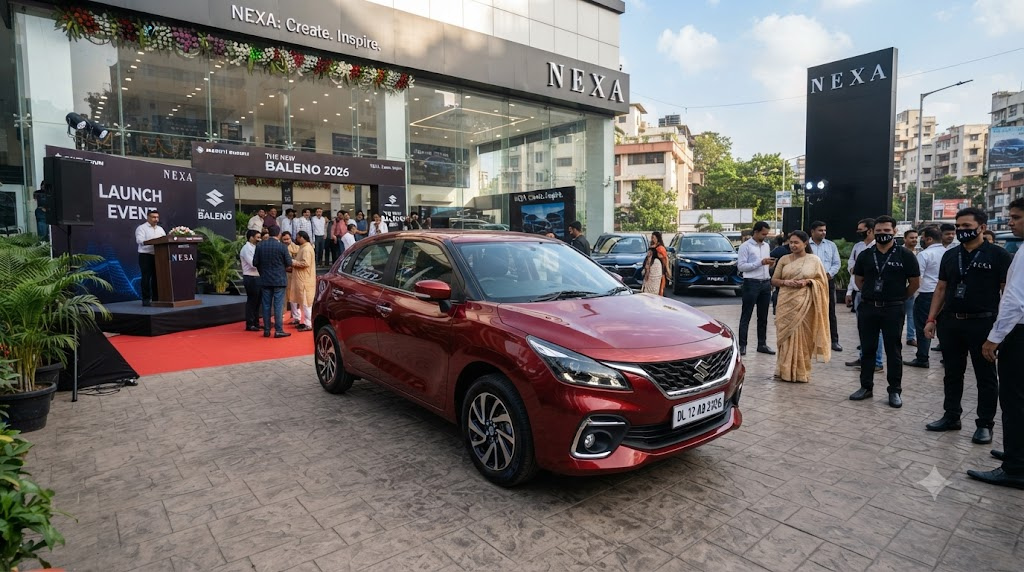
Current reports indicate an expected launch around September 5, 2026, with an expected price range of around ₹6 lakh to ₹9.50 lakh. These are expected figures and should not be treated as official until Maruti Suzuki announces the final details.
The Maruti Baleno Facelift 2026 is important because the Baleno already has a strong presence in the premium hatchback segment.
Expected Price
The Maruti Baleno Facelift 2026 is expected to start at around ₹6 lakh ex-showroom. The top variants could go up to approximately ₹9.50 lakh.
The final price may vary according to the engine, transmission, variant and features.
Buyers should wait for the official price announcement before making a booking.
Expected Launch Date
The Maruti Baleno Facelift 2026 is expected to launch in India on or around September 5, 2026. Current automotive listings show September 5 as the expected launch date.
The exact launch timing and variant details should be confirmed by Maruti Suzuki.
Engine and Performance
The Maruti Baleno Facelift 2026 is expected to receive an updated petrol engine setup.
Recent reports indicate that the updated Baleno could use a new 1.2-litre three-cylinder petrol engine. This would be a significant mechanical change compared with the existing Baleno’s engine setup.
The engine is expected to focus on a balance between everyday performance and fuel efficiency.
CNG and Automatic Option
One of the most interesting possibilities with the Maruti Baleno Facelift 2026 is a CNG-AMT combination.
If introduced, this could make the Baleno attractive to buyers who want lower running costs but also prefer an automatic transmission for city driving.
Maruti Suzuki already has a strong CNG presence in India, so a CNG-AMT Baleno could attract customers who spend a lot of time in traffic.
Mileage
Mileage is expected to remain one of the strongest reasons to consider the Maruti Baleno Facelift 2026.
The actual certified mileage will depend on the final engine and transmission combination.
Real-world mileage will also vary according to traffic, road conditions, air-conditioning use, tyre pressure and driving style.
Therefore, buyers should not expect the official test-cycle figure in every driving situation.
Exterior Changes
The Maruti Baleno Facelift 2026 is expected to receive exterior updates.
A facelift generally brings changes to areas such as the front grille, bumpers, lighting and alloy wheels.
The exact design changes should be checked after the official reveal.
Maruti is expected to keep the basic hatchback shape because the current Baleno’s design already has strong customer recognition.
Interior Features
Inside, the Maruti Baleno Facelift 2026 is expected to receive technology and convenience improvements.
Potential equipment could include a touchscreen infotainment system, connected-car functions, automatic climate control, wireless charging and a digital instrument display, depending on the variant.
The final feature list may differ between variants.
Safety
Safety will be an important area for the Maruti Baleno Facelift 2026.
Buyers should look for features such as multiple airbags, ABS with EBD, electronic stability control, parking sensors and a rear camera.
Higher variants may receive additional driver-assistance or safety technology.
The exact equipment should be verified from the official specifications.
Expected Competition
The Maruti Baleno Facelift 2026 will continue competing in a segment that includes cars such as the Hyundai i20 and Toyota Glanza.
Its biggest strengths are likely to remain practicality, fuel efficiency, dealership reach and everyday usability.
Should You Wait?
If you are planning to buy a premium hatchback, the Maruti Baleno Facelift 2026 is worth waiting for if your purchase is not urgent.
The updated engine, possible CNG-AMT option and styling changes could make it more attractive.
However, buyers should compare the final price and features with rivals before booking.
Final Verdict
The Maruti Baleno Facelift 2026 could become one of the most important hatchback updates of September.
Its expected launch, updated engine and possible CNG-AMT combination make it an interesting option for Indian buyers.
If Maruti manages to keep the price competitive, the updated Baleno could continue attracting customers looking for a comfortable and efficient premium hatchback.
For buyers, the best approach is to wait for official pricing and variant details before making the final decision.
FAQs
What is the expected price of Maruti Baleno Facelift 2026?
The Maruti Baleno Facelift 2026 is expected to cost around ₹6 lakh to ₹9.50 lakh ex-showroom.
When will the new Baleno launch?
The Maruti Baleno Facelift 2026 is expected around September 5, 2026.
Will the new Baleno get CNG?
The Maruti Baleno Facelift 2026 is reported to be considered with a CNG-AMT option.
Will the engine change?
Reports indicate that the Maruti Baleno Facelift 2026 could get a new 1.2-litre three-cylinder petrol engine.
Is it worth waiting for?
The Maruti Baleno Facelift 2026 is worth considering if you want a practical premium hatchback and your purchase is not urgent.
Disclaimer:
Information about the Maruti Baleno Facelift 2026 is based on currently available reports and expected specifications. Price, launch date, engine, mileage, features and variants can change after Maruti Suzuki’s official announcement. Always verify final details with an authorised Maruti Suzuki dealer before purchasing.
Also read:
2027 Toyota Innova Hycross Facelift: New Design and Features Revealed
Tata Car Price Hike September 2026: New Prices, Affected Cars and What Buyers
2025 Toyota Innova Hycross ZX Hybrid Features and Specifications
Fixing P0016 in Skoda, VW, and Audi: A Step-by-Step Diagnosis