
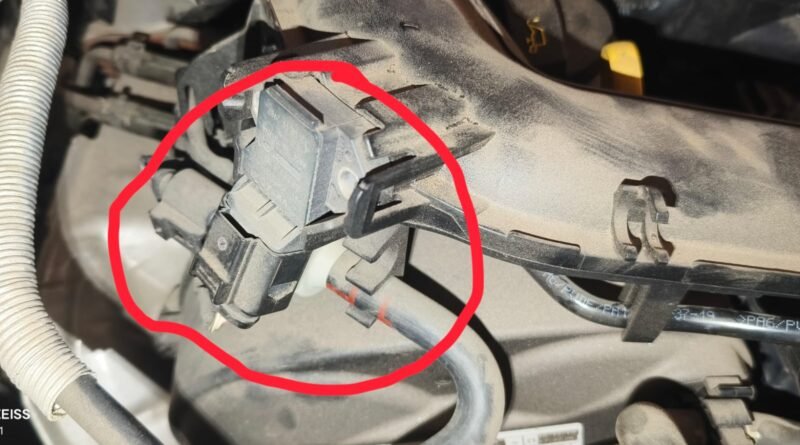
OBD Code P0113 Intake Air Temperature Sensor 1 Circuit High
Is your check engine light on? Learn everything about OBD Code P0113 Intake Air Temperature Sensor 1 Circuit High. Discover the causes, symptoms, diagnostic steps, and repair costs to fix your car’s performance today. In this blog post, we will learn how to diagnose and fix the P0113 code—specifically, how to address issues with the Intake Air Temperature (IAT) sensor—and we will discuss this in detail. If this is your first time visiting our blog, please take the time to read through this post; you are sure to learn something valuable from it.
What Does the P0113 Intake Air Temperature Sensor Mean
What should I do if my car gets the OBD code P0113 Intake air Temperature Sensor Circuit High? First, we need to get a scanner to tell us what the problem is circuit high, circuit low, or open circuit ?
To begin with, we must perform a visual inspection. We need to meticulously examine every single component to check for any loose connections or wiring irregularities. This visual check conducted personally is the first step. If, after this inspection, no issues are detected, only then should we connect a scanner to diagnose the fault and proceed with the troubleshooting process.
Common Symptoms of a P0113 Fault Code
When the P0113 Intake air Temperature Sensor is active, you will likely notice several drive ability issues. The check engine light will almost certainly be illuminated. Beyond the light, the most common symptoms include:
· Reduced Engine Performance: Since the ECM doesn’t know the correct air temperature, it may not deliver the optimal air-fuel ratio. This can result in a noticeable lack of power or sluggish acceleration .
· Poor Fuel Economy: The engine might run too rich (too much fuel) or too lean (too little air) depending on the substitute values the ECM uses. This often leads to decreased gas mileage .
· Difficulty Starting / Rough Idle: The engine may crank longer than usual before starting or run roughly, especially during cold starts, because the computer is guessing at the air temperature .
· Engine Hesitation or Stalling: An incorrect air-fuel mixture can cause hesitation when pressing the gas pedal, or even stalling .
· Failed Emissions Test: Because the code directly relates to engine combustion efficiency, a vehicle with an active P0113 code will likely fail an emissions inspection
How to Diagnose the P0113 Code
P0113 Intake air Temperature Sensor Before you start throwing parts at the problem, a systematic diagnosis is key. If you are not comfortable with electrical diagnostics, it is best to consult a professional mechanic.
Initial Scan and Visual Inspection
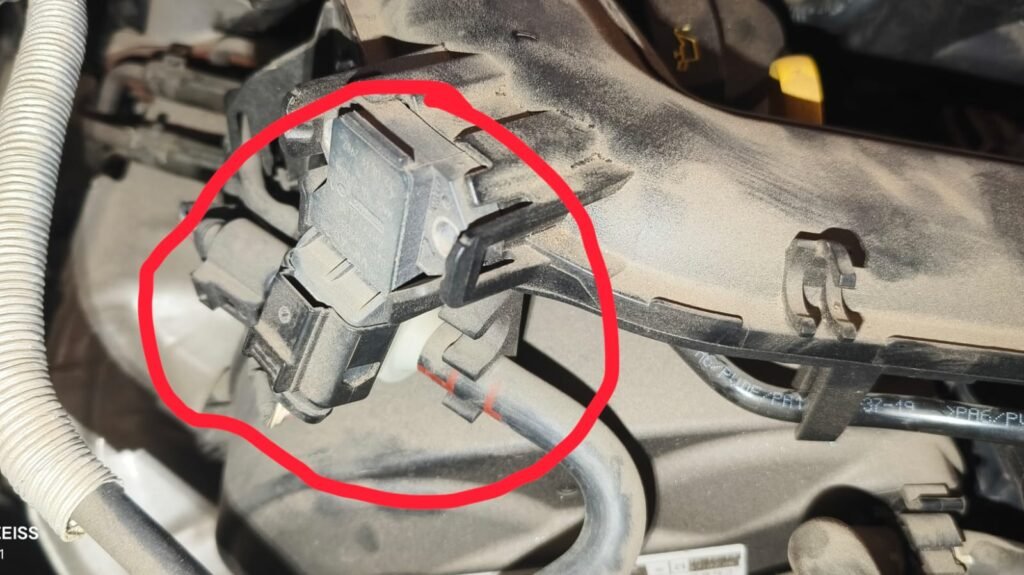
Use an OBD-II scanner to confirm the code is P0113. Note any other codes that may be present . Then, perform a thorough visual inspection. Locate the IAT sensor (check your service manual—it is often on the air intake duct, air filter box, or integrated into the MAF sensor) . Disconnect the electrical connector and inspect it for bent pins, corrosion, or damaged wires. Check the wiring harness for any signs of melting, fraying, or damage .
Monitor Live Data
Use your scan tool to view the live data from the IAT sensor. With the engine off and the ignition on, compare the IAT reading to the ambient air temperature. If the scanner reads an impossible temperature (like -40°F) while the actual air is warm, the circuit is stuck in a high-voltage state .
Circuit Testing with a Multimeter
This is where you can pinpoint the issue. You’ll need a digital multimeter (DMV).
· Check Sensor Resistance: Disconnect the sensor and measure its resistance. Compare this to the manufacturer’s specification for the current ambient temperature ( around 2,000-3,000 ohms at 68°F/21°C). If the resistance is out of spec (infinite or zero), the sensor is bad .
Check Reference Voltage: With the ignition on, check the voltage at the sensor’s harness connector. You should see a 5-volt reference signal. If not, there may be a wiring issue .
· Check for Shorts: Test the signal wire for continuity to power or ground to rule out a short circuit .
Now we know what is the meaning of circuit high because we are telling about circuit high, so today in this blog we will tell about circuit high and will also know how to fix it. P0113 Intake air Temperature Sensor The meaning of circuit high is that when we remove the connector and sensor which is connected to each other, then after removing it if someone turns on the ignition of the vehicle or starts it then it comes on. Circuit high is one condition and the second condition is that if any wire is out then also the code of circuit high will come, so what is to be done in this. 5 volts have to be checked, after checking 5 volts. If 5 volts are present in the wiring, then the problem lies with the sensor.
Repair Options and Considerations
Once you have identified the problem, it’s time for the repair. After the fix, use your OBD-II scanner to clear the code and take the vehicle for a test drive to ensure the check engine light stays off .
· IAT Sensor Replacement: If the sensor is faulty, replacement is the most common fix. This is generally a straightforward and affordable DIY job if the sensor is accessible. Replacement sensors typically cost under €100 / $100 .
· Repair Wiring/Connectors: If you find a damaged wire, corroded connector, or short circuit, repair the affected parts. This may involve soldering in a new wire section, cleaning terminals with electrical contact cleaner, or replacing a connector .
· Clean the Sensor: In cases of contamination, especially from oil or dirt, carefully cleaning the sensor (and the MAF sensor, if integrated) with a specialized MAF sensor cleaner can sometimes resolve the issue .
· Professional Repair Costs: If you have a shop perform the diagnosis and repair, total costs (parts and labor) typically range from €95 to €155 (or equivalent in local currency), depending on the shop rate and the part cost .
Don’t Ignore the Signal
The P0113 code is your car’s way of saying it can’t accurately measure the air it’s using to run. While the vehicle may still be driveable in a “failsafe” mode, ignoring this code can lead to poor performance, wasted fuel, and potential strain on other engine components .
Whether it is a simple wiring fix or a sensor replacement, addressing OBD Code P0113 promptly will keep your engine running smoothly and efficiently for miles to come . If you are ever in doubt, professional diagnostic services are the safest bet to ensure the repair is done right the first time.
ALSO READ: WHAT IS DPF LIGHT
ALSO READ: OBD Codes C101B29 & C101B4A Right Front ABS Wheel Speed Sensor Guide