

Maruti Suzuki EV Strategy
Maruti Suzuki’s reluctance to electric vehicles in India: Here’s why Is it falling behind its rivals or does it have a bigger EV strategy for the long-term?
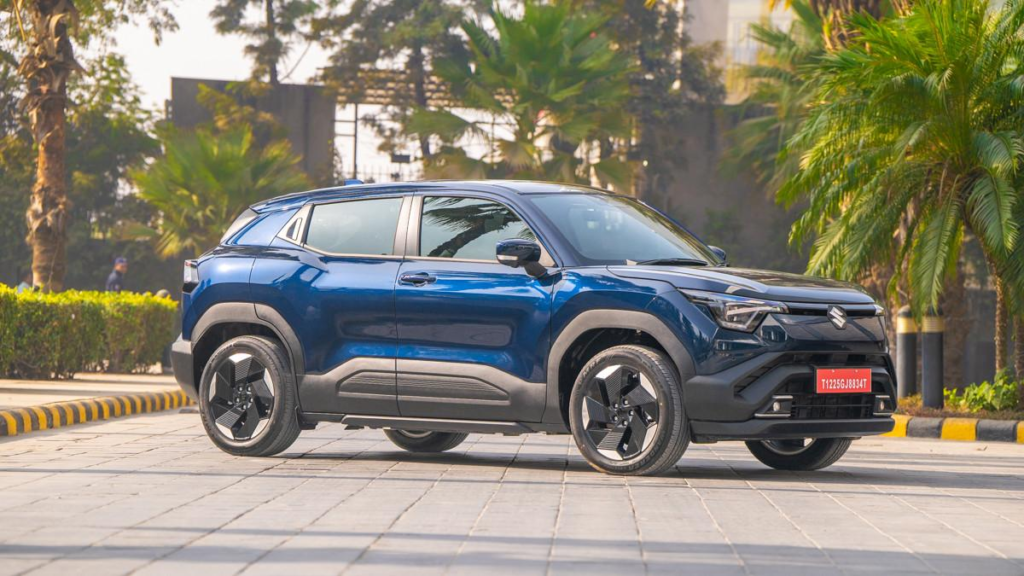
Why Maruti Suzuki Is Not Showing Aggressive EV Plans? Is it lagging or up to something larger?
Maruti Suzuki has been ruling the roost in India’s passenger vehicle market for years. From budget hatchbacks to family sedans and SUVs, the company has earned a reputation for understanding the Indian consumer better than almost anyone else. But as the electric vehicle (EV) revolution picks up steam, many have started asking an important question: Why is Maruti Suzuki not as excited about electric vehicles as some of its rivals?
Automakers such as Tata Motors and Mahindra, along with a few global players, have aggressively expanded their EV portfolios, while Maruti Suzuki has been more cautious. Some have wondered whether the company is lagging behind in the EV race or secretly preparing a much bigger plan for the future.
The answer is probably not as simple as you think.
The Expanding EV Market in India
India’s electric vehicle market has been growing strongly in recent years. Rising fuel prices, government incentives, environmental awareness and advances in battery technology have prompted consumers to consider electric mobility.

Automakers have responded with an aggressive push of electric vehicles across all price segments. As more and more EVs hit the road, it’s only natural that consumers expect the country’s largest carmaker to lead the transition.
However, the journey of EVs for Maruti Suzuki has been slower than many of its competitors.
Why Maruti Suzuki Has Been Cautious On EVs?
There are several strategic reasons the company takes this approach.
1. Know the Indian Customer
Maruti Suzuki has always been about affordability and practicality. The company knows that a huge percentage of Indian buyers look for value for money, fuel efficiency and low maintenance costs.
Electric vehicles are on the rise but the upfront costs are still higher than petrol-powered alternatives. Maruti Suzuki might be thinking that a much lower price is needed for mass adoption of EVs in India.
Instead of throwing products on to the market as fast as they can, the company seems to be trying to make sure electric vehicles meet the expectations of mass-market consumers.
2. Issues with the Charging Infrastructure
The challenge of EV adoption is still the lack of charging infrastructure.
Charging networks are growing, but they’re not as widespread as fuel stations, especially in smaller cities and rural areas. Maruti Suzuki has a huge customer base outside metros as well.
The company probably realizes that many potential buyers won’t make the switch to EVs until charging becomes easier and more accessible.
3. Battery Cost Is Still Too High
Battery packs are some of the most expensive parts of an electric vehicle.
Battery prices have been falling but they still have a big role in vehicle pricing. Maruti Suzuki’s business model has been built on delivering affordable vehicles to millions of customers.
To launch an EV that is too expensive could be at odds with the company’s core value proposition.
4. Emphasize Hybrid Technology
While some rivals have jumped straight into full electric mode, Maruti Suzuki has made huge investments in hybrid technology.
Hybrid cars have a petrol engine and electric assistance, which makes them more fuel efficient without the need for charging infrastructure. This gives customers a taste of some of the benefits of electrification without the concerns of charging and range anxiety.”
There is a lot of thinking in the industry that hybrids may turn out to be an important bridging technology in markets like India.
Is Maruti Suzuki losing its edge?
At face value, it may appear that Maruti Suzuki is trailing its rivals in the EV segment. Companies like Tata Motors have done well to build a good position in the electric passenger vehicle space.
But first to market doesn’t mean first in market (Maruti Suzuki EV Strategy).
Maruti Suzuki has often succeeded in the right time rather than the earliest time. The company doesn’t make large-scale investments until it studies consumer behavior, infrastructure readiness and long-term demand carefully.
This has worked well for the company over the years in several vehicle categories.
The Company’s Larger EV Strategy
Industry observers say Maruti Suzuki’s cautious stance could be part of a long-term strategy playing out.
the Vitara & Upcoming EV Lineup (Maruti Suzuki EV Strategy)
The company’s upcoming electric vehicle efforts suggest it’s gearing up for a more proactive role in the EV space. Maruti Suzuki could leverage the launch of electric SUVs and future EV platforms to compete more aggressively in the coming years.
It’s also investing in manufacturing capabilities and supply chains to support the production of future electric vehicles.
Localization Approach (Maruti Suzuki EV Strategy)
One of the biggest strengths of Maruti Suzuki is localization.
Historically, the company has been able to maintain lower costs than its competitors due to sourcing components locally and developing strong supplier networks. Using the same approach for electric vehicles could eventually help Maruti Suzuki bring affordable EVs to mass-market buyers.
Scalability through time (Maruti Suzuki EV Strategy)
Instead of going for early market share, Maruti Suzuki could be betting on mass adoption after the infrastructure, battery technology and consumer demand matures.
This could yield better long-term results.
The way forward (Maruti Suzuki EV Strategy)
However, in spite of its strengths, Maruti Suzuki has big challenges ahead.
Fierce Competition (Maruti Suzuki EV Strategy)
The EV market is becoming more competitive. Existing carmakers and newcomers continue introducing new electric vehicles.
Evolving Consumer Expectations (Maruti Suzuki EV Strategy)
Consumers are getting used to electric mobility and might expect faster innovation from market leaders.
Regulatory Pressure – (Maruti Suzuki EV Strategy)
Countries around the globe are promoting cleaner ways to travel, perhaps hastening the shift to electric vehicles.
Maruti Suzuki will need to show some real progress on its electrification strategy to stay competitive.”
What This Means for Indian Shoppers
For the consumer, the approach of Maruti Suzuki is a double-edged sword.
On the upside, buyers will have to wait longer for a wider selection of Maruti-branded EVs. But the company’s focus on affordability, reliability and localisation could ultimately lead to electric vehicles that are more accessible to the average Indian household.
If this plan works, it could lead to a big acceleration of EV adoption across the country.
Abstract (Maruti Suzuki EV Strategy)
It may not be the entire picture that Maruti Suzuki is not interested in electric vehicles. It seems the company is adopting a well thought out strategy, based on affordability, infrastructure readiness, customer needs and long term scalability, instead of rushing into the EV market (Maruti Suzuki EV Strategy).
Competitors have taken an early lead but Maruti Suzuki has big advantages for the future in the form of a strong brand, wide dealer network, manufacturing expertise and a cost-efficient business model (Maruti Suzuki EV Strategy).
Only time will tell if the company was really late to the EV game, or just setting itself up for a much bigger play. One thing’s for sure, Maruti Suzuki’s EV strategy is going to be a big player in shaping the future of electric mobility in India (Maruti Suzuki EV Strategy).
Read this – Kia Overtakes Maruti Suzuki in This Vehicle Segment: A Wake-Up Call for India’s Largest Carmaker
Read this –Connected Car Features Explained : Everything You Need to Know
Read this – Maruti Suzuki Brezza 2026: कीमत, माइलेज, फीचर्स और लॉन्च डेट – क्या यह बनेगी 2026 की सबसे बेस्ट SUV?..