
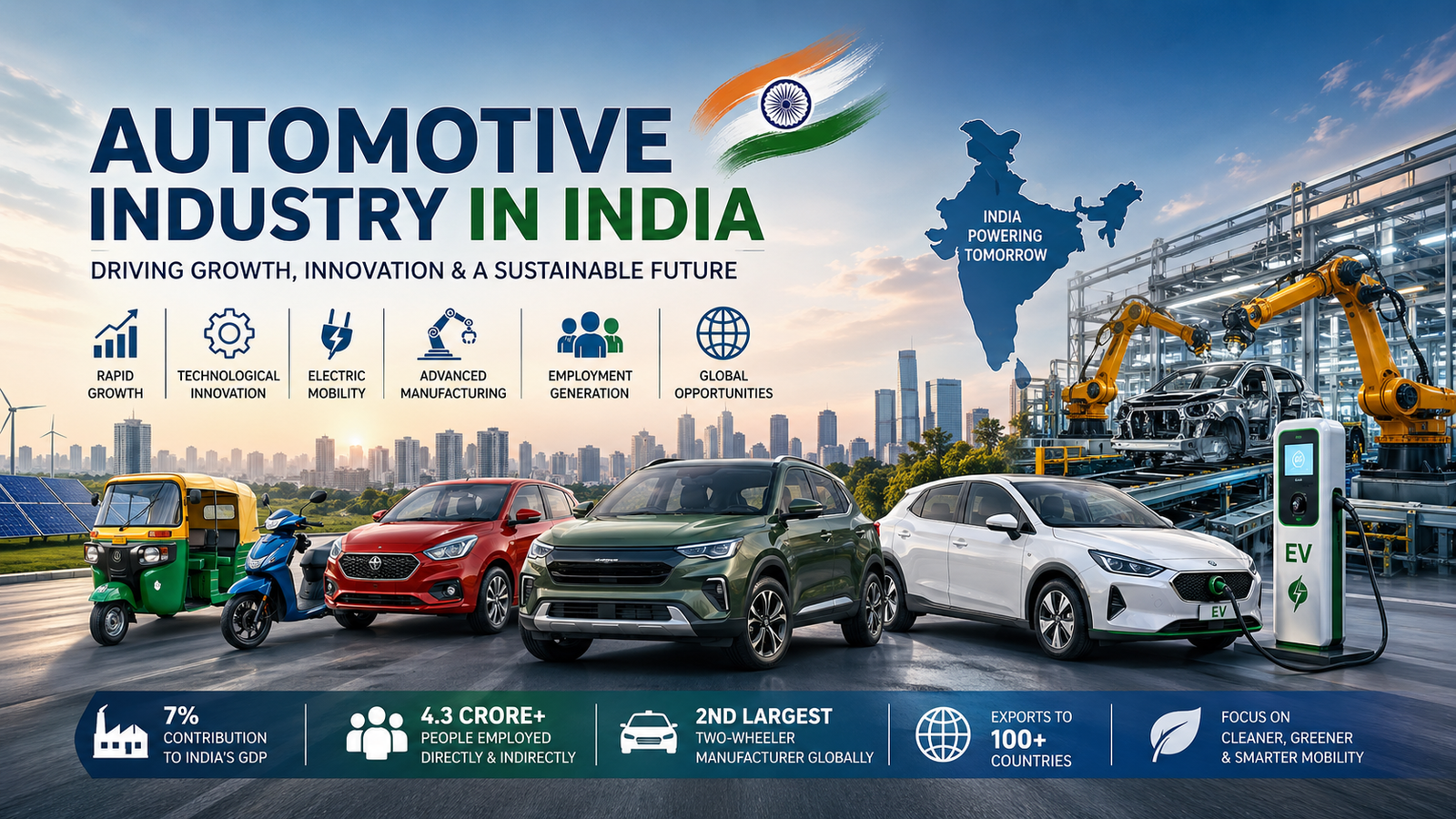
The automotive industry in India is not just about vehicles; it’s about people, dreams, and the journey we take together. As we navigate through bustling cities and serene countryside, our cars and bikes become extensions of ourselves, reflecting our aspirations and lifestyles.
The growth of this sector has created countless jobs, empowering families and communities. From the factory workers assembling vehicles to the salespeople at dealerships, each role plays a vital part in this vibrant ecosystem.
Moreover, the shift towards electric vehicles signifies a collective commitment to a cleaner, greener future. It’s not just a trend; it’s a movement towards sustainability that resonates with the values of the younger generation.
As we look ahead, the automotive industry in India is poised to embrace innovation while staying rooted in the needs and desires of its people. Together, we are driving towards a future filled with possibilities, where technology and humanity intersect on the open road.
In this blog, we will discuss the evolution, current trends, challenges, and future opportunities in the Indian automotive industry.
The automobile sector growth in India
The journey of the Indian automobile industry started in the early 1940s but gained momentum after the economic liberalization in 1991. With the liberal policies, global automobile manufacturers were attracted and the domestic companies were spurred to innovate and expand (Automotive industry in India).
Today India produces two-wheelers, three-wheelers, passenger vehicles, commercial vehicles and electric vehicles on a large scale. Leading Indian and international brands have established manufacturing plants across the country, thereby contributing to employment generation and GDP growth.
Some of the leading automotive companies forming the industry are:
- Tata Motors
- Mahindra & Mahindra
- Maruti Suzuki
- Hyundai Motor India
- Bajaj Auto
The companies have been important contributors to innovation, production capacity and exports.These companies have significantly contributed to innovation, production capacity, and exports.
Current Market Size and Share
The automobile sector accounts for about 7% of India’s GDP and about 49% of manufacturing GDP. It gives direct and indirect employment to millions of people.
India is: 1.
- Largest two-wheeler manufacturer
- The largest producers of commercial vehicles
- Rapidly expanding passenger car market
- A rising star in electric mobility
Demand for personal vehicles has increased especially after the pandemic as consumers prefer private transport over public modes (Automotive industry in India).
Major Segments of Indian Automotive Industry
1. TWO WHEELERS AUTOMOTIVE INDUSTRY IN INDIA
The biggest segment is due to the affordability, fuel efficiency and easy mobility in congested cities.
2. Passenger Vehicles (India’s Automobile Industry)
Here the important vehicle types are sedans, hatchbacks and SUVs. Today, SUVs are the fastest growing segment in India.
3. Commercial Vehicles (Indian Automobile Industry)
This segment is growing with infrastructure development, logistics and growth of e-commerce.
4. Electric Vehicles (EVs) (Indian automotive industry)
The adoption of EVs is rapidly growing due to government subsidies, rising fuel prices and environmental awareness.
Government Initiatives for the IndustryGovernment Initiatives Industry Strengthening
The Indian government has launched several schemes to strengthen the automotive and EV industry:
- FAME II (Faster Adoption and Manufacturing of (Hybrid &) Electric Vehicles)
- Production Linked Incentive Scheme for Auto & Auto Components
- Old Vehicle Scrappage Policy
- GST on electric vehicles slashed
- State electric vehicle policies
These initiatives are helping to drive the shift towards cleaner mobility solutions among both manufacturers and consumers.
New Trends in India’s Automotive IndustryEmerging Trends in the Automotive Industry in India
1. The electric mobility revolution
Electric two and three wheelers and cars are getting popular. Charging infrastructure is also growing fast.
2. Intelligent Technology and Connected Vehicles
Modern cars are equipped with infotainment powered by AI, GPS tracking, IoT integration and advanced safety features.
3. The SUV boom
Indian consumers prefer SUVs for the road conditions, higher seating position and comfort.
4. Mobility as a Service, Ride Sharing
But the pandemic has had a bit of an effect on it, but it still impacts how people get around the city.
5. Manufacturing localization
Companies are working towards local production of auto components to reduce import dependence.
Challenges of the Automotive Industry
The industry has grown rapidly but there are some challenges:
- Shortage of semiconductor chips
- Rising raw material prices
- Stringent emission norms (BS6 compliant)
- Expensive fuel
- Charging infrastructure for EVs still developing
- Fierce competition among brands
Manufacturers are responding with investments in R&D, local sourcing and alternative energy vehicles.
Opportunities & Scope in the Future
The future of the Indian auto industry is very bright because of:
- Increasing middle-class population
- Increasing urbanisation
- Demand for sustainable mobilities
- Export potential in Africa, Asia and Latin America
- EV and hydrogen fuel technology growth
- Development of rural market
India is likely to be a global hub for EV manufacturing in the next few years (Automotive industry in India).
The Automotive Industry’s Role in Employment and the Economy
The Indian automotive sector is one of the largest employers in the country. It supports:
- Production jobs
- Dealership networks
- Service & Maintanance Industry
- auto parts suppliers
- Transportation & logistics
This industry has a very high multiplier effect on the economy (Automotive industry in India).
SUMMARY
India’s automobile industry is entering a historic phase of transformation. The sector is evolving quickly, from traditional fuel cars to electric mobility, from basic transport to smart connected cars. With strong government backing, technological advancement and rising consumer demand, India is poised to emerge as a global leader in the automobile industry.
There is enormous potential for investors, manufacturers and consumers in the next decade. The future of the Indian automotive landscape will be driven by the transition to sustainable, smart and efficient mobility solutions (Automotive industry in India).
There is enormous potential for investors, manufacturers and consumers in the next decade. The future of the Indian automotive landscape will be driven by the transition to sustainable, smart and efficient mobility solutions (Automotive industry in India).
- Automobile industry in India
- Indian automotive market
- EVs in India
- EV industry growth India
- Automobile sector contribution to GDP
- Two-wheeler market India
- SUV demand in India
- Government schemes for EV in India
- Future of automotive industry in India
- Automobile manufacturing companies in India
Read this – Big announcements for Maruti lovers,must see the features
Read this – Kia Seltos Price List 2026 – Complete Review, Specs & Features