
BS 7 Emission Norms April 2029: Rules, Timeline and Impact on Car Owners
BS 7 emission norms are proposed for April 2029 in India. Learn about the rollout, pollution rules, EV impact, old cars and key questions.
Table of Contents
Introduction
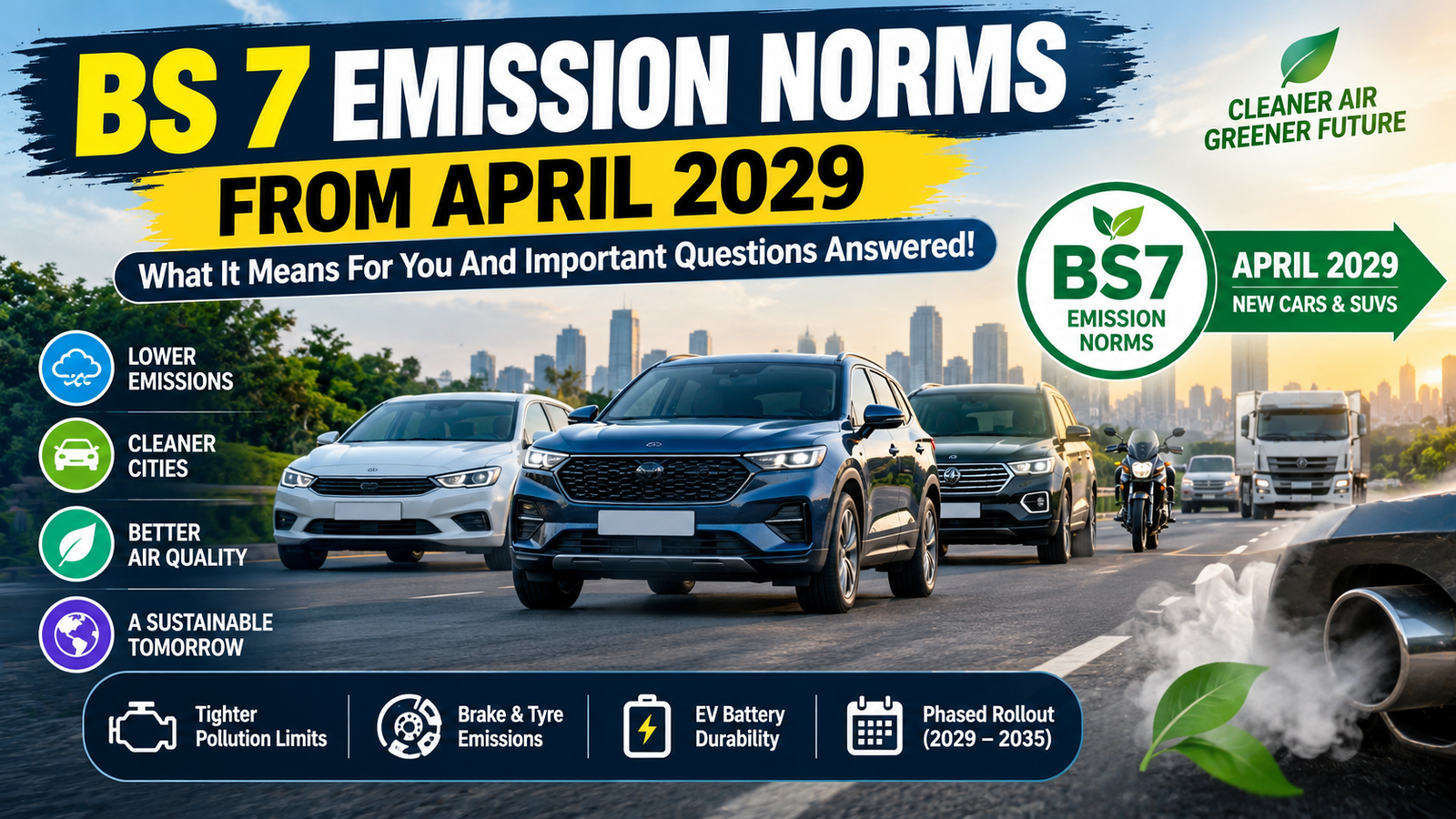
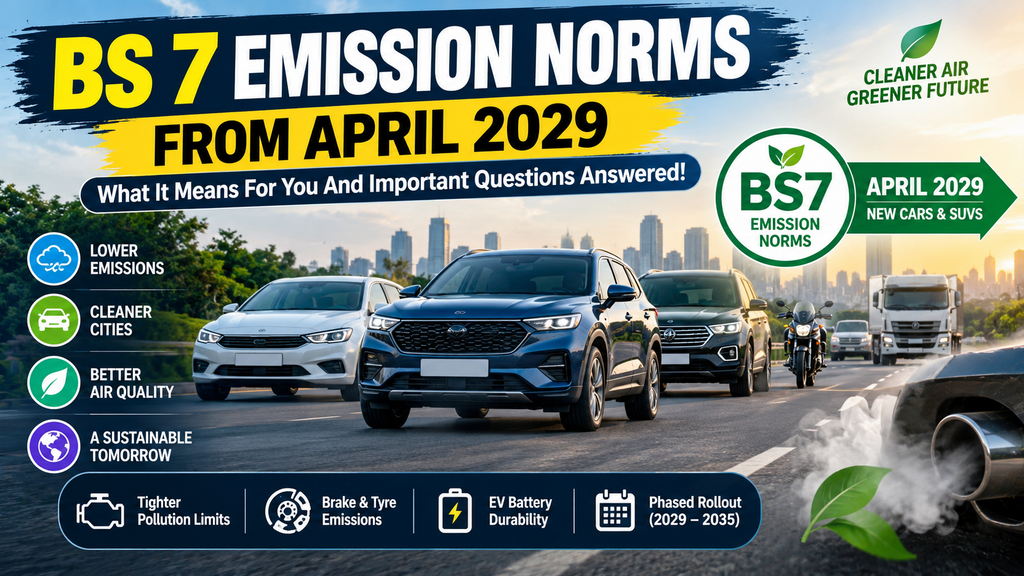
India is preparing for its next major step in vehicle pollution control. The proposed BS 7 Emission Norms are expected to begin from April 2029, starting with new cars and SUVs. The rollout is planned in phases and could continue until April 2035.
The proposed standards aim to reduce harmful emissions and improve pollution monitoring. They are also expected to cover areas such as tyre and brake particles, while introducing battery durability requirements for certain electric and hybrid vehicles. The rules are currently based on a draft framework, so some details may change before final approval.
1. What Are BS 7 Emission Norms?
The BS 7 Emission Norms refer to India’s proposed Bharat Stage VII vehicle emission standards. Bharat Stage rules set limits on pollutants released by vehicles, including nitrogen oxides, hydrocarbons and particulate matter.
India currently follows BS-VI Phase 2 standards, introduced in April 2023. The next stage is intended to bring Indian vehicle regulations closer to Europe’s Euro 7 framework.
The goal of the BS 7 Emission Norms is to reduce pollution from new vehicles and strengthen testing beyond controlled laboratory conditions.
2. When Will BS 7 Rules Start in India?
According to current reports, the proposed BS 7 Emission Norms will be introduced in phases.
- April 2029: New cars and SUVs.
- April 2030: Small goods vehicles and pickup vans, according to reported timelines.
- April 2031 onwards: Additional vehicle categories, including buses and heavy commercial vehicles.
- Until April 2035: Phased implementation is expected to continue.
The exact dates and requirements depend on the final government notifications. Two-wheeler timelines may be announced separately.
3. What Changes Will Car Buyers Notice?
The BS 7 Emission Norms could encourage manufacturers to improve engine technology, exhaust treatment systems and vehicle testing.
Here are the main changes buyers should understand:
- Stricter pollution checks: Vehicles may need to meet tighter requirements for selected pollutants.
- Real-world testing: Testing and monitoring are expected to focus more on emissions during actual driving.
- Smaller particles: Proposed rules include tighter controls on certain fine particles from vehicle exhaust.
- Brake and tyre emissions: The framework also addresses particles produced by brake wear and tyre abrasion.
- Electric vehicle requirements: Battery durability requirements are proposed for certain electric and hybrid vehicles.
These proposed BS 7 Emission Norms are not only about petrol and diesel engines. They aim to address a wider range of vehicle-related pollution.
4. Will New Cars Become More Expensive?
The BS 7 Emission Norms may increase development and compliance costs for some manufacturers. Automakers could need upgraded emission-control equipment, additional testing and changes to vehicle systems.
However, it is too early to predict how much car prices will increase. The final costs will depend on the approved requirements, vehicle category and manufacturer’s technology.
Buyers should not assume that every new car will become significantly more expensive. Manufacturers may manage the additional costs differently across models and variants.
5. Will Existing BS6 Cars Be Banned?
One of the biggest questions about the BS 7 Emission Norms is whether current car owners will need to replace their vehicles.
Based on the current draft reporting, the proposed standards are intended for new vehicles covered by the rules. Existing BS-VI-compliant cars are not expected to require replacement simply because the new standards begin.
If you already own a BS6 car, continue maintaining it according to the manufacturer’s schedule and follow applicable pollution certificate requirements. Always check final government notifications for any changes that may affect your vehicle.
6. What Should People Planning to Buy a Car Do?
If you plan to buy a car in 2026, there is no need to postpone your purchase solely because of the proposed BS 7 Emission Norms.
Consider these practical tips:
- Choose a car that suits your budget and daily travel.
- Compare petrol, diesel, CNG, hybrid and electric options.
- Check the vehicle’s emission compliance and warranty details.
- Follow future announcements about the final standards.
- Avoid relying on unconfirmed claims about future price hikes or bans.
The BS 7 Emission Norms are still being developed, so buyers should make decisions based on their present needs rather than speculation.
7. Important Questions Answered
When will BS 7 Emission Norms start?
The proposed rollout for new cars and SUVs is scheduled to begin in April 2029, subject to final approval.
Will BS 7 rules apply to old cars?
Current reports indicate that the proposed rules will primarily cover new vehicles in the specified categories. Existing BS6 cars are not expected to be banned solely because of the new standards.
Will petrol and diesel cars continue after 2029?
The proposed framework does not mean that all petrol and diesel cars will automatically stop being sold. Manufacturers will need to meet the applicable standards for their new vehicles.
Will electric cars also be affected?
Yes, certain proposed requirements cover battery durability, and the wider framework also addresses non-exhaust particles from brakes and tyres.
Will car prices increase?
Some models could become more expensive due to compliance costs, but no reliable general price increase has been confirmed.
Conclusion
The proposed BS 7 Emission Norms represent an important development in India’s efforts to control vehicle pollution. Their phased introduction is expected to begin with new cars and SUVs in April 2029, followed by other vehicle categories.
For car buyers, the key message is simple: existing BS6 vehicles are not expected to need replacement solely because of the new rules. Future buyers should monitor official announcements as the framework moves from draft to final regulations.
The BS 7 Emission Norms could change how vehicles are tested, developed and monitored in India, but their final impact will become clearer once the government publishes the approved rules.
Disclaimer: This article is for informational purposes only and is based on reports about proposed regulations available on 14 October 2026. Implementation dates and technical requirements may change before final notification. Verify details through official government announcements before making a vehicle purchase decision.
Also read-
Best Cars in india under 10 lakhs all details and features
Tata Motors and Jeep Collaboration: What Has Been Announced?